Airlines face mounting pressure amid escalating Iran conflict and travel disruptions
March 3, 2026 • Al Jazeera
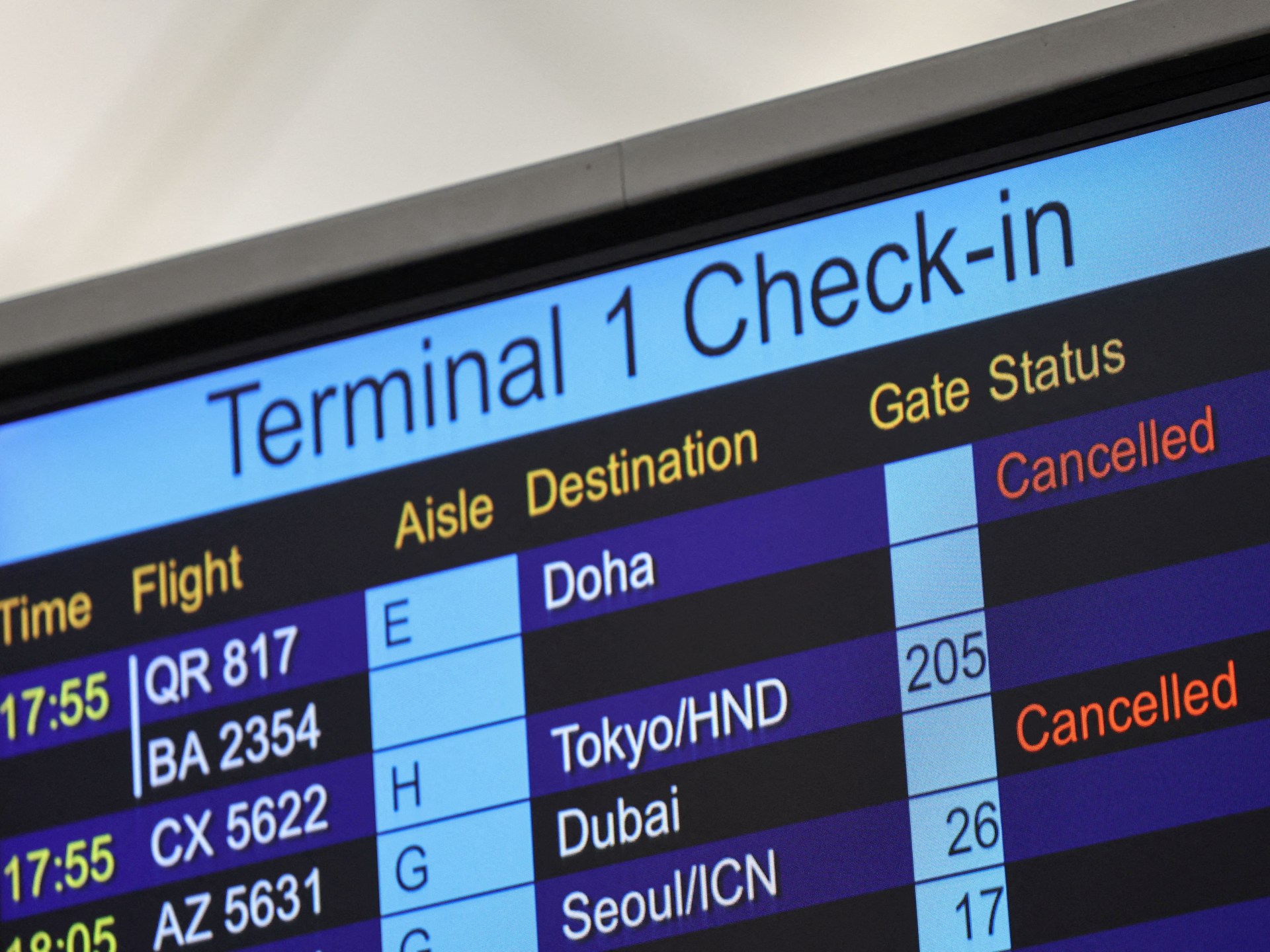
Thousands of passengers remain stranded at major Gulf hubs, including Dubai, due to ongoing restrictions and closures. Since the start of the strikes, over 21,300 flights have been cancelled at seven major airports, including Dubai, Doha, and Abu Dhabi.
The US and Israeli air war against Iran has resulted in significant disruptions to travel across the region. Governments have rushed to bring stranded travelers home from the Middle East following the cancellation of more than 20,000 flights over a few days.
Gulf airlines Emirates, flydubai, and Etihad have been operating limited flights since Monday, primarily for repatriation purposes. The United Arab Emirates has reported that 60 flights have taken off, with plans to operate over 80 flights in the next phase.
The US Department of State has urged Americans to leave more than a dozen countries in the region, while other nations have arranged repatriation flights for their citizens. However, airspaces remain closed or restricted across the Gulf, leaving many without clear options for departure.
US Assistant Secretary of State for Consular Affairs Mora Namdar has advised Americans to “DEPART NOW” using available commercial transportation. The US is securing military and charter flights to evacuate Americans from the Middle East, with contact established with nearly 3,000 US citizens.
The conflict has resulted in a surge in demand for alternative routes, with bookings and ticket prices increasing on routes such as Hong Kong-London. Analysts estimate that the conflict could cost the Middle East billions in tourism dollars if it lingers.
Industry experts note that the location of the war is affecting travel and trade, particularly within the Middle East region. The closure of airspaces has forced airlines to consider alternative routes, which can be challenging and costly.
Source: Al Jazeera