Bangladeshs Electoral History: A Timeline of Past Elections and Leaders
February 8, 2026 • Al Jazeera
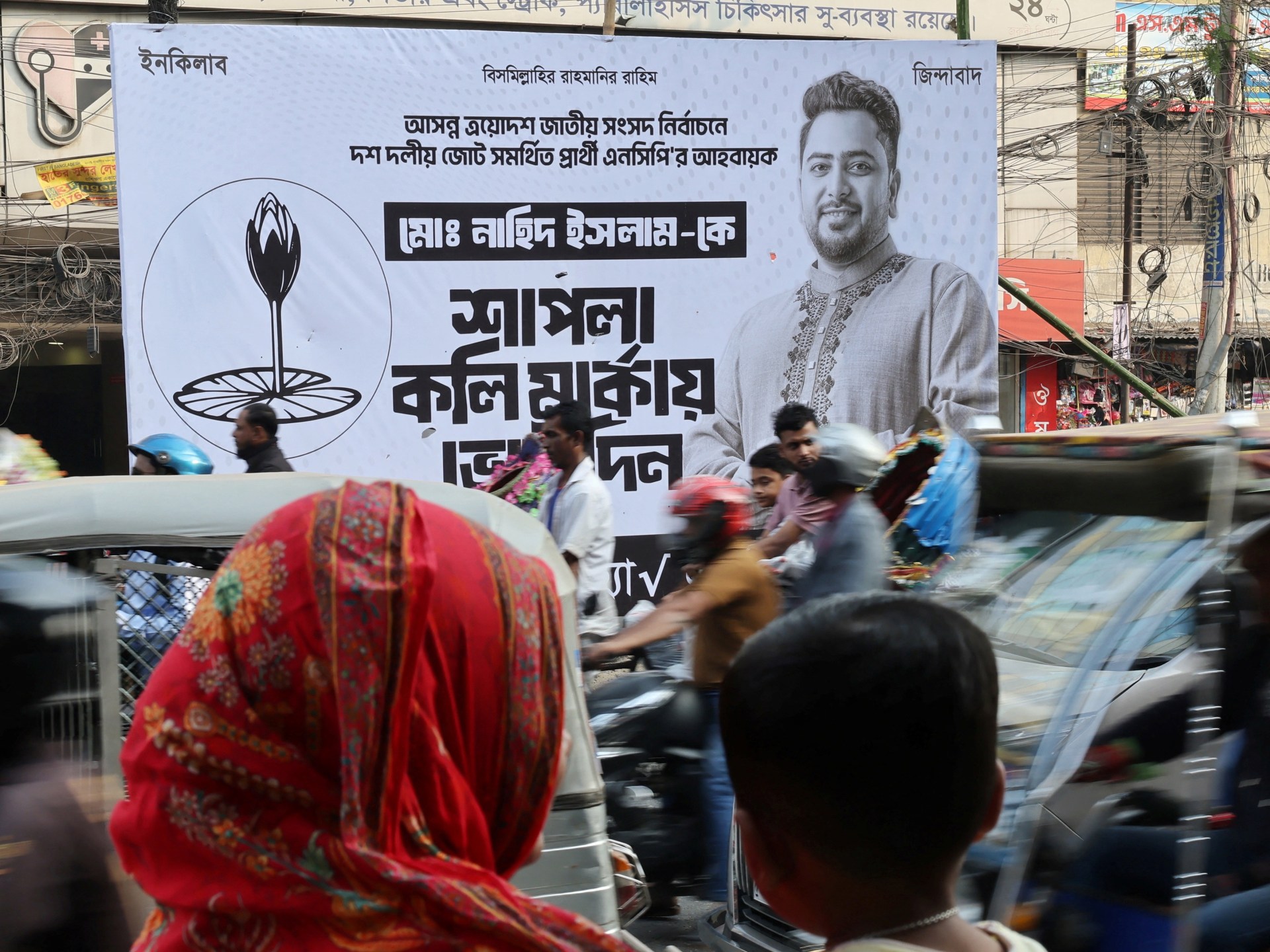
Bangladesh to Hold Elections for First Time Since Ousting of Former Prime Minister
The country is set to hold its first general election since the ousting of former prime minister Sheikh Hasina in 2024. Over 127 million eligible voters will participate in the February 12 elections, which are being referred to as the largest democratic exercise of the year.
Bangladesh has a history of holding elections every five years, with the country’s politics traditionally dominated by the Awami League and the Bangladesh Nationalist Party (BNP). However, the Awami League has been banned due to its leader, Hasina, and other party officials facing criminal trials over their role in the 2024 protests.
The election will see a total of 1,981 candidates vying for 350 seats in the Jatiya Sangsad national assembly. The BNP and Jamaat-e-Islami are the two main contenders, each leading multi-party coalitions.
Bangladesh has operated under a single-house parliamentary system since its formation in 1971, with a prime minister typically appointing a ceremonial president. The country has had 11 democratically elected governments since its independence from Pakistan in 1971, punctuated by periods of military rule.
In the past, Bangladesh held general elections in December 1970 and March 1973. In the 1970 election, Sheikh Mujibur Rahman’s Awami League won close to all 162 seats allocated to East Pakistan. The country gained independence from Pakistan in December 1971 after a violent conflict that resulted in an estimated three million deaths.
A total of 15 million Bangladeshi expatriates will be able to vote by post for the first time, with their remittances being highly significant for the economy.
Source: Al Jazeera