Cambodians face uncertainty as ceasefire with Thailand remains fragile and uncertain
May 9, 2026 • Al Jazeera
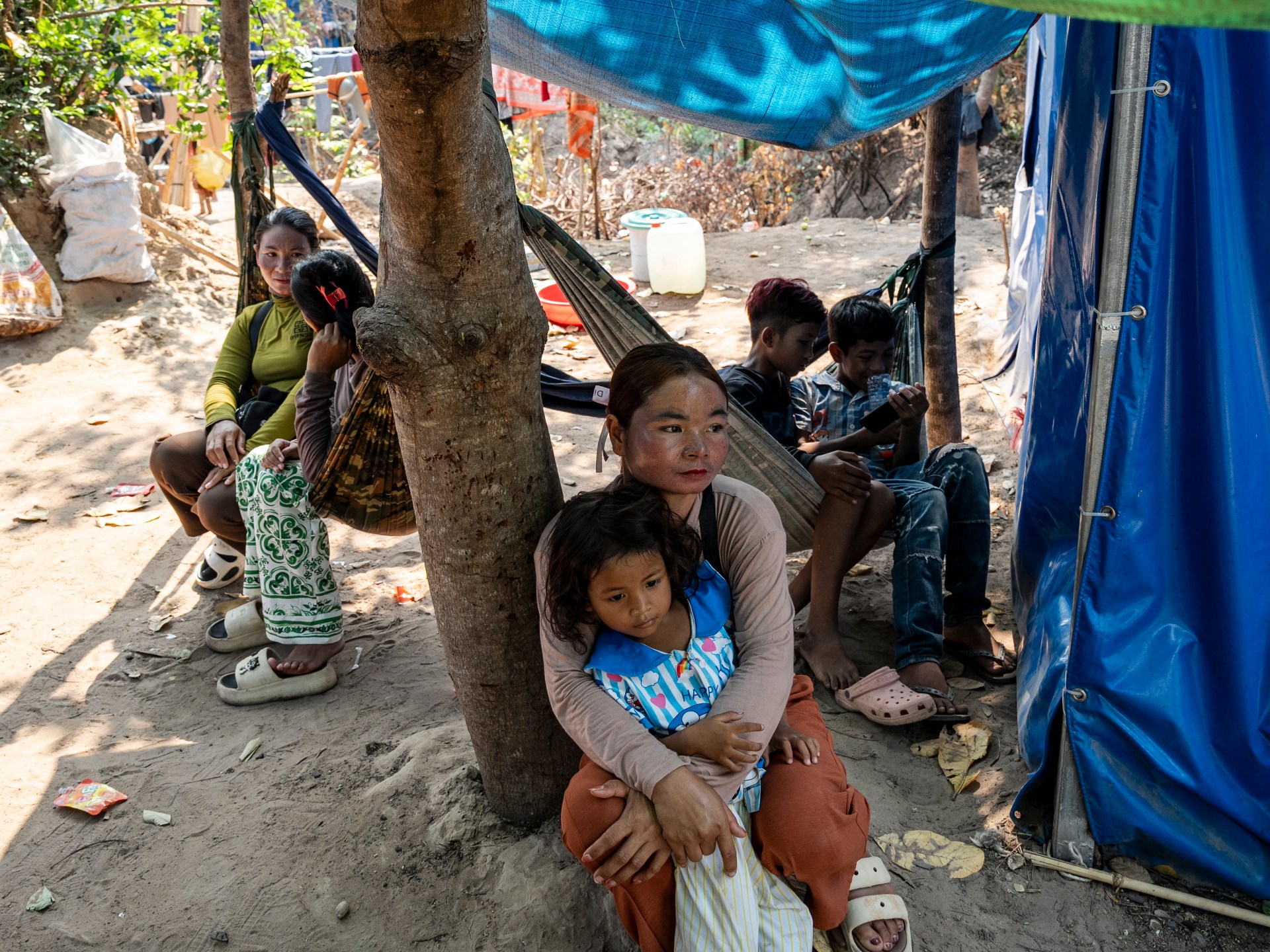
Displacement Camps in Cambodia Remain Tense After Border Conflict
As many as 34,440 people, including over 11,355 children, remain in displacement camps in Cambodia, according to the country’s Ministry of Interior. The number includes families who fled fighting between Thailand and Cambodia last year.
In northwestern Cambodia, an 11-year-old girl named Sokna lives with her family in a Buddhist pagoda grounds. Her mother, Puth Reen, reported that the girls have stopped attending school since moving to the camp. Puth Reen said that life had become precarious for her family after returning to live in Cambodia.
The Cambodian government has provided wooden stilted houses to some families, while others continue to survive on aid donations. However, tensions between the leadership in Bangkok and Phnom Penh remain, making it difficult for life to return to normal.
Some areas along the Thai-Cambodia border have become rallying points for nationalists who post about the Thai occupation of Cambodian territory. The Thai military has used shipping containers and barbed wire to block access to villages once inhabited by Cambodians.
The Cambodian military has also prevented people from returning to their homes in front-line areas, which are still highly militarized zones. A 67-year-old local farmer, Sun Reth, was not allowed to sleep in her home or pick cashew nuts for income due to the presence of troops.
A ceasefire between Thailand and Cambodia was reached on December 27, but the situation remains tense five months later. For families who fled the fighting, education is fragmented, with primary school students attending classes at a local school, while high school students need to travel daily to the provincial capital.
The rising cost of petrol has added to the challenges faced by those in displacement camps. The US-Israel war on Iran has led to increased fuel prices, affecting many families who rely on aid donations for their livelihoods.
Source: Al Jazeera