China sets economic growth target at below 5% for first time officially
March 5, 2026 • Al Jazeera
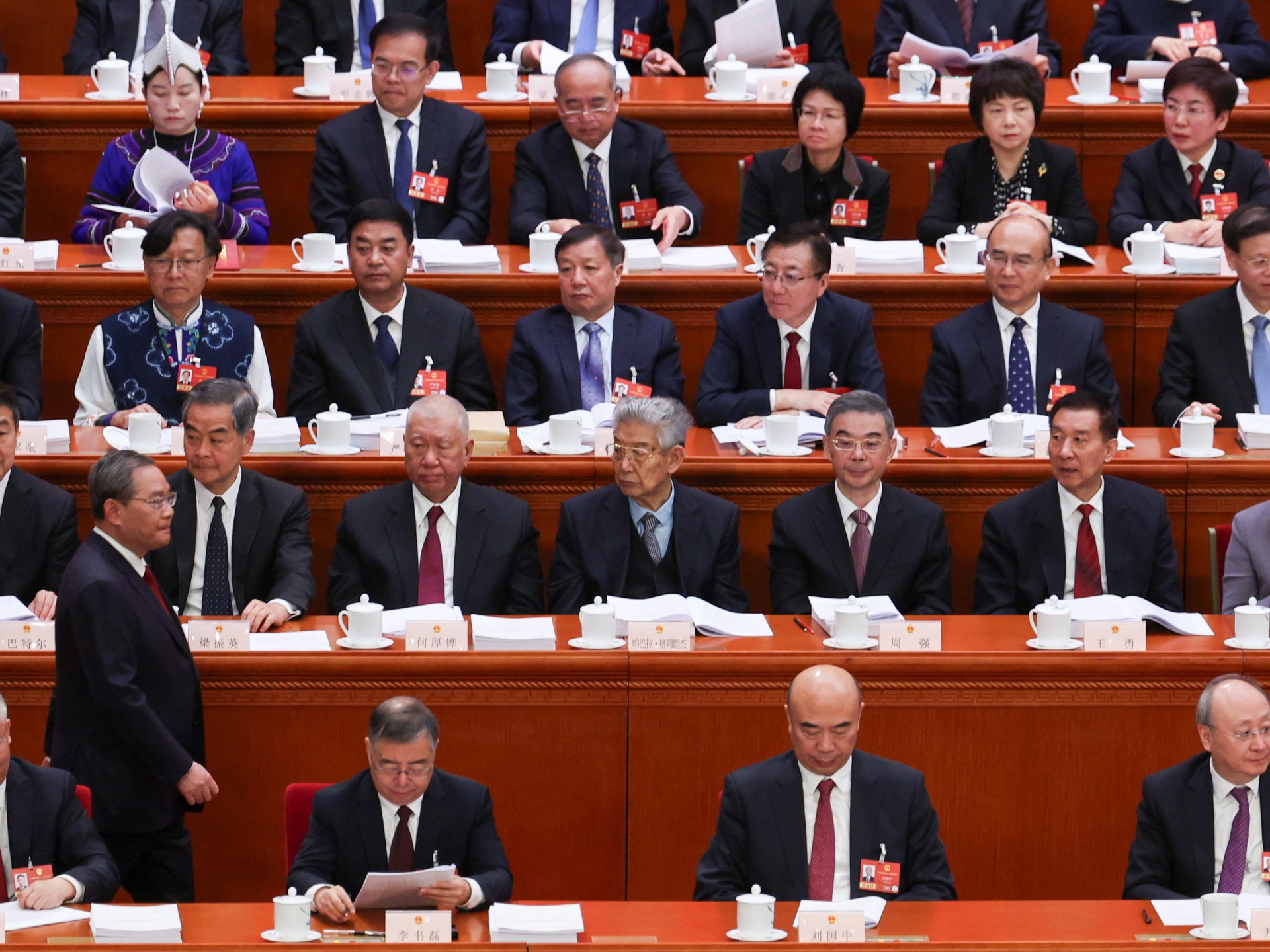
Thousands of Chinese officials have gathered in Beijing for the opening session of the National People’s Congress (NPC), where delegates are approving the country’s economic and political roadmap for the next five years.
According to a government report reviewed by Xinhua News Agency, China has set a target of 4.5 to 5 percent gross domestic product (GDP) growth for 2026. This represents a decrease from the recent target of “around 5 percent”. The lowered growth figure reflects China’s economic slowdown.
The collapse of the country’s property sector, which once accounted for between 25 and 30 percent of GDP, has triggered part of this slowdown. Tianchen Xu, a China economist at the Economist Intelligence Unit, stated that the growth target is “quite realistic” and reflects China’s trend towards more conservative expectations.
Xu noted that Beijing does not necessarily prioritize high growth rates, as they may incentivize local officials to exaggerate growth with white elephant projects and data manipulation. Instead, the focus is on delivering tangible economic results such as household income growth and expanded access to public services.
China also intends to expand defense spending by 7 percent, the lowest rate in five years. The country aims to transition from an economy driven by manufacturing and exports to one driven by consumption and cutting-edge technology.
The annual Government Work Report, presented at the NPC on Thursday, showed China’s GDP grew 5 percent to 140.19 trillion renminbi (RMB) ($20.28 trillion) last year. The report detailed other targets, including a target of about 30 trillion RMB ($4.3 trillion) in public spending for 2026.
China will continue state support for advanced industries such as integrated circuits, aviation and aerospace, biomedicine, and the low-altitude economy. Officials have also targeted the problem of “involution” or over-competition between domestic firms, which often leads to overproduction and low-quality products.
The work report touched on how China plans to tackle social and environmental issues, such as population decline, triggered by its ageing society, falling birthrate, and the long-term impact of its now-abandoned one-child policy. The country aims to become a “childbirth-friendly society” and expand services for its growing population of people over 60.
China also intends to hit peak carbon emissions by 2030 as it transitions to more renewable energy sources from coal and other fossil fuels.
Source: Al Jazeera