Colombias Total Peace Plan Faces Uncertainty Amid Petro Presidency
May 29, 2026 • Al Jazeera
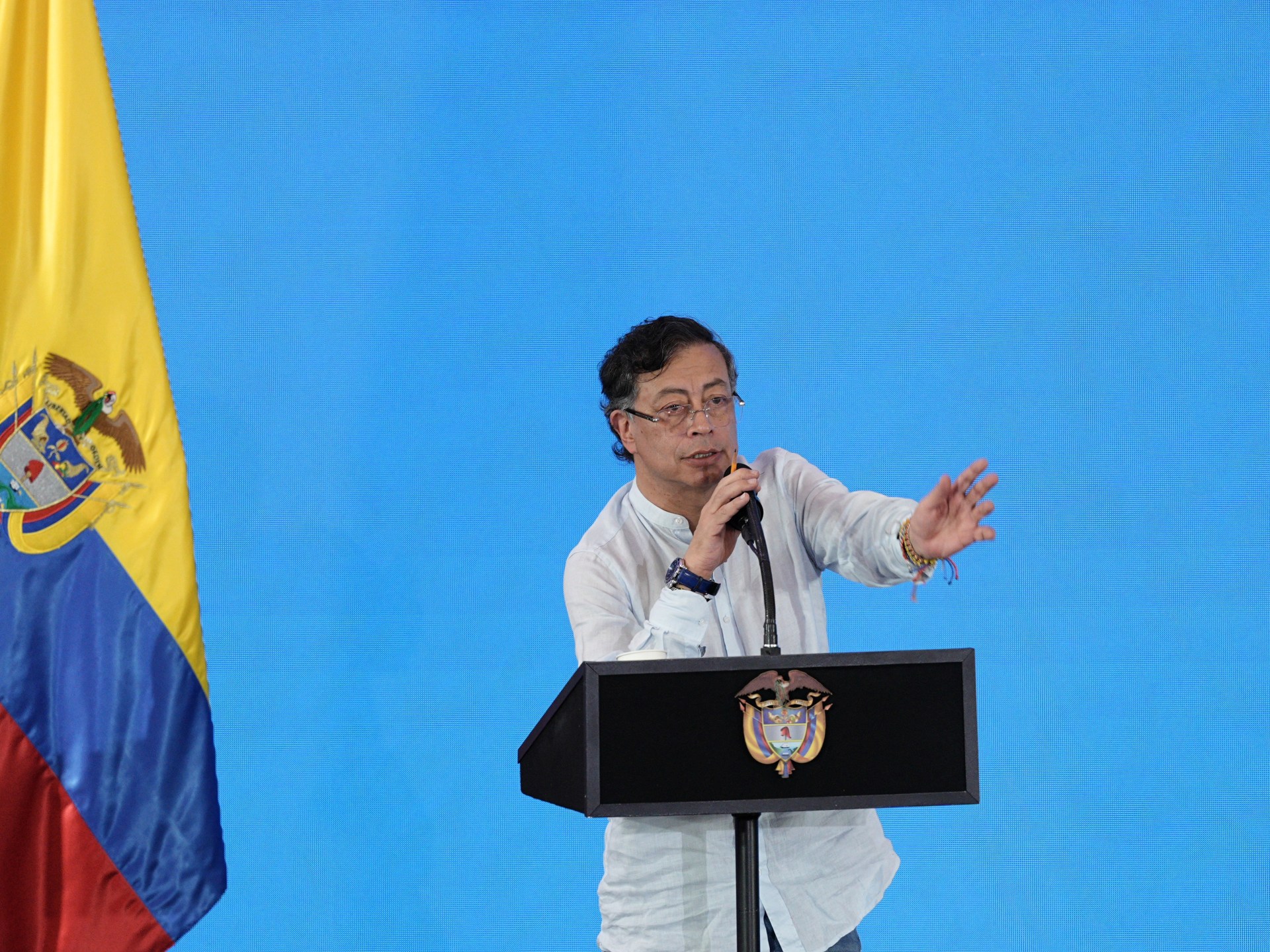
Colombia’s Presidential Candidates Debate Legacy of Gustavo Petro’s Conflict Resolution Efforts
A stillness hung over the Caguán River in Cartagena del Chairá, a town on the Colombian Amazon’s outskirts. The riverbank was lined with boats, and silence had replaced the usual rumble of engines along the dirt roads. However, despite the calm appearance, residents expressed concern about their situation.
On May 12, community members received an audio message from the Carolina Ramirez Front of the Estado Mayor Central (EMC), one of several groups involved in a long-standing conflict that has plagued Colombia since the 1960s. The restrictions effectively cut off parts of Caqueta department, and residents were warned not to move by road or river.
David Rincon, a resident who asked for anonymity, stated that defying orders was not an option due to threats from the group. “If you don’t comply, they threaten you — or worse,” he told Al Jazeera.
Colombia’s outgoing president, Gustavo Petro, has struggled to achieve lasting peace since taking office in 2022. His flagship policy, aimed at negotiating solutions with armed rebels and criminal groups, has seen the number of active fighters more than double, from approximately 13,000 in 2022 to around 27,000 by the end of 2025.
Violent incidents have also escalated, with disputes between armed groups reaching their highest level in a decade. Experts warn that Petro’s “Total Peace” plan is seen as a political liability, citing its inability to address the root causes of the conflict.
The policy has been criticized for relying on fragmented rebel groups and networks of organized violence. The government’s negotiation teams have faced challenges in addressing these issues, including the fracturing of Colombia’s armed rebel groups since 2016.
In Sunday’s presidential election, only one leading candidate has committed to continuing the “Total Peace” plan. Others have pledged to abandon it. Experts believe that the policy is no longer effective and needs to be revised to address the evolving nature of the conflict.
The Fundación Ideas para la Paz think tank notes that the policy owes results to the country but leaves armed groups stronger, with greater territorial expansion and technological sophistication. The situation remains uncertain, with residents like Rincon expressing fear and uncertainty about their future.
Source: Al Jazeera