Companies from China and Iran profit in Russian-occupied Ukrainian territories
May 21, 2026 • Al Jazeera
Here’s a rewritten version of the article in a neutral newsroom style:
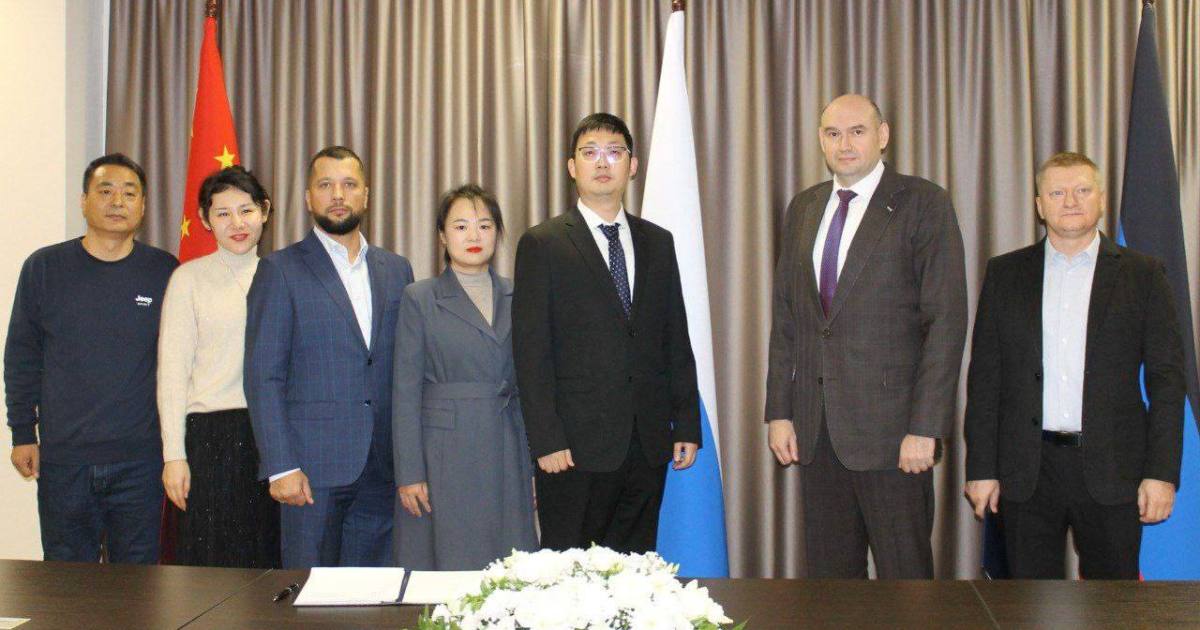
Two Chinese companies have signed a deal to supply stone-crushing machinery for construction projects in Donetsk and Luhansk, according to a Ukrainian monitor. The agreement was announced by Evgeny Solntsev, who at the time held the title of “prime minister” of the People’s Republic of Donetsk.
The contract was inked in Moscow, but it was not made with a sovereign nation. Instead, it was signed between representatives of Zhongxin Heavy Industrial Machinery and Amma Construction Machinery, two Chinese companies. The equipment supplied to the Karansky quarry in southern Donetsk region has been used for construction projects in Russia-occupied areas in Ukraine.
One of the busiest construction sites is the Azov Sea port of Mariupol, where dozens of buildings have been erected on top of mass graves of thousands of civilians killed during the city’s siege in early 2022. The crushed stone from Zhongxin Heavy Industrial Machinery has been used for these projects.
The website of Amma Construction Machinery lists a phone number in Irkutsk, Russia, and a link to the website of Bark, a company specializing in equipment exports. However, neither company has responded to Al Jazeera’s request for comment.
According to the Eastern Human Rights Group (EHRG), at least 17 Chinese companies operate in the occupied areas of Donetsk and Luhansk. Almost 6,000 Chinese-made relay stations for cellphone connections have been installed there. The EHRG reports that Chinese firms are involved in mining, construction, supply telecommunications equipment, and provide financial services.
The EHRG’s Maksym Butchenko stated that most enterprises in the occupied regions do not work, with only five coal mines remaining open out of 94 before 2014. He also noted that local businesses use Chinese electronic payment systems through Telegram channels, which offer currency exchange and transfers. The yuan is sold in 79 banks in the occupied areas.
Butchenko described this as “shadow integration,” a term used to describe China’s involvement in the occupied regions. Beijing has not commented on this development.
Source: Al Jazeera