Djiboutis strategic location makes it a hub for international military presence
April 8, 2026 • Al Jazeera
Djibouti to Host Military Bases of Multiple Nations
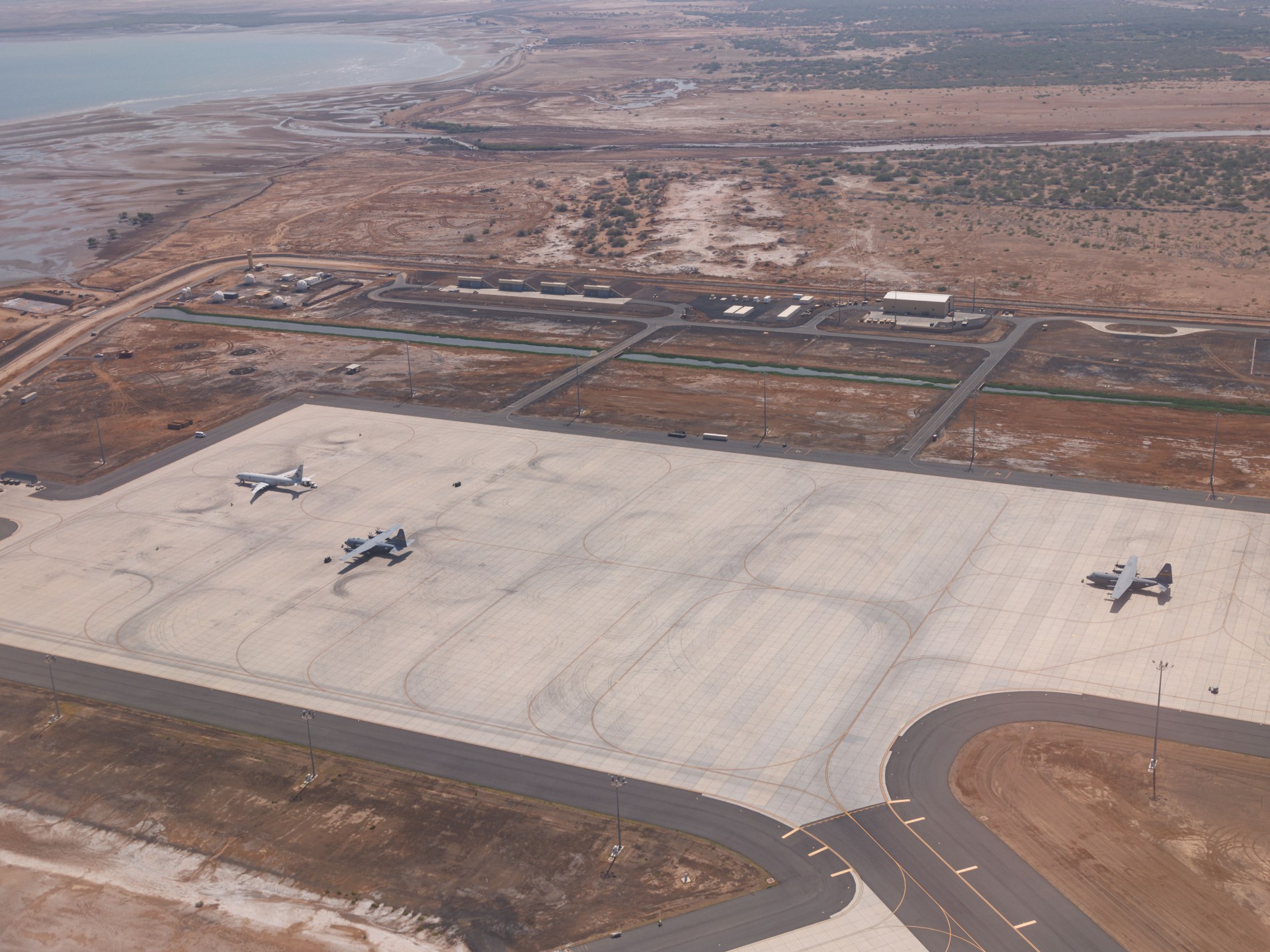
The small African nation of Djibouti has a strategic location along the coast, hosting military bases of several rival powers, including China and the United States. The country’s dense cluster of foreign military bases is unprecedented, with bases from France, Japan, Italy, and others operating within miles of each other.
President Ismail Omar Guelleh, who has ruled for at least two decades, has welcomed these countries to Djibouti, leveraging its location to advance his own interests. As the country’s citizens cast their ballots on Friday, it is expected that Guelleh will win his sixth term in office.
The region surrounding Djibouti is crucial due to its role in global maritime trade and internet connectivity. The Bab-el-Mandeb, a narrow corridor just beyond Djibouti’s shore, carries 12 percent of global maritime trade daily and 90 percent of Europe-Asia internet capacity. This area is also connected to the Suez Canal and the Indo-Pacific region.
The US and Israel have been at war with Iran since February 28, and the Strait of Hormuz is under Iranian control. Djibouti’s position at the entrance to the Red Sea has become a focal point. The country’s history dates back to the September 11, 2001, attacks, when the US sought forward bases in East Africa, with Camp Lemonnier becoming the headquarters of US Africa Command’s Horn of Africa task force.
Multiple countries have established military bases in Djibouti, including France and Japan, which were initially drawn by piracy concerns. China has also established a base, as part of a package deal that includes a new railway linking landlocked Ethiopia to the coast through Djibouti. The country’s economy is heavily reliant on servicing Ethiopian trade, with 85 percent of its GDP derived from this source.
The cost of hosting these military bases varies, with the US paying $65m annually, France $30m, and China $20m. A Djiboutian official stated that the country’s geography is its main national resource, similar to oil for Gulf states. The base-for-cash model has become a key aspect of Djibouti’s development strategy, with significant infrastructure investment from Chinese firms.
Source: Al Jazeera