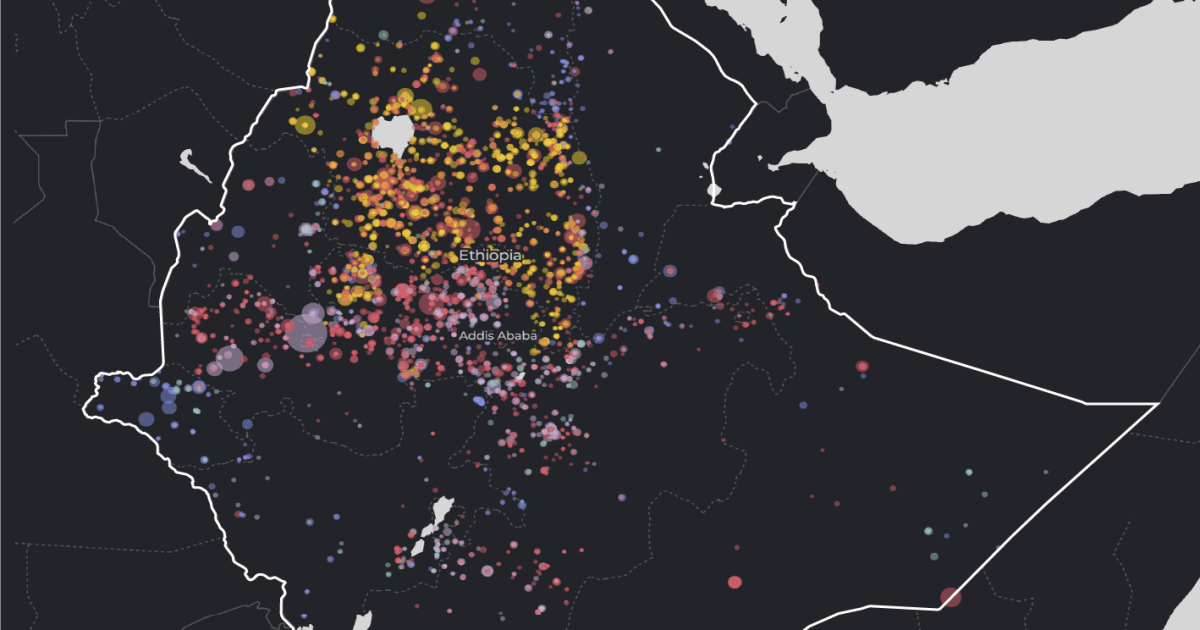
Ethiopias Ethnic Groups and Conflict Areas: A Visual Guide Released
May 29, 2026 • Al Jazeera
Ethiopia to Hold Nationwide Elections on June 1
The Ethiopian government will conduct its first nationwide elections since the formal end of the Tigray war on June 1. The polls are scheduled to take place every five years, with all 547 parliamentary seats up for grabs.
A total of 50.5 million registered voters have signed up to participate in the vote. Prime Minister Abiy Ahmed’s Prosperity Party holds 457 out of the country’s 547 seats, having been in power since 2018.
Ethiopia is a landlocked country in the Horn of Africa, bordered by Eritrea, Sudan, South Sudan, Kenya, Somalia, and Djibouti. The country has a population of approximately 135 million people, making it Africa’s second-most populous nation and the 10th most populous globally.
The National Election Board of Ethiopia (NEBE) is expected to announce the official results on June 11. The country has sustained notable economic growth over the past two decades, with the IMF projecting a 9.2 percent expansion in 2026.
However, persistent challenges remain, including high inflation and foreign exchange shortages. The country has five official languages: Afar, Amharic, Oromo, Somali, and Tigrinya. Roughly two-thirds of the population are Christian, while one-third identify as Muslim.
Ethiopia is home to over 80 distinct ethnic groups, with the Oromo making up approximately 35 percent of the population. The country’s political structure is divided into 12 regional states and two chartered cities, each largely organized around a dominant ethnic group.
The country has experienced near-continuous conflict since 2020, with fighting taking place in Tigray, Oromia, and Amhara regions. The war ended with the Pretoria peace agreement in November 2022, but clashes have erupted again in Tigray in January 2026.
Source: Al Jazeera