European Union and Mercosur bloc agree on landmark free trade agreement
January 17, 2026 • Al Jazeera
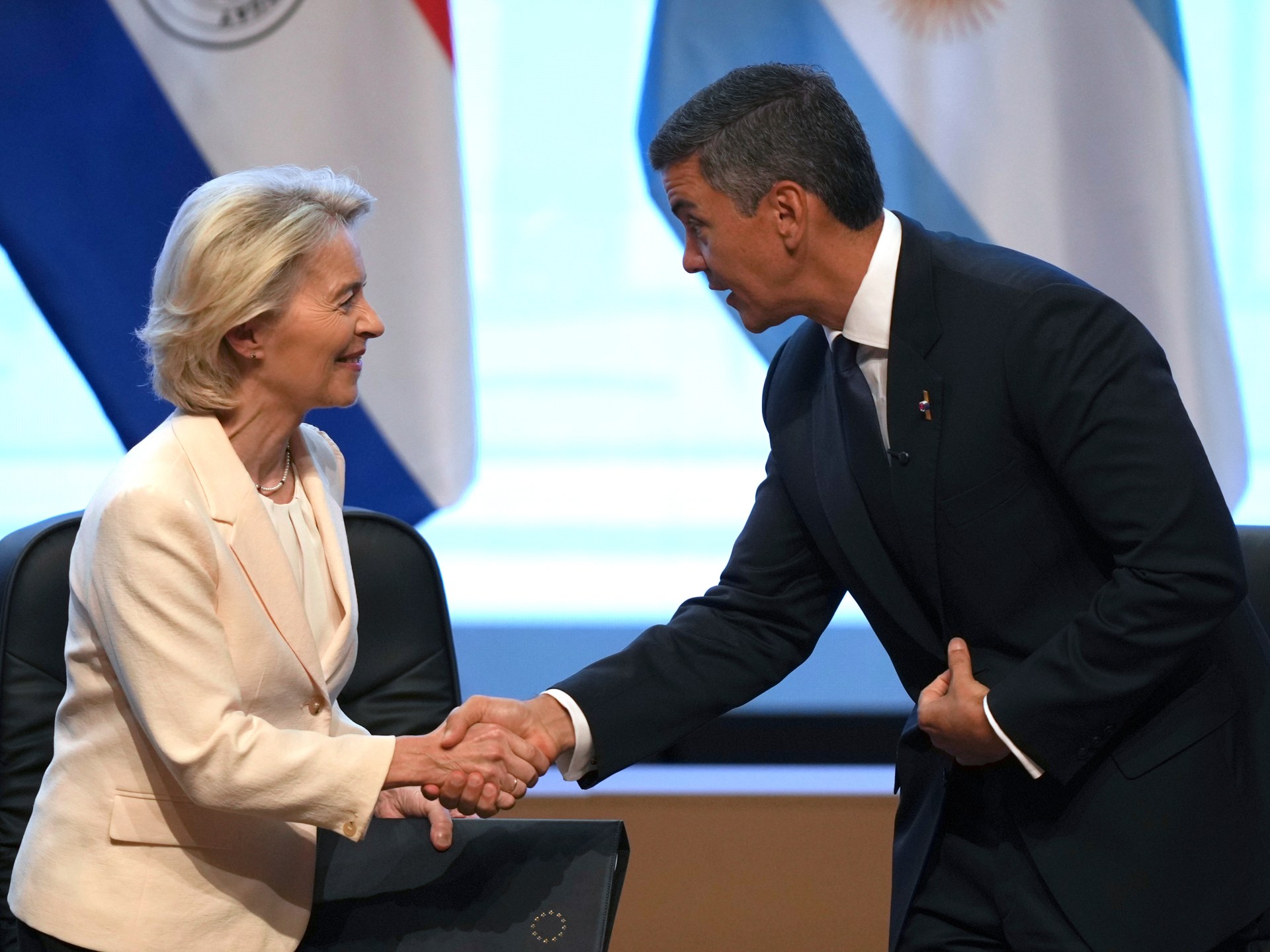
European Union and South American Leaders Sign Major Free Trade Agreement
A major free trade agreement between the European Union and the Mercosur bloc has been finalized, paving the way for the largest-ever trade accord by the EU. The deal, which took 25 years to negotiate, aims to lower tariffs and boost trade between the two regions.
The agreement must now be approved by the European Parliament and ratified by the legislatures of Argentina, Brazil, Paraguay, and Uruguay. The signing ceremony was held in Asuncion, Paraguay’s capital, where EU chief Ursula Von der Leyen stated that the pact sends a “clear signal” in favor of international trade.
Paraguayan President Santiago Pena also praised the treaty, describing it as a “bulwark against unpredictability and protectionism.” Brazilian Foreign Minister Mauro Vieira echoed this sentiment, saying the deal is a “gesture to support multilateralism.”
The agreement has received mixed reactions from various groups, including farmers and environmental organizations, who have raised concerns over the potential impact of cheaper South American imports. However, leaders in Paraguay argue that the pact will bring jobs, prosperity, and opportunities for people on both sides of the Atlantic.
The deal eliminates tariffs on more than 90% of bilateral trade between the EU and Mercosur countries, which account for 30% of global GDP and over 700 million consumers. The treaty is expected to come into force by the end of 2026, with European exports of cars, wine, and cheese benefiting from reduced tariffs, while South American beef, poultry, sugar, rice, honey, and soya beans will face easier entry into Europe.
The signing of the agreement comes as tensions between global powers continue to rise. Just before the ceremony, US President Donald Trump announced new tariffs against several European countries, further fueling concerns about protectionism and isolationism.
Source: Al Jazeera