Gulf States Weigh Entering Conflict After Iranian Missile Strikes
March 2, 2026 • Al Jazeera
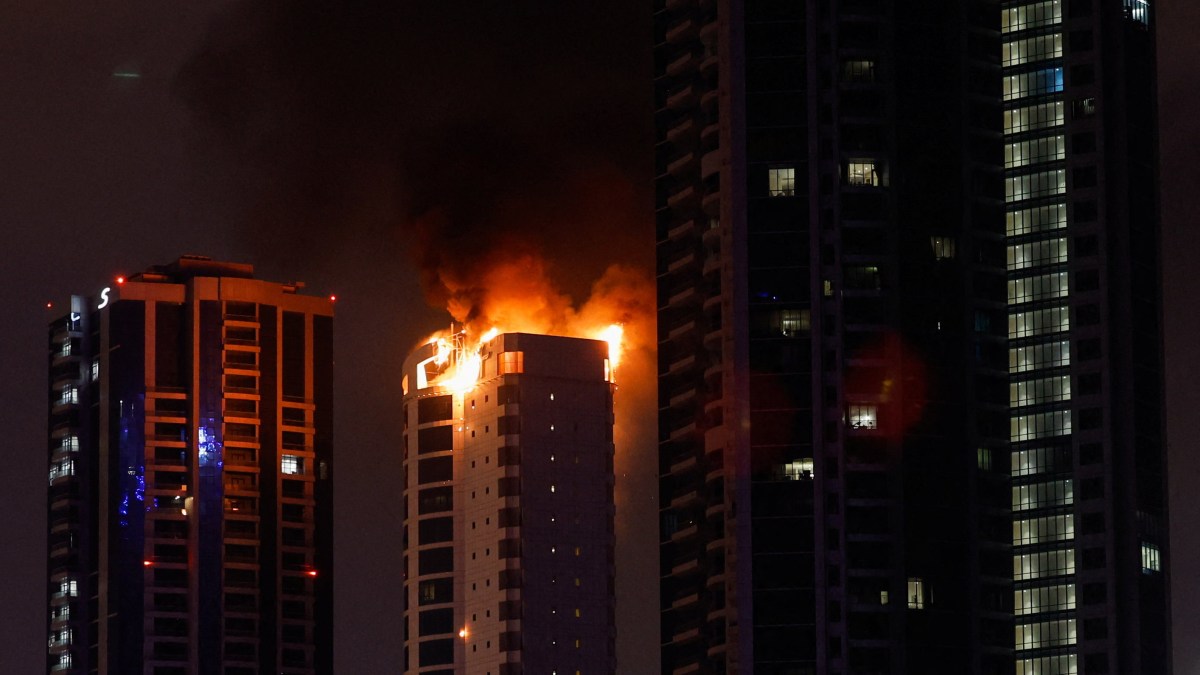
Here is a rewritten version of the article in a neutral newsroom style:
Gulf States Face Dilemma After Iranian Missile Strikes
Doha, Qatar - A series of missile strikes by Iran on Saturday hit cities in the Gulf region, including Doha, Dubai, and Manama. The attacks have left the region’s leaders with an impossible choice: respond to the strikes or risk being perceived as aligning themselves with Israel.
The strikes, which were reportedly retaliation for a joint US-Israeli operation that targeted Iranian military sites, resulted in significant damage and loss of life. At least 148 people were killed in one strike alone, while multiple cities across the region suffered damage from missiles and debris.
Analysts say the Gulf states’ carefully cultivated image as stable and neutral is now under threat. “For people and political leaders here, seeing their cities bombed is as strange and unimaginable as seeing other major cities being attacked,” said Monica Marks, a professor of Middle East politics at New York University Abu Dhabi.
The region’s leaders have been trying to prevent military action for weeks, with Oman mediating indirect talks between the US and Iran. However, the US and Israel launched missiles despite these efforts.
Gulf Cooperation Council (GCC) states are now facing a difficult decision: respond to the strikes or remain passive. Analysts say this choice is not only challenging but also carries significant risks. “The GCC states did not want this war,” said Rob Geist Pinfold, a lecturer at King’s College London. “They tried to lobby against it.”
Pinfold notes that remaining passive could be just as damaging to the region’s standing as entering the war. “At the end of the day, these governments are responsive to popular opinion,” he said. “They want to be seen as protecting their people and territory.”
Both analysts suggest that the Gulf states may ultimately choose to act, but on their own terms. Pinfold argues that they are more likely to launch strikes themselves, possibly through a joint GCC effort like the Peninsula Shield Force (PSF), rather than simply opening their airspace for US and Israeli operations.
This approach would allow the Gulf states to maintain control over their actions and avoid being perceived as aligning themselves with Israel. “They don’t want to be seen as working for Israel or working with Israel,” Pinfold said. “They want to be seen as leading, not just following.”
Source: Al Jazeera