Hezbollah deploys fibre optic drones to test Israeli radar capabilities
April 29, 2026 • Al Jazeera
Here’s a rewritten version of the article in a neutral newsroom style:
Reports from Israel indicate that Hezbollah has introduced a new type of unmanned aerial vehicle (UAV) to its arsenal. The drones, which are guided by a physical fibre optic cable, have been used in recent attacks on Israeli forces.
According to reports, the drones are immune to electronic jamming and invisible to radar, allowing them to penetrate Israel’s multibillion-dollar defence systems. The cables can extend up to 30km, enabling the drones to reach distant targets without relying on radio frequencies or satellite signals.
Hezbollah’s use of these modified aircraft has rendered traditional early-warning systems blind, as they emit minimal thermal and radar signatures. The drones have also managed to bypass Israel’s “Trophy” active protection system installed on Merkava tanks.
The Lebanese group has reportedly used high-resolution optical cameras to transmit uncompressed video through the cable, allowing operators to manually steer the drones into specific vulnerabilities. This technology was demonstrated during a recent attack in Taybeh, where an explosive-laden fibre optic drone slammed into an Israeli armoured unit, killing one soldier and wounding six others.
Israeli military officials have acknowledged that they entered the war in Lebanon without sufficient tools to counter this threat. In response, some combat units have begun developing improvised defences, such as hanging physical nets over military positions.
The technology used by Hezbollah is similar to that employed by Ukrainian forces during the Russia-Ukraine conflict. However, it also has its limitations, including vulnerability to poor weather conditions and a thin fibre optic cable.
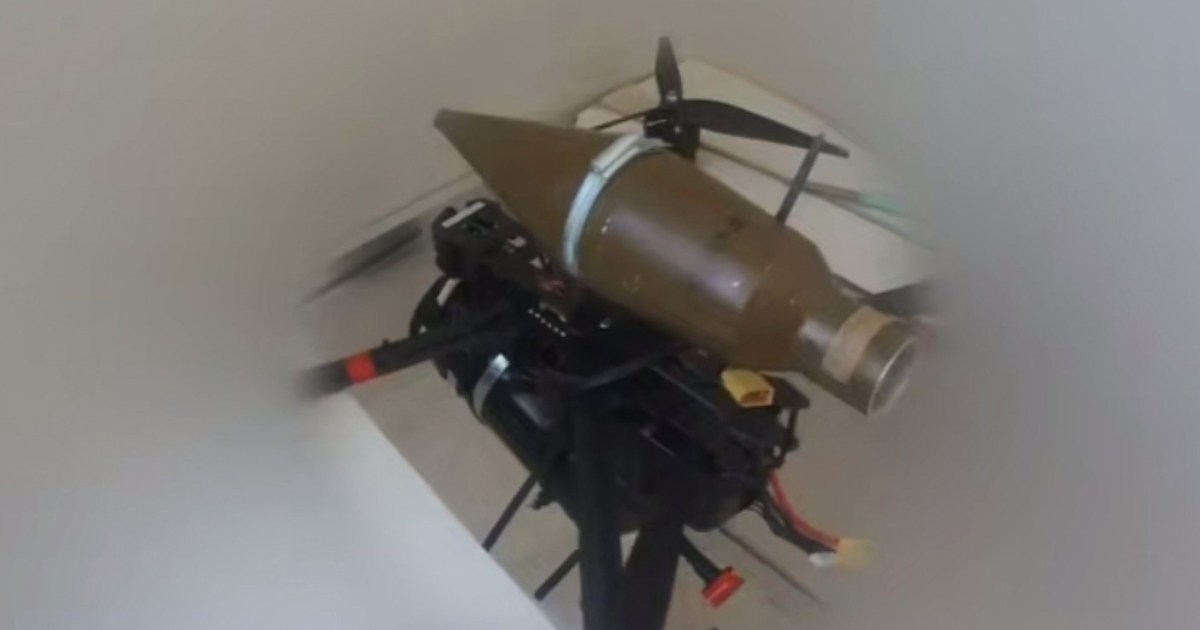
Hezbollah’s drones are assembled and modified in workshops across southern Lebanon, and are fitted with anti-armour shaped charges. The use of this technology is seen as a cheap and precise alternative to conventional antitank missiles.
Source: Al Jazeera