Hungarian Prime Minister Viktor Orban loses election, but ideology remains dominant
April 13, 2026 • Al Jazeera
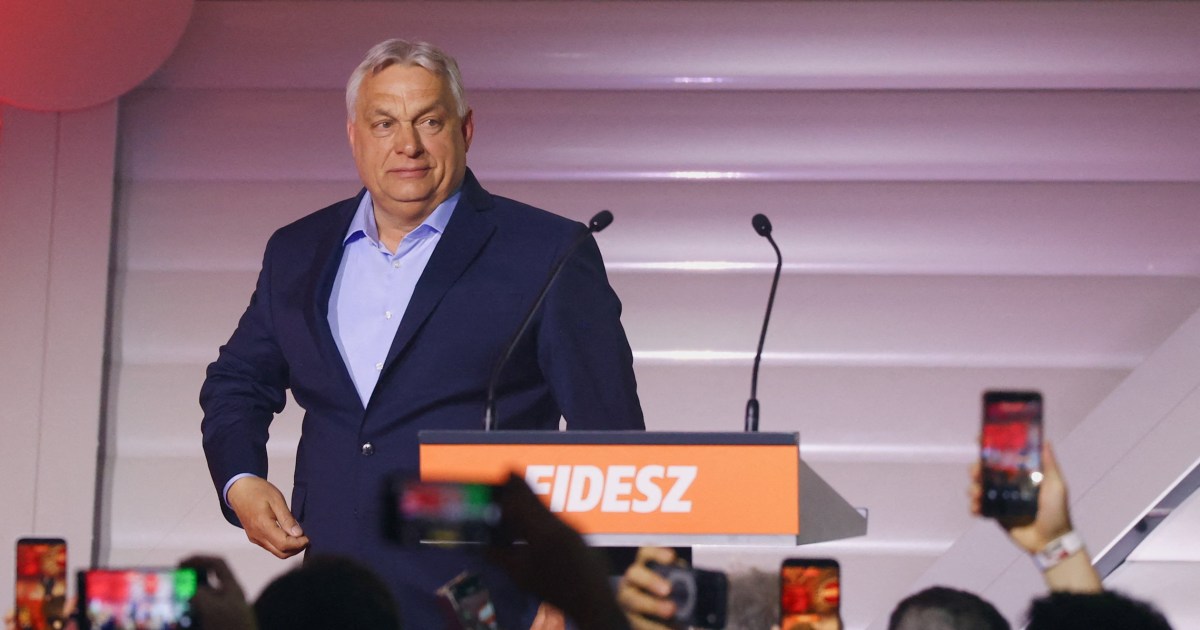
Hungarian Prime Minister Viktor Orban suffered a major defeat in the legislative election on Sunday, ending his 16-year tenure in power. Orban conceded defeat in a tearful speech to his supporters. The outcome marks a significant shift in Hungarian politics and has implications for the European Union.
Orban’s political career may be over, but his ideology remains influential. The EU is facing its worst geopolitical crisis in history, with leaders struggling to address pressing issues. The EU Commission President, Ursula von der Leyen, welcomed Hungary’s decision to support pro-Brussels parties, citing a return to the country’s European path.
However, some argue that this development does not accurately reflect Hungary’s historical ties to Europe. The country has been an integral part of European politics for centuries and has played a significant role in shaping the continent’s history. Orban’s government successfully negotiated Hungary’s accession to the EU and NATO during his first term.
The winner of Sunday’s elections, Peter Magyar, is Orban’s former ally who shares similar political views on immigration and geopolitics. Magyar expressed skepticism about Ukraine’s involvement in Hungarian politics, stating that nobody wants a pro-Ukrainian government in Hungary. He also indicated a willingness to engage with Russian President Vladimir Putin over energy issues.
Other EU leaders have also voiced concerns about Ukraine’s involvement in European politics. Belgian Prime Minister Bart De Wever has been a vocal critic of the EU’s plans to tap into Russia’s assets, and Slovakia’s Prime Minister Robert Fico has aligned himself with similar views. These developments suggest that there are other like-minded political forces within the EU, particularly in its eastern regions.
The outcome of Sunday’s elections will likely have significant implications for the EU’s relations with Hungary and other member states. The EU Commission is expected to provide a 90-billion-euro loan to Ukraine, which may be affected by Hungary’s decision.
Source: Al Jazeera