Indias Fast Breeder Reactor Success Marks Significant Nuclear Leap Forward
April 7, 2026 • Al Jazeera
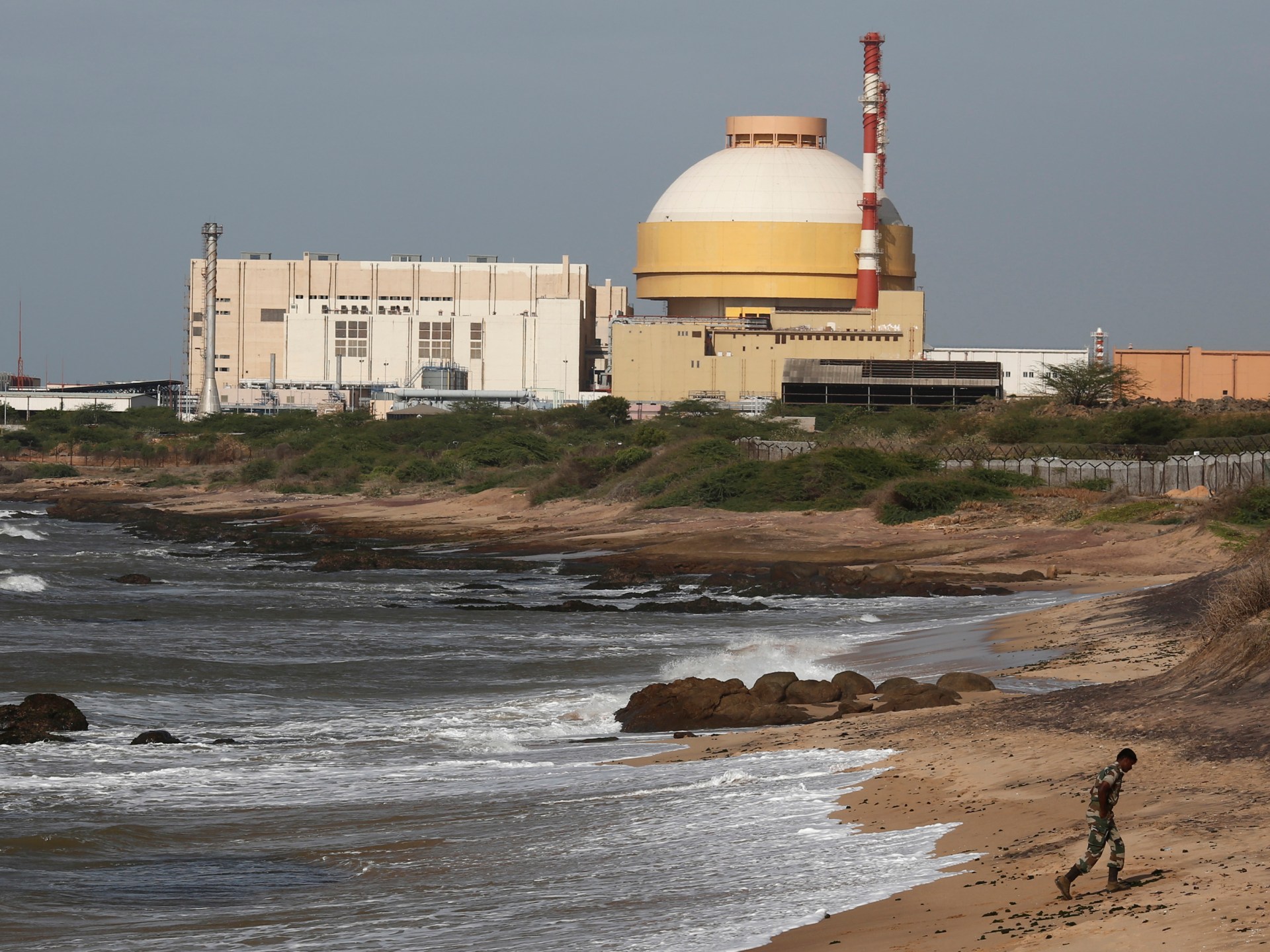
India’s Advanced Reactor Achieves Self-Sustaining Stage
A prototype fast breeder reactor (PBFR) at Kalpakkam in Tamil Nadu has reached criticality, marking a significant milestone for India’s atomic energy programme. The reactor, designed and developed by the Indira Gandhi Centre for Atomic Research, has a 500 megawatt electrical capacity.
The Indian government has announced plans to use this technology to reduce dependence on uranium and instead utilize thorium, a more abundant resource. Once fully operational, India will become only the second country after Russia to have a commercial fast breeder reactor.
The reactor’s design allows it to produce more fissile material than it consumes, making it an advanced nuclear reactor capable of producing fuel for fission nuclear reactions. The Kalpakkam reactor will initially use uranium-plutonium mixed oxide (MOX) fuel and undergo nuclear transmutation to produce more fuel.
According to a report by the Indian Prime Minister’s office, the reactor offers several advantages, including significant reduction in nuclear waste generated and the ability to increase nuclear fuel reserves. The technology can also be adapted for thorium systems, which are believed to have a greater abundance than uranium.
The fast breeder reactor is an advanced nuclear reactor that uses both plutonium and uranium as fuel. It has a 500 megawatt electrical capacity and will need less uranium to generate electricity compared to traditional pressurised heavy water reactors. The Indian government plans to deploy this technology to extract more energy from its limited uranium reserves and pave the way for large-scale deployment of thorium-based reactors.
The reactor’s achievement marks a major leap forward for India’s nuclear programme, with Prime Minister Narendra Modi describing it as “a proud moment” and “a defining step” in advancing the country’s atomic energy capabilities.
Source: Al Jazeera