Iran considers expanding land routes to alleviate container backlog
April 24, 2026 • Al Jazeera
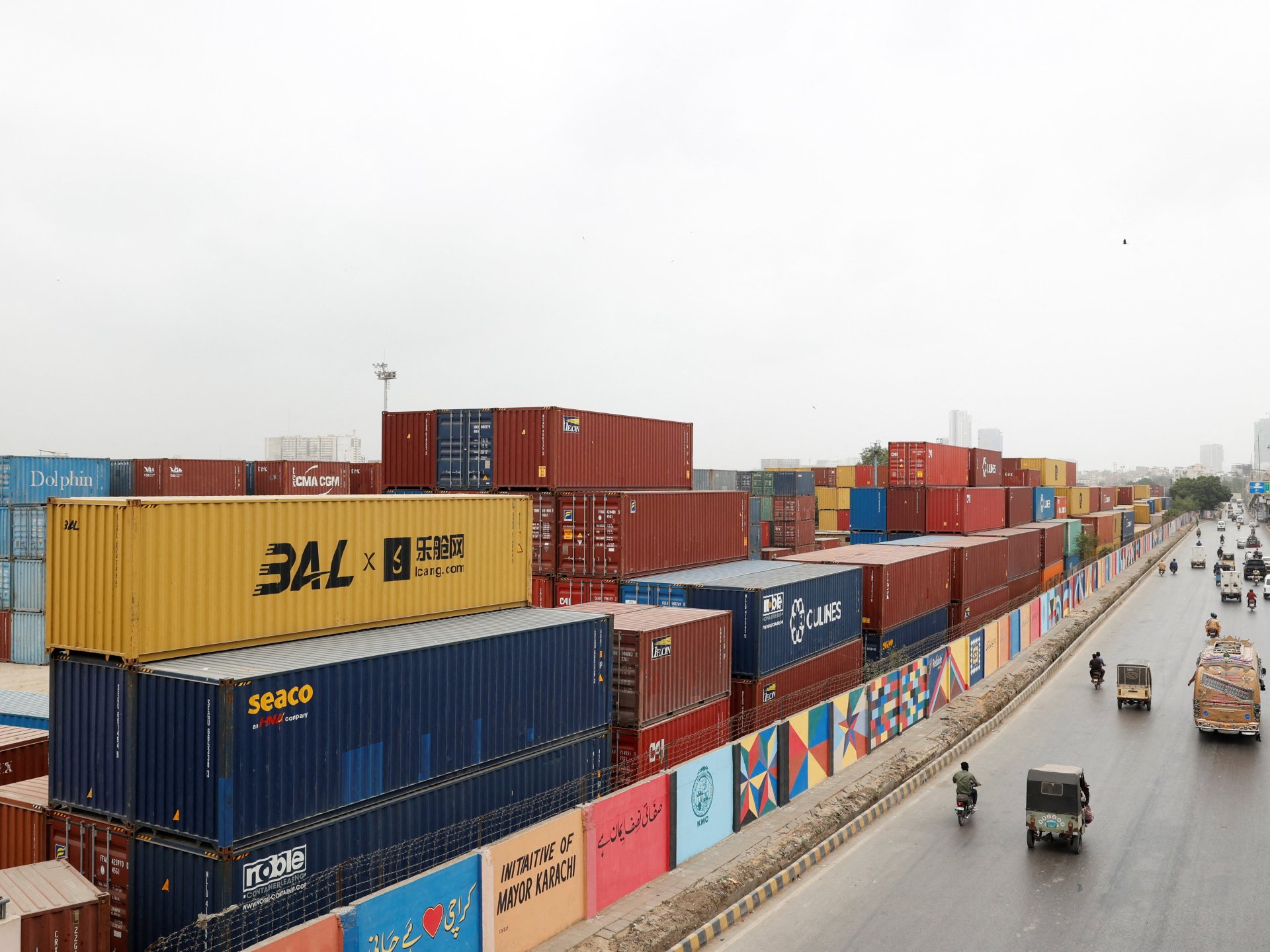
Karachi Port Sees 3,000 Stranded Containers Amid US Blockade
A significant number of containers are currently stranded at Karachi port in Pakistan, awaiting collection by vessels intended to transport them to Iran. The cargo’s contents remain unknown. Three thousand containers have been held up since the US naval blockade was imposed on April 13, which has restricted ships from transiting the Strait of Hormuz.
The blockade, implemented under President Donald Trump, aims to control trade rather than completely halt it. According to Trump, “Iran is collapsing financially” and wants the Strait of Hormuz opened immediately. Iran had previously introduced an access system to control ship transit in the strait, but this was replaced by the US naval blockade.
The blockade has significant economic implications for Iran, as it restricts its ability to import essential goods. Analyst Javed Hassan notes that Iran’s storage reservoirs would fill quickly, potentially forcing production shut-ins and sharply contracting export revenues. However, Hassan also suggests that Iran has built “resilient architecture” during periods of US-led sanctions.
Iran has millions of barrels of oil already at sea, which could sustain export revenues for a couple of months. Additionally, overland and inland sea corridors are being explored as alternatives to the blocked Strait of Hormuz. Documents shared between Pakistani industry leaders and government officials reveal discussions about a possible land route for Iranian goods. If successful, Pakistani trucks would carry the cargo to the border, with Iranian transport taking over.
The status of the Strait of Hormuz remains unclear, with Iran allowing passage to ships from countries seen as aligned with it since imposing restrictions on transit in early March.
Source: Al Jazeera