Iran says it doesnt need to block Strait of Hormuz to affect region
March 20, 2026 • Al Jazeera
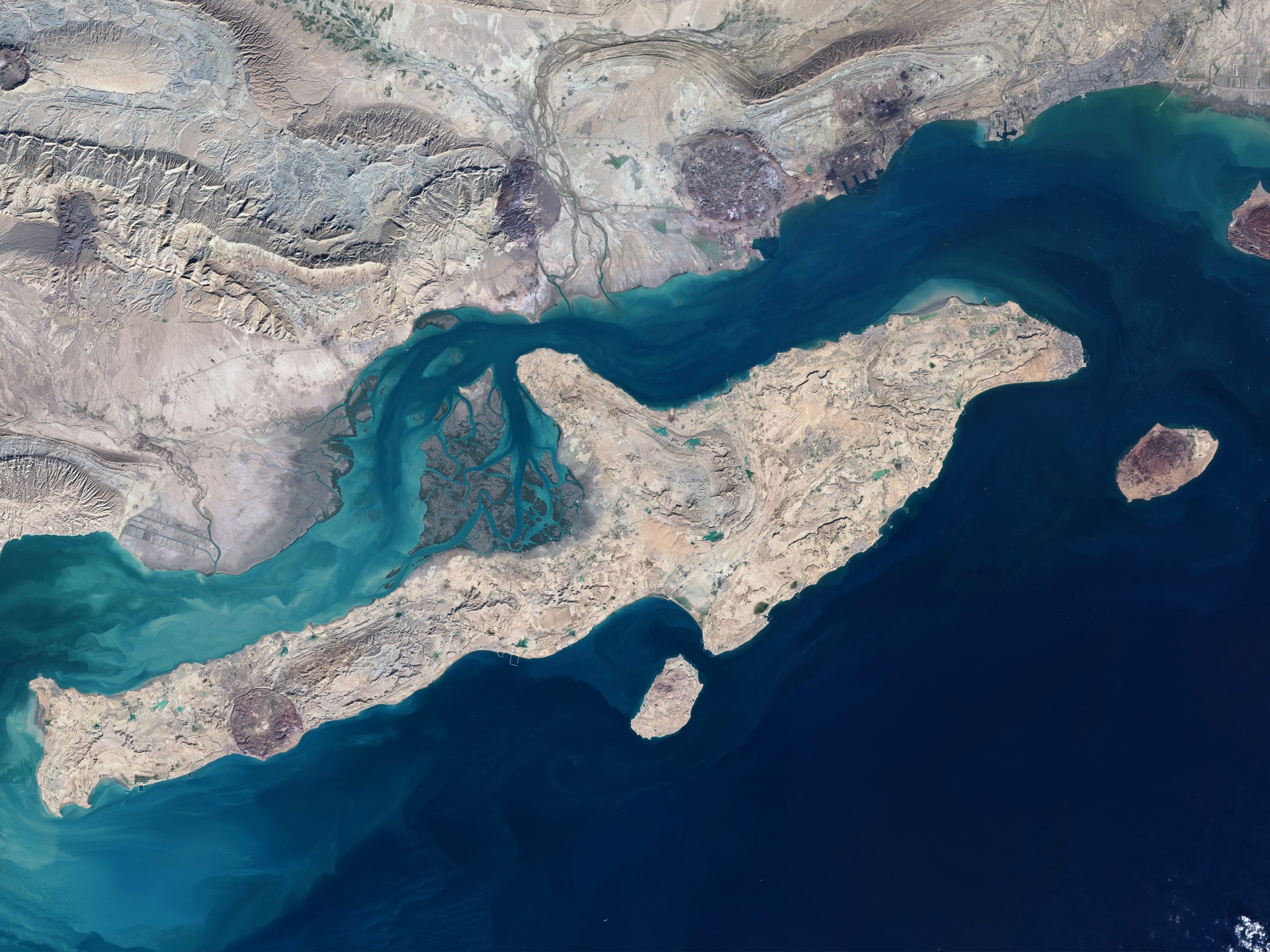
Iran’s Military Strategy in the Strait of Hormuz: A Shift from Blockade to Interdiction
The focus on blocking the waterway through the Strait of Hormuz has shifted as Iran’s military strategy now targets the approaches to the strait. According to experts, this approach allows for a more efficient and technically sophisticated interdiction strategy.
Iran’s most effective military option is not to mine the Strait of Hormuz itself, but rather to seed mines in the entrance zones where commercial traffic converges before entering the transit system. This creates disruption over a wider maritime area while maintaining surveillance and command-and-control coverage.
The Strait of Hormuz is part of a complex maritime traffic separation scheme, with inbound and outbound channels separated by buffer zones. Large crude carriers follow predictable routes, speeds, and timings due to navigational rules and safety requirements. However, the key battlespace lies in the wider approach geometry leading into the strait.
Iran gains its greatest advantage by seeding mines in the entrance zones rather than directly under the keel line of every tanker. This creates uncertainty among mariners, insurers, and naval escorts, assuming contamination without overtly mining the strait itself.
The use of floating devices deployed in the entrance zones can drift naturally towards commercial traffic patterns due to surface circulation flows from the Gulf of Oman into the Gulf. A limited number of mines placed in the right location can create a disproportionate effect over a much wider maritime area.
Iran’s northern littoral provides overlapping observation angles across tanker lanes and their approaches, with a layered maritime picture that includes coastal radar, UAV reconnaissance, patrol craft reporting, electronic emissions tracking, and civilian maritime observation. The architecture is redundant by design, making it difficult to collapse even where parts of the network have been degraded.
The addition of space-based ISR, including Iran’s Khayyam electro-optical satellite, provides high-resolution imagery that can be tasked over the Gulf and its approaches. This enhances Iran’s ability to monitor and disrupt maritime traffic in the region.
Source: Al Jazeera