Iranian Regime Survives After High-Ranking Leaders Assassination
March 17, 2026 • Al Jazeera
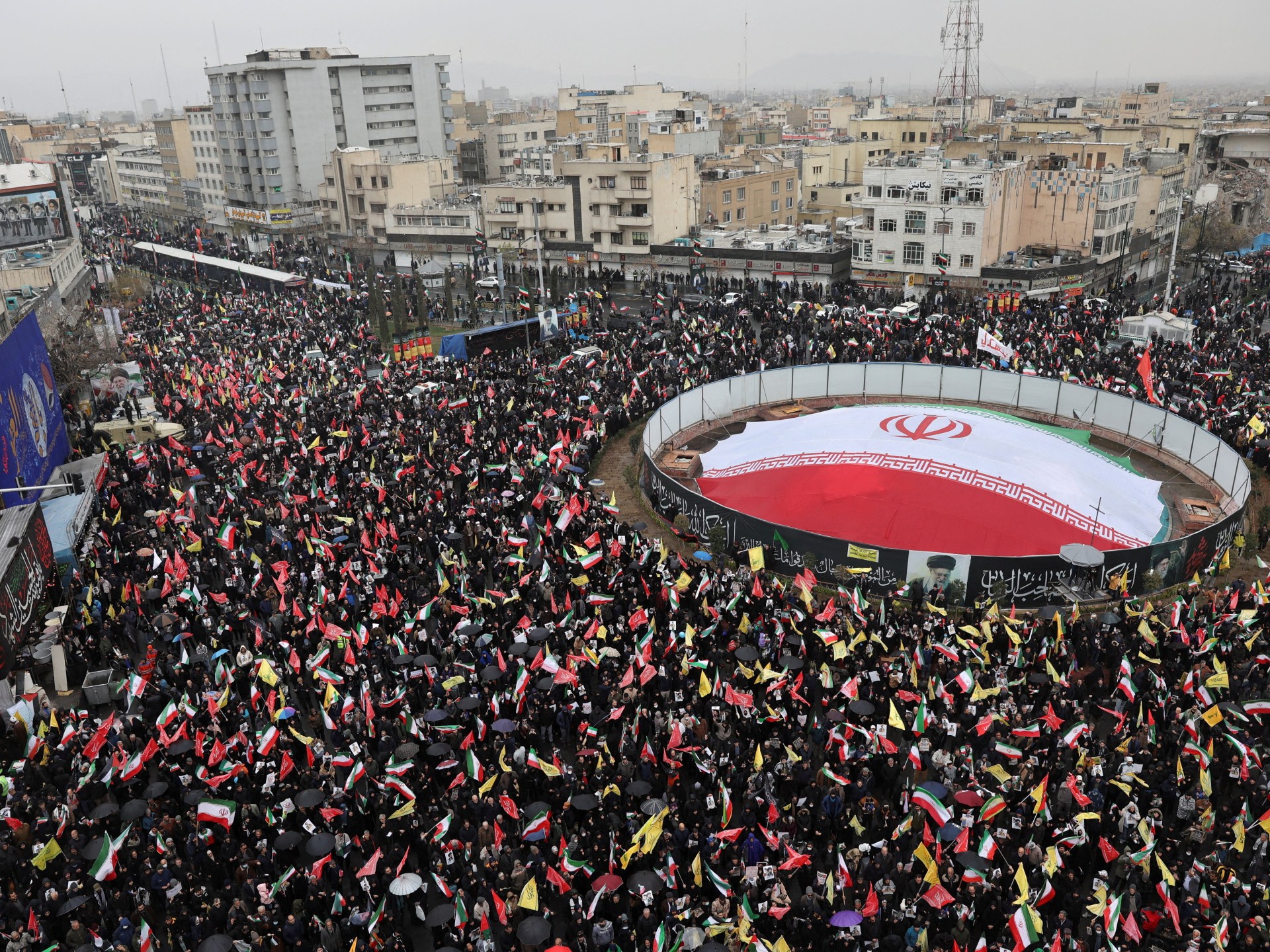
Iran’s Government Seeks Stability Amid Leadership Vacuum
A power vacuum following the death of Iran’s Supreme Leader Ali Khamenei has raised concerns about the stability of the country’s government. However, experts say that the regime’s design allows it to absorb significant blows.
The Iranian system is not as fragile as some may believe. In fact, its institutions were built with a power vacuum in mind. The constitution outlines a temporary council that assumes leadership powers when the position becomes vacant, pending the Assembly of Experts’ selection of a new leader.
A three-man council has been established to oversee the country’s affairs until a new supreme leader is chosen. This council includes President Masoud Pezeshkian, Judiciary Head Gholam-Hossein Mohseni-Eje’i, and Guardian Council member Alireza Arafi.
The Assembly of Experts, comprising 88 members, will determine the next supreme leader. The Iranian constitution provides a “survival protocol” to ensure the system’s continuity in times of crisis.
However, experts caution that the regime’s strength lies not just in its constitutional framework but also in its power structure. Three key layers contribute to the system’s resilience: religious legitimacy, security-military sector, and political bureaucracy.
The Islamic Revolutionary Guard Corps (IRGC) is a critical component of the regime’s stability. As the backbone of the system, it possesses significant influence over internal security, regional decision-making, and economic networks.
Reports indicate that the IRGC’s cohesion is now the primary concern. With senior commanders killed in the war, the organization has tightened its grip on decision-making. The fate of the IRGC will determine the stability of the Iranian government.
Source: Al Jazeera