Modis Big Win in Indian State Elections Raises Concerns About Democracy
May 5, 2026 • Al Jazeera
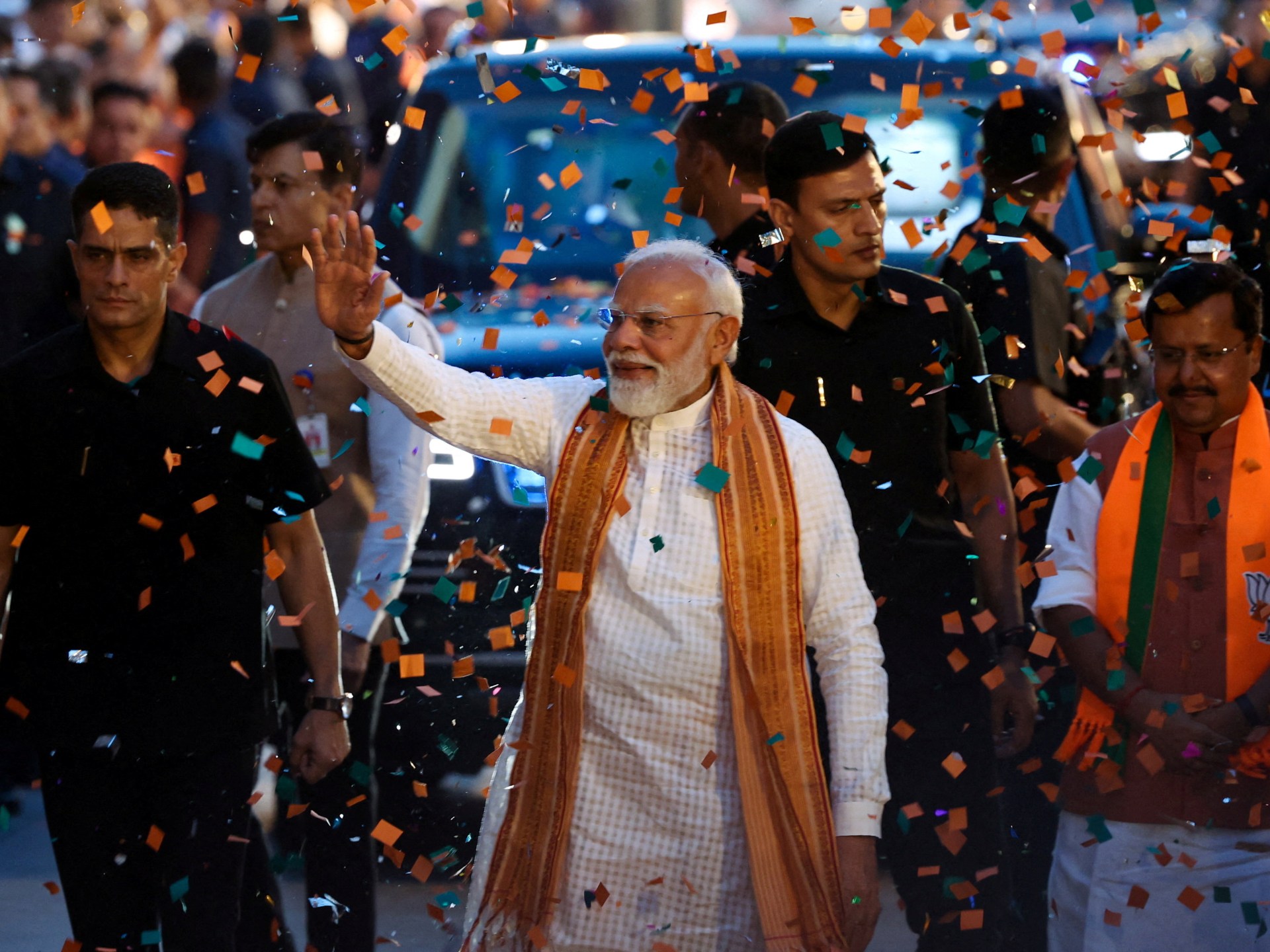
Indian Prime Minister Narendra Modi’s Bharatiya Janata Party (BJP) secured its first victory in the state of West Bengal, marking a significant milestone for the Hindu nationalist party. The legislative assembly elections were held on multiple dates in April across several Indian states, including Tamil Nadu, Assam, Kerala, and Puducherry.
The BJP retained control in Assam for a third consecutive term, while its coalition partner returned to power in Puducherry. In Tamil Nadu, actor Joseph Vijay’s fledgling political outfit broke the stranglehold of two dominant state parties, and he is poised to become the next chief minister.
In neighboring Kerala, an Indian National Congress-led alliance defeated a communist government, marking the first time in 50 years that the left was not in control of any Indian state. The West Bengal outcome represents the most notable takeaway from Monday’s verdict.
The state of West Bengal holds significant historical importance, as it is where the story of Indian colonialism began after the Battle of Plassey in the mid-18th century. The British East India Company defeated the Nawab of Bengal, transforming into the sword arm of British imperialism in South Asia.
In 1905, the British partitioned Bengal along religious lines, separating the largely Muslim eastern regions from the Hindu-majority western districts. This event catalyzed a new political consciousness in the region and produced national figures, including Shyama Prasad Mukherjee, founder of the BJP’s precursor, the Bharatiya Jan Sangh.
Mukherjee founded the Jan Sangh to advocate for a culturally united India and opposed a special status granted to Indian-administered Kashmir after India and Pakistan emerged as independent nations in 1947. Modi fulfilled Mukherjee’s dream by scrapping the disputed region’s partial autonomy weeks after coming into power for a second term in 2019.
The West Bengal election has raised questions about the state’s complex post-independence political trajectory, which has elected various governments over the years, including communist and centrist parties. The state also remained relatively peaceful during periods of turmoil in modern India, such as anti-Sikh riots in 1984 and the demolition of a mosque in Uttar Pradesh in 1992.
The outcome of the West Bengal election will be closely watched, given its significance in Indian history and politics.
Source: Al Jazeera