Myanmars Civil War Enters Multi-Front Conflict Zone
March 27, 2026 • Al Jazeera
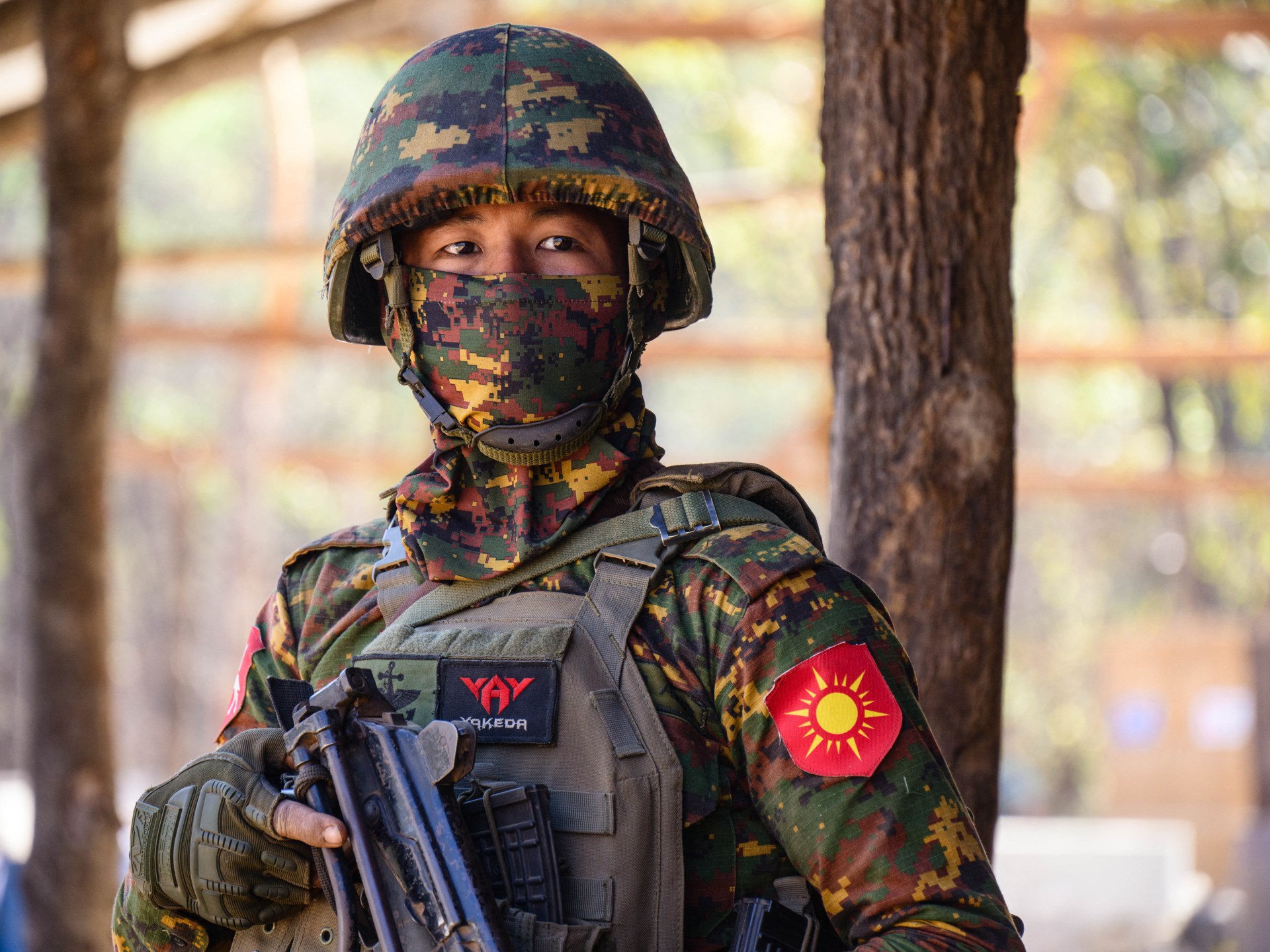
Here is a rewritten version of the article in a neutral newsroom style:
Myanmar’s Civil War Enters Sixth Year
The conflict in Myanmar, which began in 2021 after the military regime seized control of the country, continues to escalate. The military regime, led by Senior General Min Aung Hlaing, has been battling various groups, including ethnic armed groups and pro-democracy forces.
The conflict originated when Min Aung Hlaing ousted an elected government and detained civilian leaders, including Nobel Peace Prize laureate Aung San Suu Kyi. This power grab reversed a decade of democratic transition in the country.
Since Myanmar’s independence from British rule in 1948, the country has experienced near-continuous conflict with ethnic minority communities. Many were promised autonomy after decolonization but did not receive it.
The military has been deeply integrated into Myanmar’s social and political fabric for over six decades and controls a vast business empire that includes natural resource extraction, beer sales, and other industries. The military has received arms from China and Russia, which it uses to fight the conflict.
Many of its adversaries were once peaceful protesters who turned to combat training after being driven underground by the military’s crackdown. However, some have joined ethnic armed groups, which have been fighting for autonomy since the 1960s.
The conflict has resulted in significant human costs, with over 96,000 people killed and at least 3.6 million displaced, according to international estimates.
There are four main camps in the conflict: the military regime, ethnic armed groups, post-coup forces aligned with the National Unity Government (NUG), and newer resistance groups fighting for a new political order.
Alliances in the conflict are fluid, and some have collapsed into violence. The military’s character is marked by brutality and rigid obedience, which dates back to its formation during World War II.
The military seeks to preserve Bamar dominance while absorbing ethnic minorities into a centralized state. Estimates suggest that the military has between 150,000 and 250,000 soldiers, with up to 100,000 conscripts bolstering its ranks since draft laws were introduced in 2024.
Conscription, combined with pressure from Beijing on ethnic armies on the China-Myanmar border, has halted earlier advances against the military. The conflict is expected to continue, with no clear end in sight.
Source: Al Jazeera