Nigerian Artisans Adapt to Global Demand for Handwoven Fabrics
April 12, 2026 • Al Jazeera
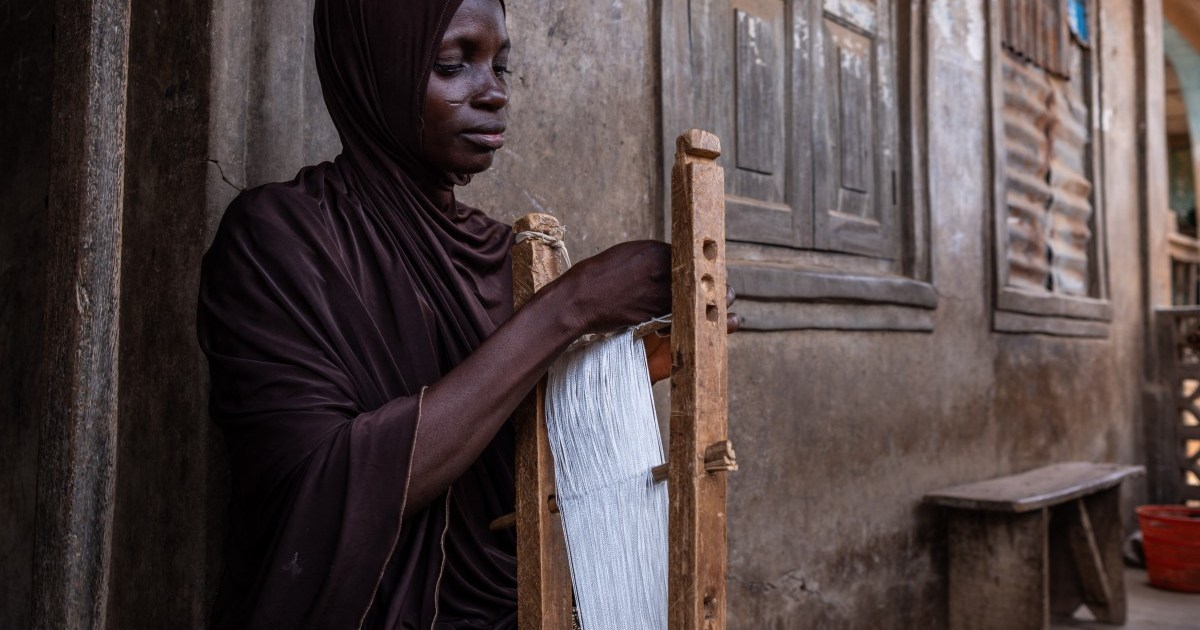
Artisans in Nigeria’s Iseyin Town Maintain Traditional Handweaving Techniques Despite Growing Demand
In the southwestern Nigerian town of Iseyin, artisans continue to produce aso-oke, a handwoven fabric that has gained popularity globally. The demand for this traditional textile has increased both domestically and internationally, driven by the Nigerian diaspora and growing recognition of the country’s fashion and music culture.
As a result, many young people, including university graduates, are flocking to Iseyin to learn the art of aso-oke weaving. The town is recognized as the home of this fabric, which has become an economic lifeline for local residents. Weavers use wooden looms to create narrow, tightly patterned strips that are later sewn together into wider cloths.
According to Waliu Fransisco, a 34-year-old weaver, he abandoned his career as a nightclub singer to master the craft of aso-oke weaving ten years ago. He now earns a decent living from weaving the fabric and is satisfied with his decision. The production process involves preparing threads from cotton or silk using traditional methods before setting them on looms.
Today’s weavers use loom-ready threads in diverse colors, mostly imported from China. Artisans spend hours arranging threads on looms to create unique patterns, which are then sewn together into garments and accessories. Kareem Adeola, a 35-year-old weaver, notes that this traditional technique is what Iseyin is known for, as it has been passed down through generations.
The town’s production hubs feature shaded spaces under trees, makeshift sheds, and narrow alleys, where weavers work diligently behind wooden looms. The craft has become an essential part of the local economy, with many residents relying on it for their livelihoods.
Source: Al Jazeera