One Year of Trumps Tariffs: Impact on American Consumers
April 2, 2026 • Al Jazeera
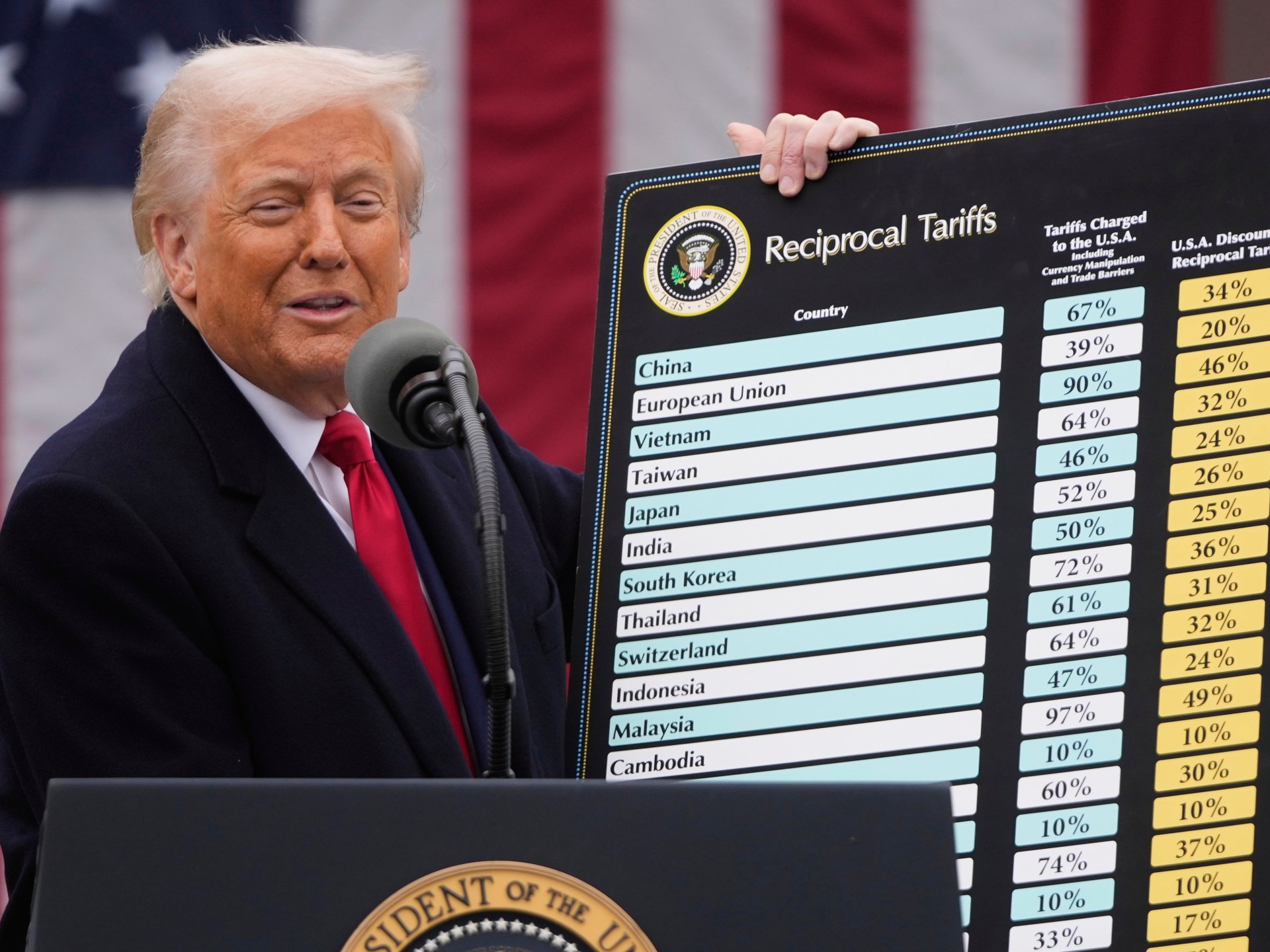
US Households Face Increased Costs Due to Global Tariffs
On February 20, 2025, the Supreme Court ruled that most of President Trump’s tariffs are illegal, citing a lack of authority under the National Emergencies Act. The decision came after the president announced a new 10 percent global tariff as part of an executive order dubbed “Liberation Day” in January 2024.
The initial implementation of the tariffs led to significant market fluctuations, with the stock market experiencing its worst drop since the pandemic. Countries subsequently negotiated with Washington or imposed their own levies.
Despite the Supreme Court’s ruling, a temporary tariff remains in place, set to expire this July. The average effective US tariff rate has increased significantly, rising from 2.6 percent to over 13 percent between implementation and the court’s decision.
According to economists at the New York Federal Reserve, tariffs have reshaped the US economy. The Tax Foundation reports that US households paid $1,000 more for the same goods over the past year, with lower-income families bearing the brunt of the increased costs.
The Trump administration initially argued that tariffs would reduce the trade deficit and make the US richer. However, the reality is that households are worse off, with higher prices for essential goods like food, clothing, and cars.
The government collected more than $287.1 billion in customs duties in 2025 and $64.4 billion so far in 2026. The Penn Wharton Budget Model suggests that businesses may be required to refund up to $175 billion due to the Supreme Court’s ruling.
Economists at the Federal Reserve Bank of New York found that nearly 90 percent of the economic burden from tariffs has fallen on US businesses and consumers, with foreign exporters absorbing a small percentage of the cost.
Source: Al Jazeera