Palestinians face challenges preserving historic markets in post-conflict Gaza
March 18, 2026 • Al Jazeera
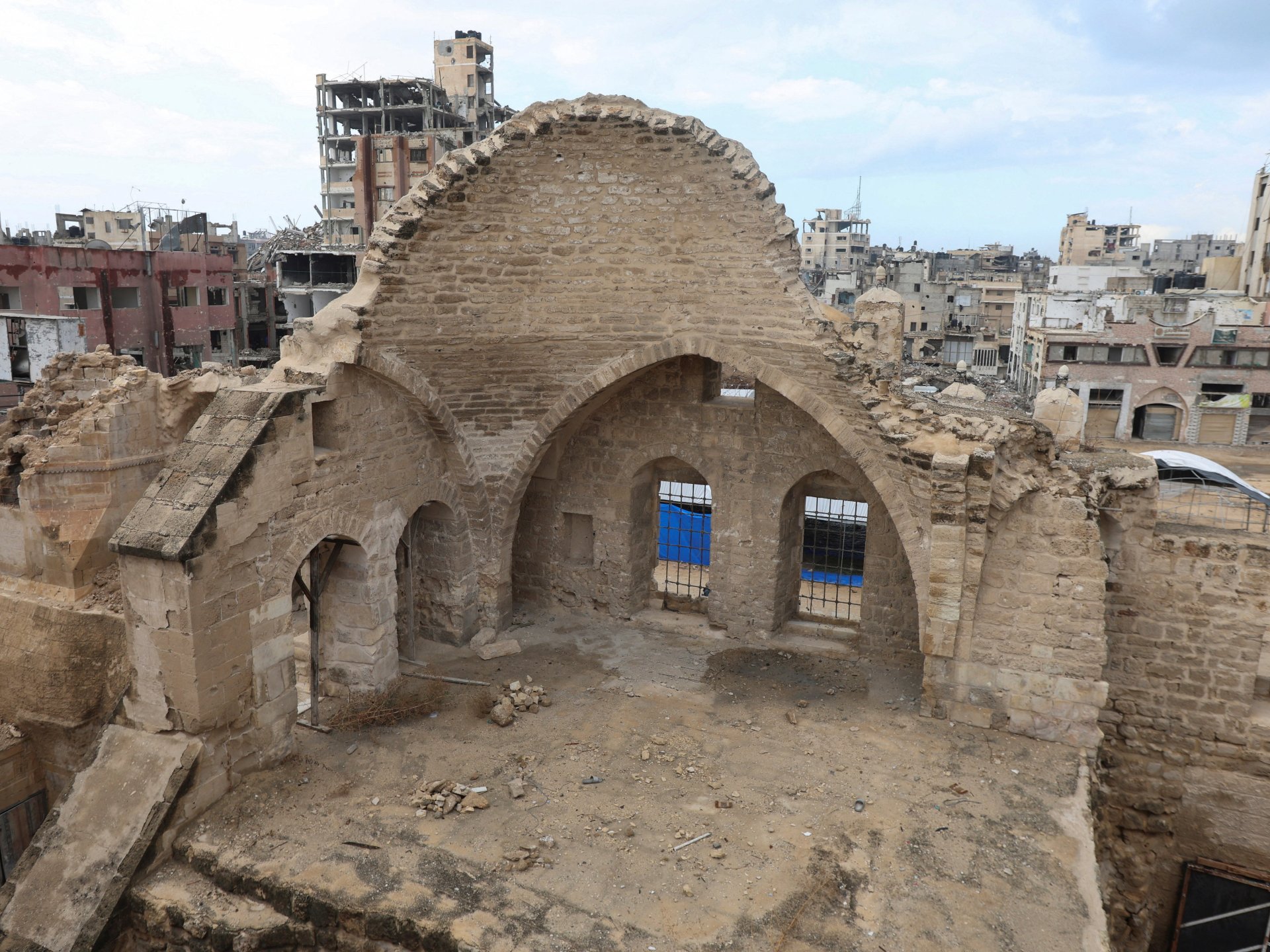
Khan Younis’s Historic Grain Market Left in Ruins After Israeli Conflict
The historic Grain Market in Khan Younis, Gaza Strip, has been largely abandoned since Israel’s military operation on the city began. The market, which dates back to the late 14th century, was once a bustling commercial hub where traders and travelers exchanged goods from Africa, the Levant, and beyond.
Located near the Barquq Castle, a centuries-old structure built in 1387, the Grain Market was a familiar landmark for generations of families in Khan Younis. The market’s aromatic scent of spices and dried herbs was a common sight as people walked towards it. However, after Israeli attacks inflicted heavy damage on the market and the castle, the area has been reduced to shattered alleys.
Nahed Barbakh, a 60-year-old trader who has been in business for decades, witnessed the decline of the Grain Market firsthand. He spent years watching customers stream through the market, but now only a handful pass by his shop. The Israeli occupation has left the market unrecognizable, with more than two years of bombardment and displacement leaving it in ruins.
The Grain Market was also among the first sites of destruction during the conflict, with many shops still closed due to financial losses. Nahed’s shop used to be fully stocked with goods, but now only a few shelves remain. The sound of an Israeli tank fire interrupted his conversation, highlighting the fear that prevents people from returning.
The demarcation line, known as the “yellow line,” has divided Khan Younis, reshaping the city’s geography. The Grain Market, once at the center of urban life, now sits close to the yellow line, making it a hazardous area for pedestrians. The revival of daily commerce life is a distant prospect, leaving the market’s future uncertain.
The Grain Market’s origins date back to 1387 when Mamluk ruler Younis al-Nawruzi established Khan Younis as a strategic stop along the trade route linking Egypt and the Levant. Built as an extension of the Barquq Castle, the market became a central commercial hub where traders and travelers exchanged goods from various regions.
Source: Al Jazeera