Poverty drives children to mine in Democratic Republic of Congo
March 20, 2026 • Al Jazeera
Here’s a rewritten version of the article in a neutral newsroom style:
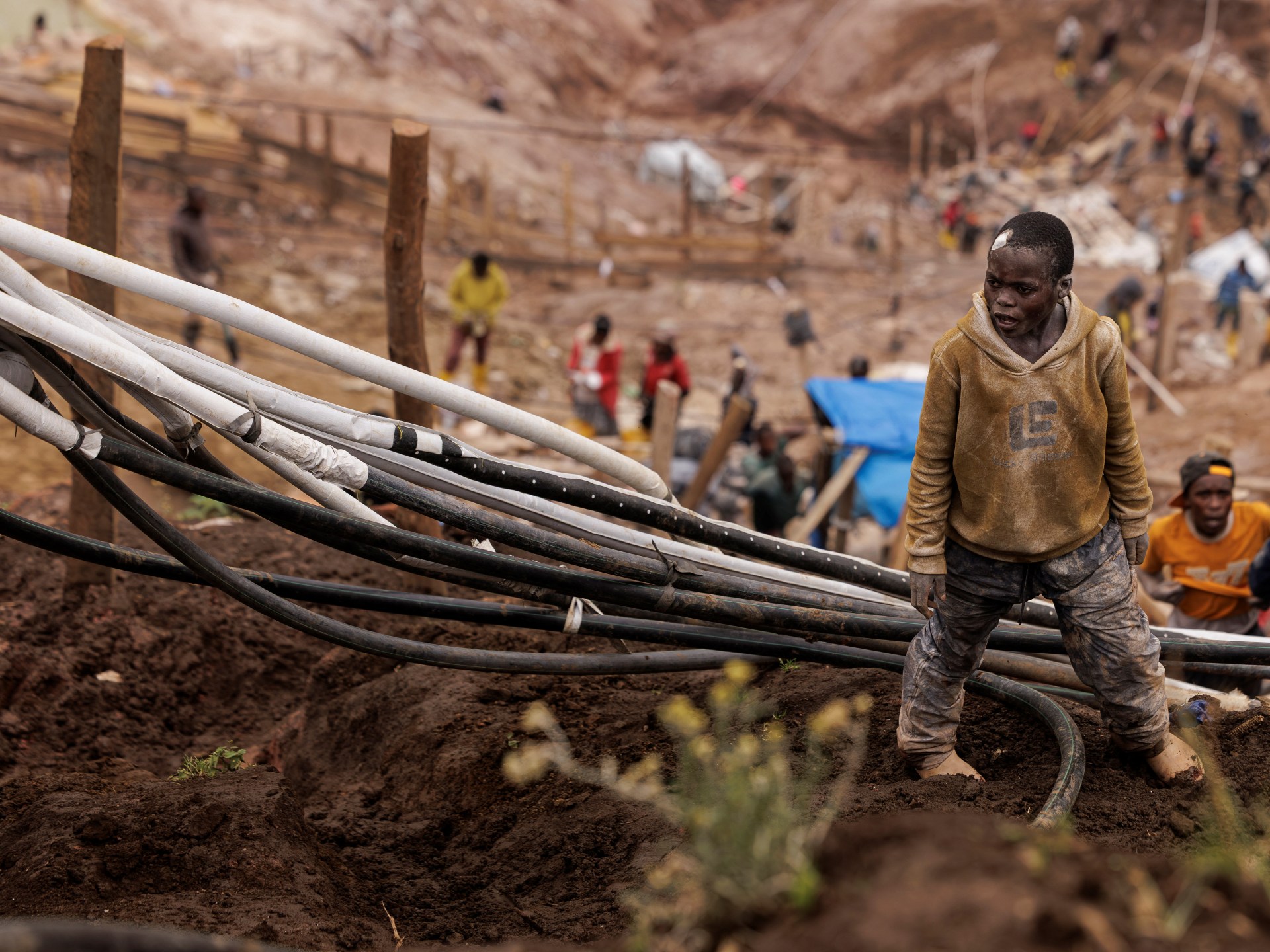
At least 70 children died in a landslide at the Rubaya mine, located in the Democratic Republic of Congo. The incident occurred on March 3, following heavy rains that destabilized the open and steep mine slopes. This is not the first time the area has experienced such an event; a similar disaster occurred last month.
According to Congolese authorities, 200 people died at the Kasasa mining site, including the children who lost their lives in the landslide. The victims were primarily artisanal miners operating in the resource-rich city of Rubaya.
Mishiki Nshokano, a 15-year-old survivor of the disaster, is currently recovering at an undisclosed location in Goma, approximately 60km away from Rubaya. He had been working as an artisanal miner for four years to support his family and earn a daily income of around $4.
Nshokano’s father died in a landslide at another mine site in 2022, when he was just 11 years old. His father had previously earned more than three times the amount Nshokano now earns, but the family struggled financially after his death.
The Rubaya mine is known for its coltan deposits, which are used in modern technology such as smartphones and electric cars. However, many miners, including children, do not have knowledge of the material’s uses or its importance to society.
The Congolese government has implemented laws to prohibit child labor in the mines, but enforcement remains a challenge. The country’s informal mining sector is largely unregulated, and violence between armed groups and the government further complicates the situation.
According to reports from the United States Bureau of International Labor Affairs, the Democratic Republic of Congo has made minimal progress in eliminating child labor in its mines.
Source: Al Jazeera