Record Heatwave Sweeps South Asia, Wreaking Calamitous Effects Nationwide
May 8, 2026 • Al Jazeera
Here is a rewritten version of the article in a neutral newsroom style:
Heatwave Hits South Asia, Disrupting Daily Life
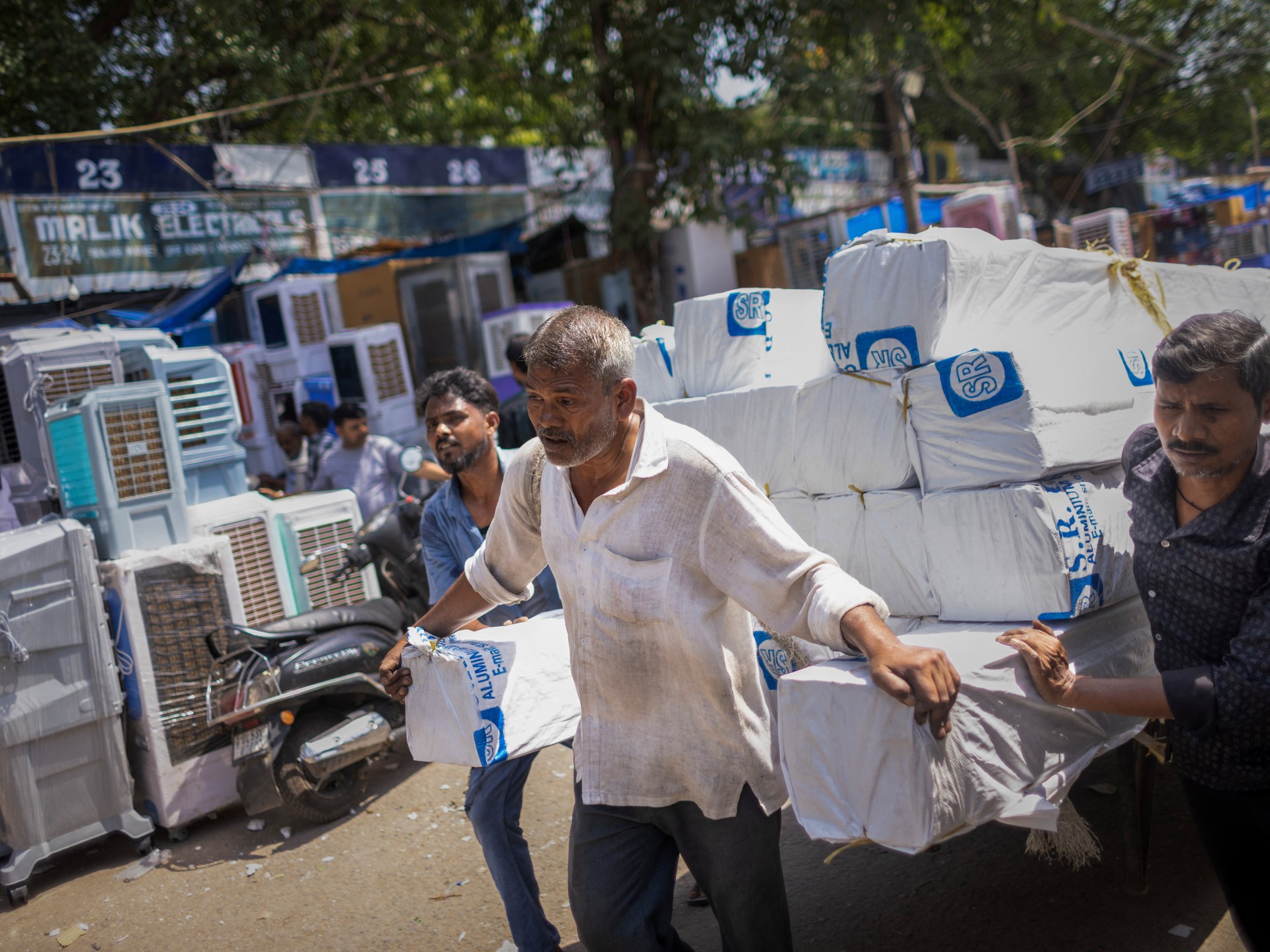
Temperatures in countries including India, Pakistan, and Bangladesh have soared above seasonal averages, with some areas reaching as high as 45-50 degrees Celsius. According to local emergency services, at least 10 people have died from heat-related complications in Pakistan on Tuesday.
Heatwaves are not a new phenomenon in the region, but scientists say recent events are unprecedented in terms of intensity and duration. Meteorological agencies attribute these extremes to human-driven climate change, which is causing natural weather patterns to become more extreme.
India’s research director at the Bharti Institute of Public Policy think tank, Anjal Prakash, explained that high-pressure systems dominate the region, trapping hot air near the surface and preventing it from rising and cooling. This sinking air compresses, warms adiabatically, and blocks clouds, allowing relentless solar heating.
Experts also point to other climate-related factors contributing to the heat, including weak pre-monsoon rains and lingering El Nino-like patterns. The World Meteorological Organization (WMO) warns that El Nino conditions could potentially form as early as May, with high confidence in their onset.
The India Meteorological Department (IMD) has forecast higher-than-average temperatures across much of the country, warning of severe heatwave conditions in western regions and along the coast. Heatwaves are expected to be more frequent than usual along the eastern coast, in parts of the Himalayan foothills, and in the western states of Maharashtra and Gujarat.
According to the IMD, temperatures in some areas could rise by three to five degrees Celsius above normal. In Maharashtra, cities such as Akola and Amravati recorded 46.9C and 46.8C on April 26. Local media reported that over 90 of the world’s hottest cities were in India on April 24.
The crisis is exposing deep inequalities across the region, with some areas bearing a greater burden than others.
Source: Al Jazeera