Russia views Iran as expendable in its foreign policy strategy
January 18, 2026 • Al Jazeera
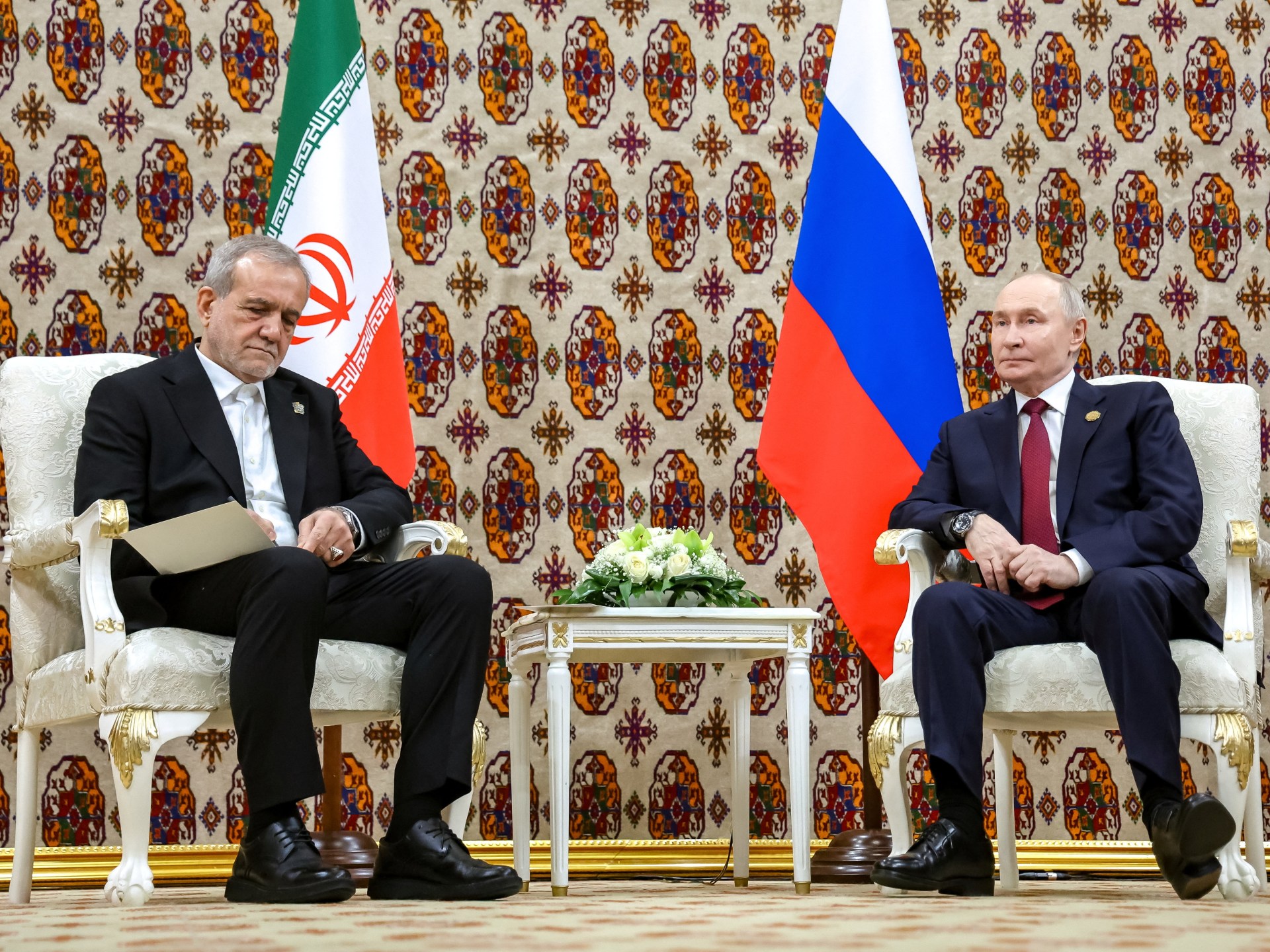
US Intervention in Iran Sparks Concerns About Russia’s Motivations
Moscow has reaffirmed its focus on winning the conflict in Ukraine, with all other international developments serving as secondary considerations. According to Leonid Ragozin, a freelance journalist based in Riga, recent events have generated enthusiasm among pro-Ukraine circles in the West.
The US military’s abduction of Venezuelan President Nicolas Maduro and subsequent threats to intervene in Iran during its recent upheaval have led some to believe that weakening Moscow’s allies will ultimately weaken Russia itself. However, this logic is not universally accepted.
US President Donald Trump has expressed support for regime change in Venezuela, echoing a policy previously criticized by him. This stance bears resemblance to the export of revolution, a short-lived Soviet policy spearheaded by Leon Trotsky.
In 1920-21, the Persian Soviet Socialist Republic existed in Iran’s Gilan province on the Caspian Sea, with the aim of spreading proletarian revolution to India. The Red Army ultimately retreated, and local allies were quickly overthrown.
Fast-forwarding a century, Iran has once again become a target for revolutionary export, this time driven by American and Israeli hawks aiming to create a similar scenario in Ukraine. However, Iran’s theocratic regime is deeply ingrained, and resistance to it is organic.
Iran’s history of resisting subjugation by outside powers, including Russia or the USSR, has been marked throughout its 20th-century history. The country was also a site for Soviet and Western interests converging, as in the 1953 coup d’etat against Prime Minister Mohammed Mossadegh.
A tentative alliance between Iran and Russia formed during Vladimir Putin’s rule, strengthened by Iran’s provision of drone technology to Russia during its invasion of Ukraine. This development highlights an important similarity between Iran, Russia, and China – three long-existing states that Western powers have struggled to colonize throughout history.
Russia’s role in this context is complex, given its own colonial ambitions in the past. Moscow’s focus on winning the war in Ukraine remains paramount, with military expeditions in the Middle East and Africa serving as secondary considerations for Putin’s government.
Regime ideologues in Moscow view their allies and client regimes as expendable pieces in a global game of nuclear superpowers.
Source: Al Jazeera