Somalis face dire circumstances amid aid cuts, drought, and ongoing conflict
May 7, 2026 • Al Jazeera
Here is a rewritten version of the article in a neutral newsroom style:
Somalis Struggle Amid Drought, Conflict, and Aid Cuts
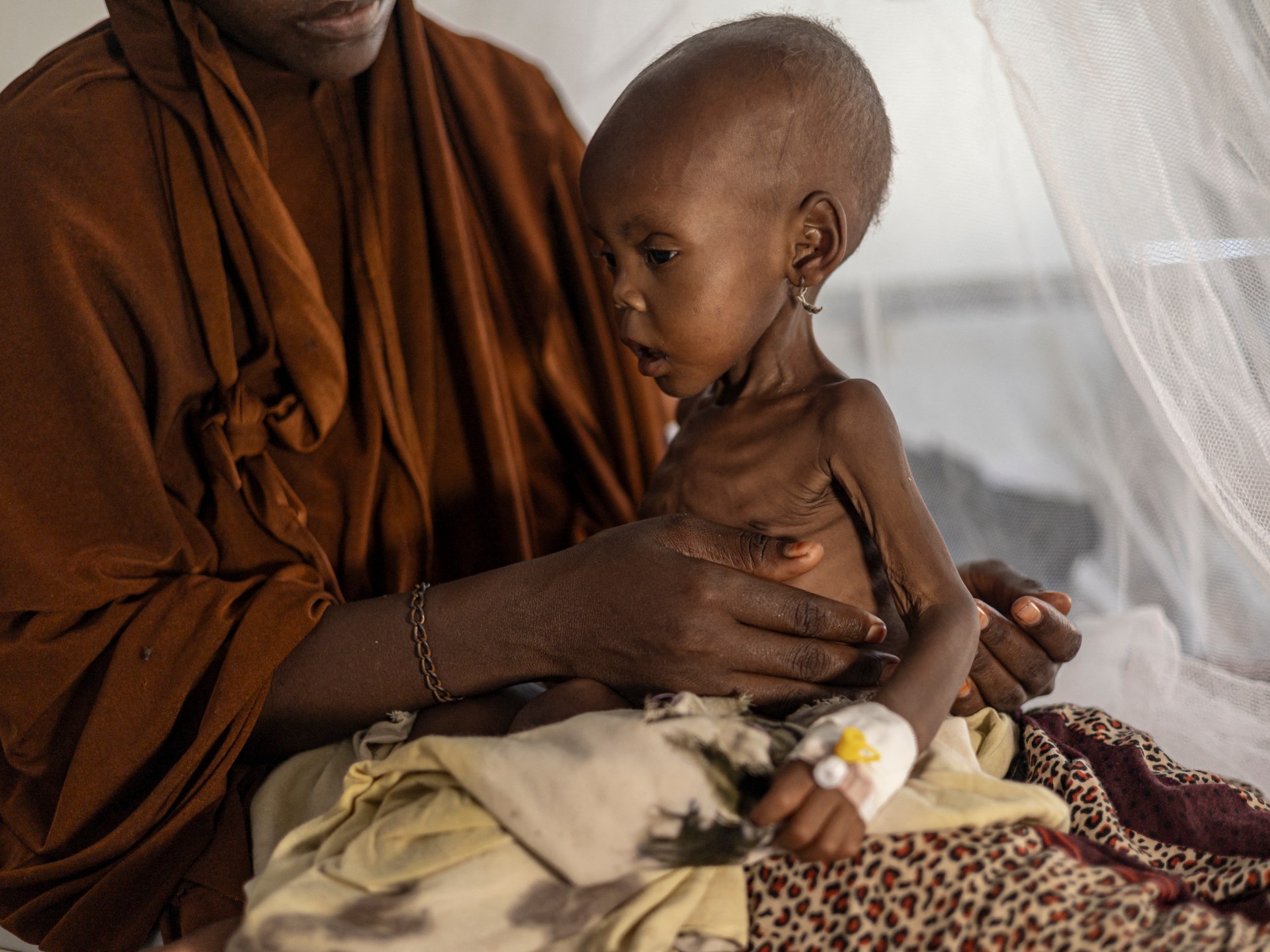
A severe drought has pushed Somalia’s malnutrition rate to double its previous levels, with over 300,000 people forced to leave their homes since January. Maryam, a 46-year-old woman from the Jubbaland state, fled her village after her goats starved and her crops failed. She now resides in one of several makeshift settlements on the outskirts of Kismayo, the capital city.
The drought has been exacerbated by three consecutive seasons of failed rains. International aid agencies have struggled to cope with the crisis, with several organizations suspending operations due to reduced funding. The United States’ decision to slash its donations last year has had a significant impact on humanitarian efforts.
According to Save the Children, the organization’s Somalia director, Mohamud Mohamed Hassan, the recent cuts in foreign aid have had “a huge impact” on their work. Over 200 health centers and 400 schools have closed since last year, leaving many without access to basic services.
The situation is dire, with reports of children dying from malnutrition and limited food supplies being seized by armed groups. The camp’s manager notes that five children died in March alone due to malnutrition. The recent drought has also had a devastating impact on farmers, who have lost their livestock and crops.
A hospital in Kismayo is the only facility capable of treating severe cases of malnutrition, but it is turning patients away due to a lack of space and staff. The United Nations Office for the Coordination of Humanitarian Affairs (OCHA) has reduced its Somalia program from $2.6 billion in 2023 to $852 million this year.
The situation remains dire, with many seeking work or selling firewood to survive. The OCHA’s head, Tom Fletcher, notes that “things are really, really desperate” and that they often have to make difficult choices about which lives to save and which not to save.
Source: Al Jazeera