South African activist highlights historical injustices in modern-day struggles
January 2, 2026 • Al Jazeera
Here is a rewritten version of the article in a neutral newsroom style:
Tour Guide Shares Alternative Perspective on Cape Town’s Colonial History
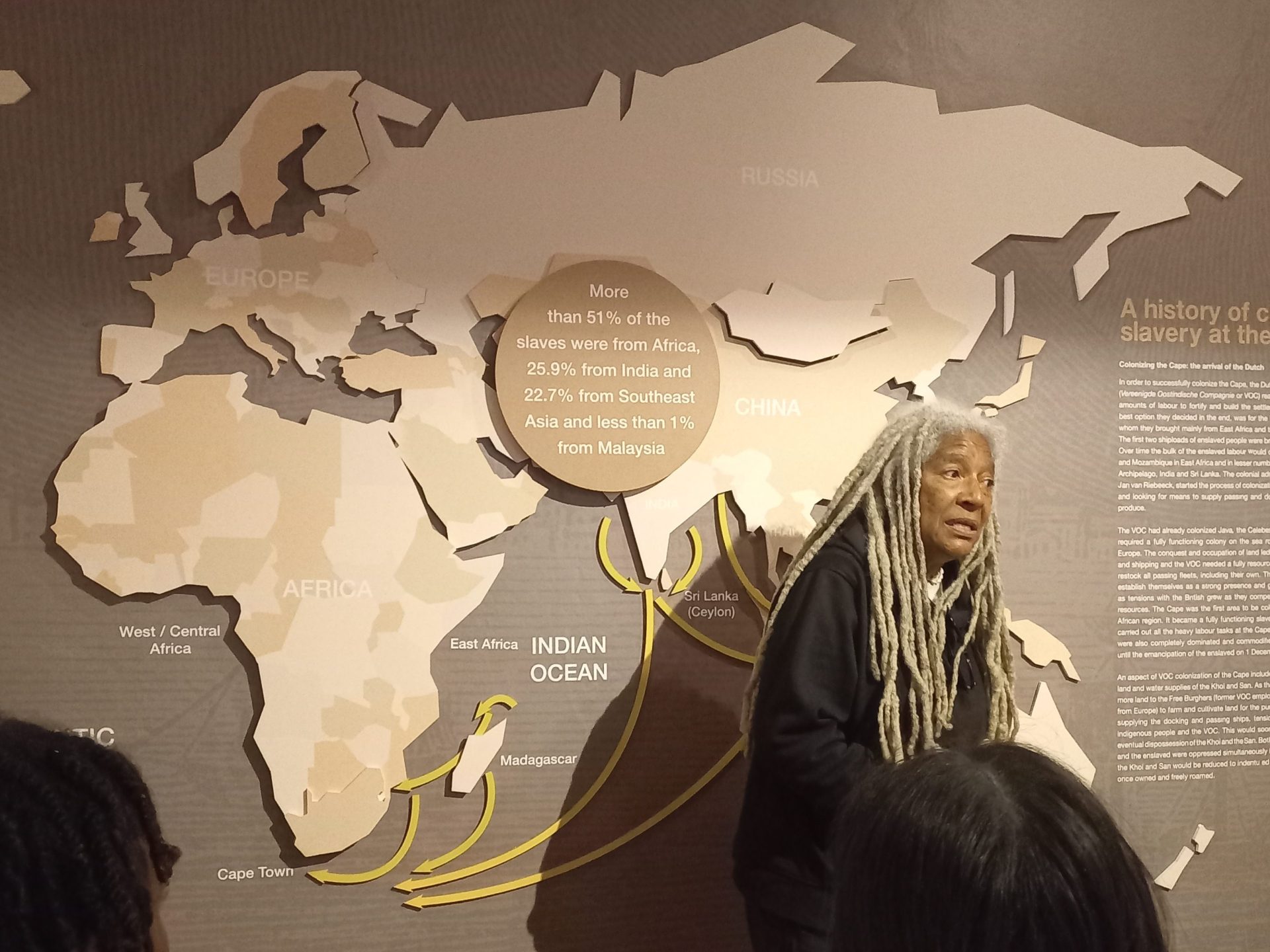
Lucy Campbell, a 65-year-old activist-turned-historian, led a group of American students through a five-stop tour of Cape Town, highlighting the city’s complex colonial past. The tour began at the Castle of Good Hope, a 17th-century fortress built by the Dutch East India Company (VOC). Campbell explained that the castle was constructed as part of the VOC’s efforts to establish a refreshment post between the Netherlands and other trade destinations in the East.
Campbell refused to enter the castle, citing its association with violence and dispossession. She pointed out that it was built on land previously inhabited by the Khoi people, who were displaced by European settlers. The tour continued at various locations throughout the city, including the Slave Memorial erected in 2008 in Church Square.
Campbell emphasized the importance of acknowledging the contributions of enslaved people to the construction of Cape Town and recognizing the Indigenous population that lived on the land before the Dutch arrival in 1652. She noted that many official tributes fail to do justice to these groups, instead focusing on the achievements of European settlers.
The tour also touched on the ongoing legacy of colonialism in Cape Town, including issues related to land ownership and labor rights. Campbell shared her own family’s history, which is tied to the Hessequa people, a subset of the Khoi who were displaced by European settlers. She highlighted the need for continued recognition and acknowledgment of these historical injustices.
Campbell has been leading privately run tours like this one for 17 years, offering an alternative perspective on Cape Town’s colonial history to dozens of visitors each year.
Source: Al Jazeera