Trumps Pardon Policy Raises Questions About Presidential Clemency Practices
February 15, 2026 • Al Jazeera
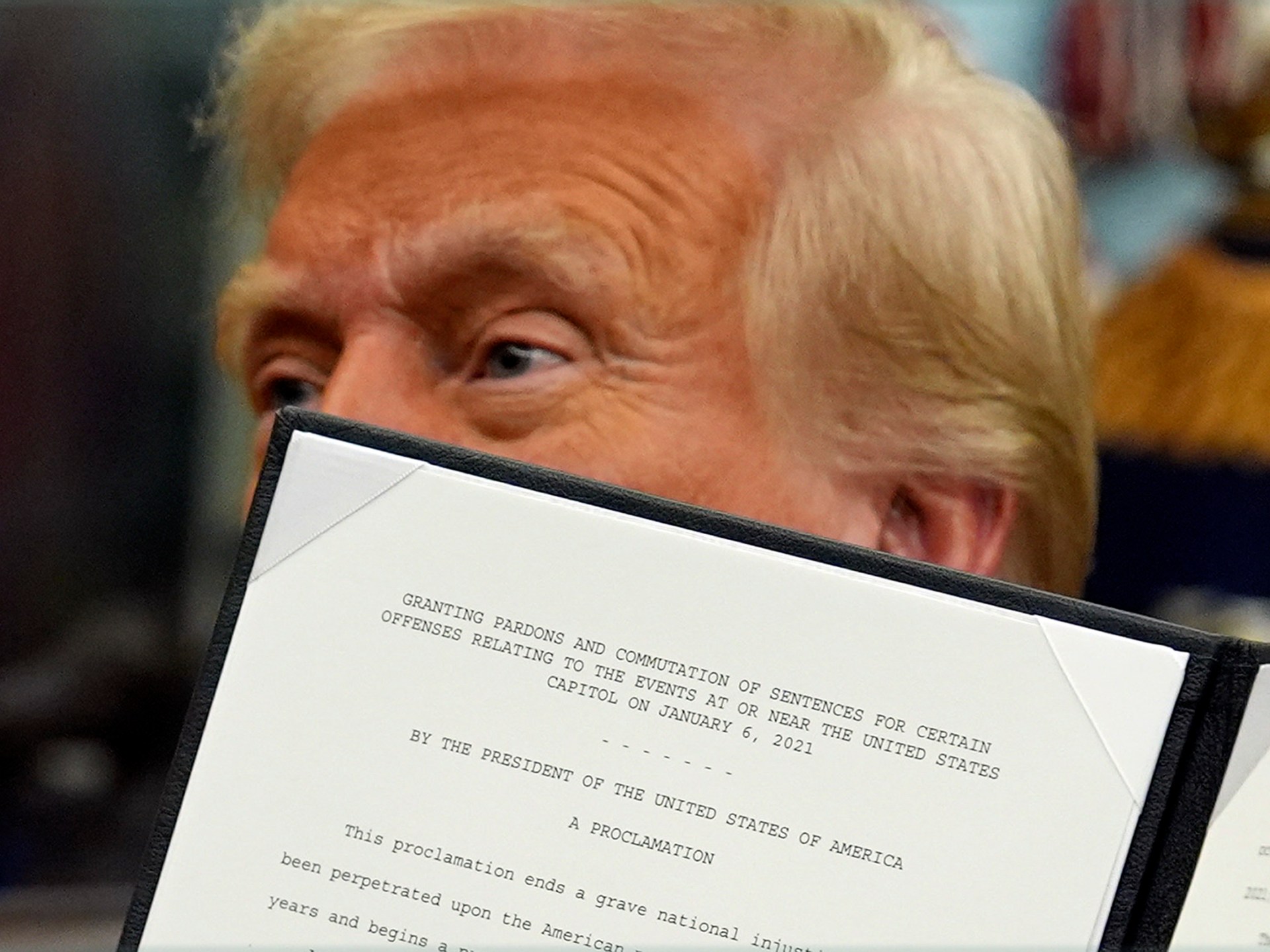
US President Donald Trump has issued over 1,840 acts of clemency since taking office for his second term. These include pardons and commutations granted to individuals from various backgrounds, including politicians, reality TV stars, and wealthy power brokers.
Since assuming office, Trump’s use of the clemency power has been subject to scrutiny by experts. Some argue that the way he exercises this authority violates established rules and norms, which have been in place for over a century. Critics contend that pardons and commutations have become transactional, with Trump using them to reward those loyal to his agenda.
Notable beneficiaries of Trump’s clemency include supporters of his “Make America Great Again” movement, as well as individuals who have been involved in high-profile controversies. According to Mark Osler, a law professor at the University of St Thomas, some recipients have been wealthy power brokers, while others have been less prominent figures.
Osler notes that Trump’s decisions on clemency are often influenced by his personal relationships and loyalty to those within his orbit. Experts argue that this trend risks excluding those most vulnerable within the justice system.
The origins of presidential clemency date back to the US revolutionary era, with Alexander Hamilton credited with introducing the concept of executive pardons. The US Constitution enshrines this power, allowing presidents to offer two types of clemency: pardoning and commutation.
Critiques of the clemency system have been present throughout history, with previous presidents accused of abusing or underusing it. Experts acknowledge that the lack of transparency and accountability in the pardon process has contributed to concerns about its misuse.
The Office of the Pardon Attorney typically filters through clemency requests and forwards recommendations to the president, who serves as the final arbiter. However, some experts argue that this process has become increasingly politicized under Trump’s administration.
Source: Al Jazeera