US and India Agree on Critical Minerals Deal
May 26, 2026 • Al Jazeera
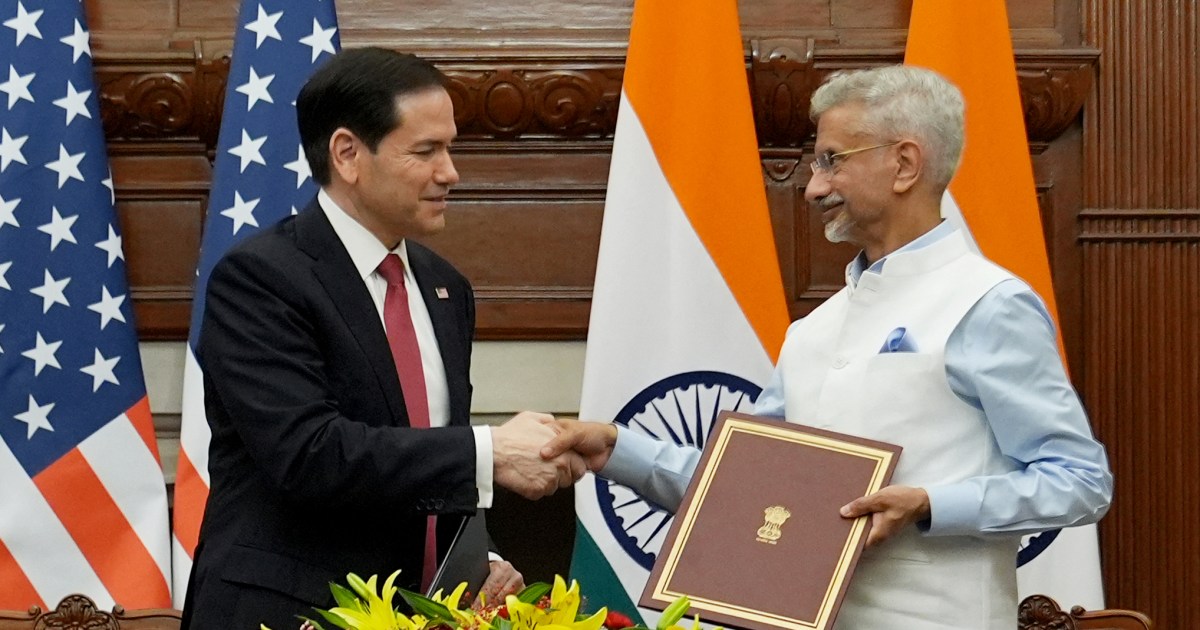
US and India Sign Framework Agreement on Rare Earths and Critical Minerals
The United States and India have signed a framework agreement aimed at securing supplies of critical minerals and rare earths, including their mining and processing. The agreement was finalized during US Secretary of State Marco Rubio’s four-day visit to India.
During the meeting between Indian External Affairs Minister Subrahmanyam Jaishankar and US Secretary of State Marco Rubio in New Delhi, the two countries agreed to deepen cooperation across the critical minerals and rare earths supply chain. This includes mining, processing, recycling, and related investments.
Critical minerals are nonfuel minerals used to manufacture batteries, clocks, wiring, military hardware, semiconductors, and other technological products. The US relies on imports for 12 of these minerals, while importing at least half of the remaining 29 critical minerals.
Rare earth elements, including lanthanides, scandium, and yttrium, are essential to the production of permanent magnets used in industrial automation, electric vehicle motors, renewable energy generators, electronics, and medical devices. China is home to 60% of the world’s rare earth mineral deposits and processes 90% of the global supply.
The framework agreement aims to protect sensitive supply chains from coercive market practices and reduce collective vulnerability to single-source monopolies. The terms of the agreement were not disclosed.
India has identified 30 minerals as critical, including antimony, beryllium, cobalt, copper, gallium, germanium, graphite, hafnium, indium, lithium, molybdenum, niobium, nickel, platinum group elements, phosphorous, potash, rare earth elements, rhenium, silicon, strontium, tantalum, tellurium, tin, titanium, tungsten, vanadium, zirconium, selenium, and cadmium.
The agreement is the latest in a series of efforts by the US to diversify its rare earths supply chain.
Source: Al Jazeera