US Imposes 15% Tariff on Foreign Goods in Trade Deal Disruptions
February 22, 2026 • Al Jazeera
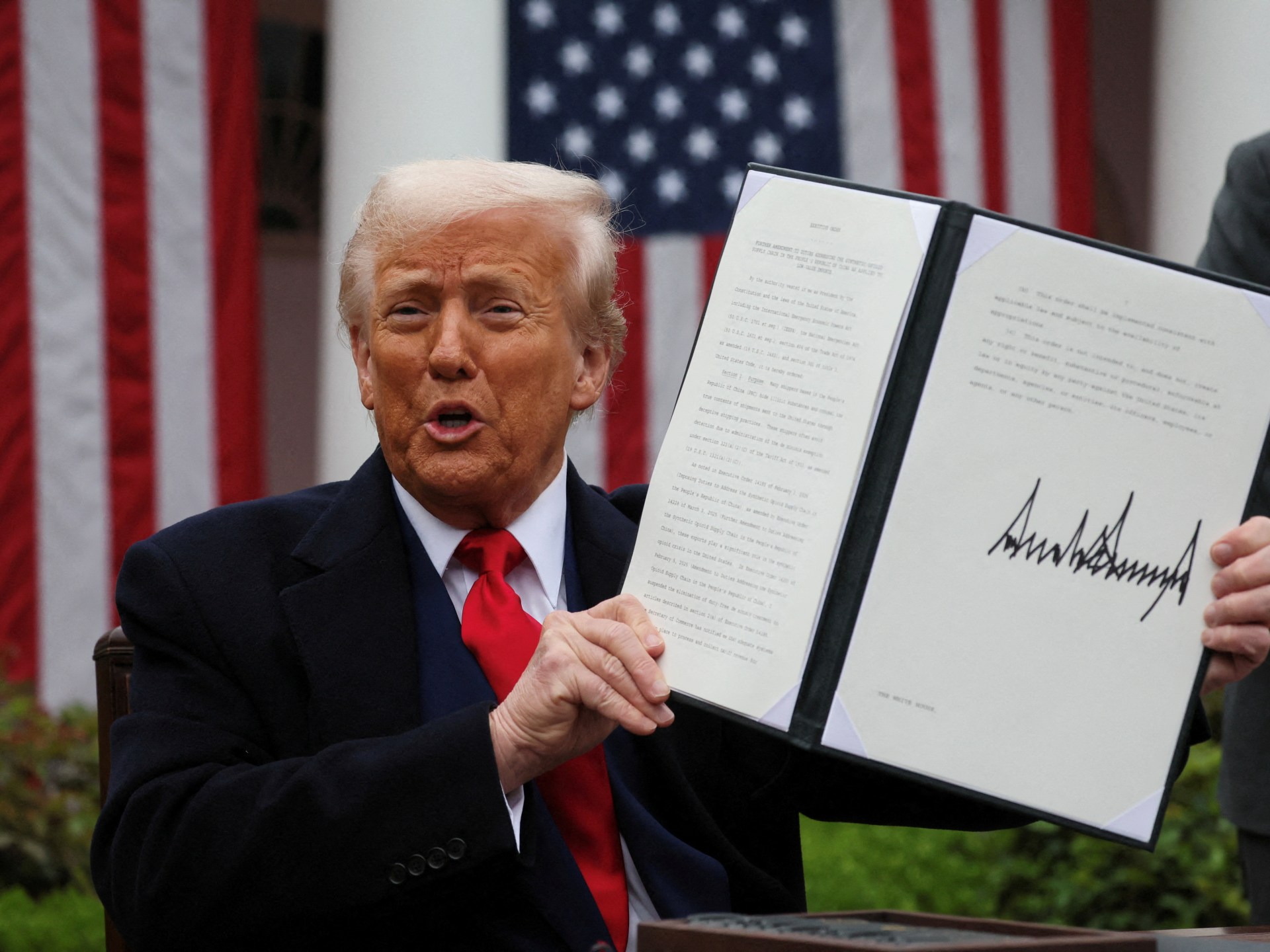
US President Imposes New Tariffs Amid Global Trade Uncertainty
In a move that has injected uncertainty into global trade, US President Donald Trump imposed a new 15% tariff on Saturday. This comes weeks after his inauguration in January 2025, when he used the International Emergency Economic Powers Act (IEEPA) to impose tariffs against foes and allies.
On Friday, the US Supreme Court ruled that Trump exceeded his authority by invoking the 1977 law, which allows presidents to respond to specific national emergencies. The court stated that tariffs are a form of taxation, and under Article I of the Constitution, the power to tax belongs exclusively to Congress.
However, the ruling does not apply to Trump’s tariffs on steel, aluminum, lumber, and automotives, as these were imposed under a different law - Section 232 of the Trade Expansion Act of 1962. Following the verdict, Trump signed an executive order under Section 122 of the US Trade Act of 1974 to impose a blanket 10% tariff on all countries the US trades with, starting on February 24.
The new trade law empowers the president to impose tariffs of up to 15% to address “large and serious balance-of-payments deficits.” Tariffs can be imposed under this law only for 150 days unless the US Congress agrees to extend it. Trump is the first president to use this law to impose tariffs.
Several countries, including the UK, India, and the European Union, had signed trade deals with the US in an effort to cushion themselves from Trump’s punishing tariffs last year. However, the ongoing tariff spectacle has thrown the future of those trade deals into doubt.
The White House stated that certain goods, such as agricultural products and aerospace products, will not be subject to the temporary levy. An international trade lawyer noted that since this is the first time this legal authority has been used by any US president, it could likely be litigated.
As a result, several countries are uncertain about whether they will be charged the new 15% tariff or the agreed rate signed in their trade deals. The future of these trade agreements remains unclear, with some experts suggesting that the big incentive for doing trade deals with the Trump administration has vanished.
Source: Al Jazeera