US Trade with Southeast Asia and Taiwan Sees Significant Surge Despite Tariffs
January 21, 2026 • Al Jazeera
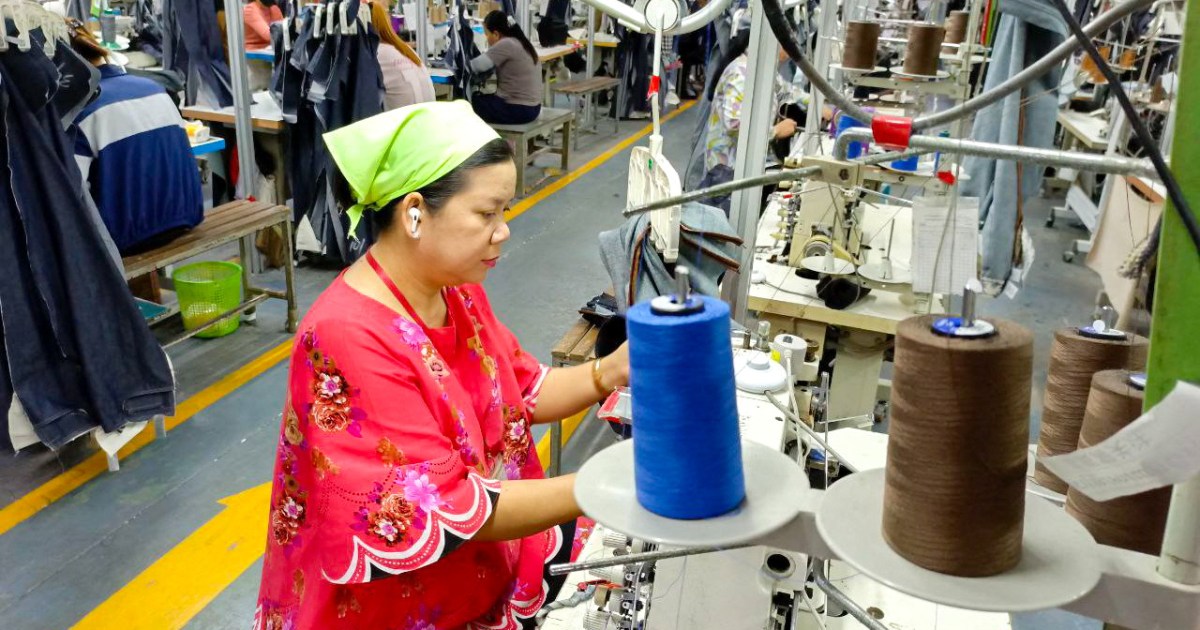
US Trade Data Shows Decline in Exports from China, but Tariffs Have Limited Effect
Preliminary trade data indicate that exports from China have fallen dramatically since the United States imposed tariffs on Chinese goods in 2025. The global US trade deficit for goods also decreased as a result of these measures. However, despite the decline in imports from China, US customers are still purchasing goods from other countries.
In April 2024, President Donald Trump launched “reciprocal tariffs” on US trade partners under the International Emergency Economic Powers Act (IEEPA), aiming to reduce the country’s trade deficit. The tariffs were imposed on Southeast and East Asia, with a focus on China, which is the world’s factory and a major source of exports to the US.
As of November 2025, the average US duty on Chinese goods was 47.5 percent, according to the Peterson Institute for International Economics. This led to a sharp drop in trade between the two countries, with the value of Chinese exports to the US falling by 20 percent. The US Census Bureau reported that the trade deficit for goods also decreased significantly, from $438.7 billion in 2024 to $266.3 billion in 2025.
However, preliminary data show that the tariffs have not had their intended effect in Southeast and East Asia. Instead of reducing US dependence on these regions, the tariffs have simply rearranged supply chains. Trade moves to where trade opportunities can be found, according to Deborah Elms, head of trade policy at the Hinrich Foundation in Singapore.
The region was a major target of Trump’s “Liberation Day” tariffs, with preliminary duties set at 17 to 49 percent for Cambodia, Indonesia, Malaysia, the Philippines, Thailand, and Vietnam. Despite these tariffs, US trade in goods with Thailand, Indonesia, and the Philippines rose in 2025, even as these countries faced tariff rates of 19 percent.
The US trade deficit for goods also increased in some Southeast Asian countries, including Indonesia (11%), Thailand (23%), and the Philippines (38%). Trade in goods with Cambodia and Malaysia remained unchanged despite tariffs of 19 percent. The shift in trade can be attributed to various factors, including the rerouting of Chinese goods through neighboring countries.
Source: Al Jazeera