Yemens economy struggles with persistent cash shortages despite recent currency stabilization efforts
April 19, 2026 • Al Jazeera
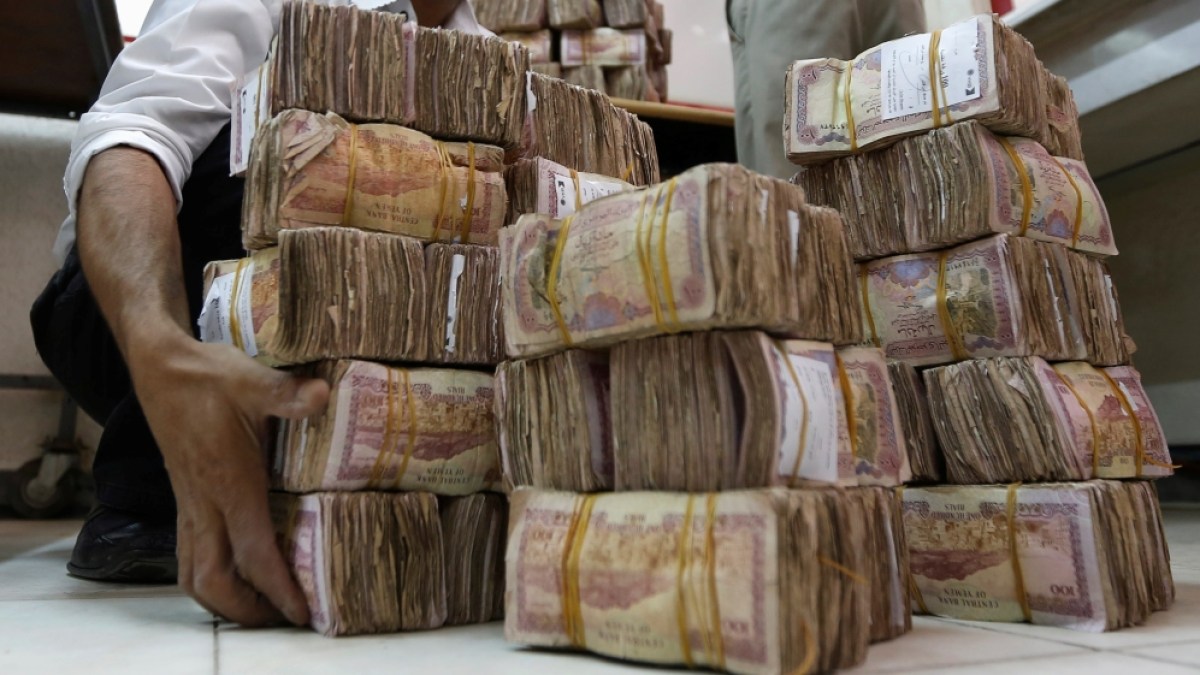
Yemeni Exchange Firms Limit Currency Conversion Amid Liquidity Crisis
In southern Yemen’s Aden city, the government’s central bank has taken steps to curb the devaluation of the Yemeni riyal. The measures have led to a reduction in the riyal’s value from approximately 2,900 US dollars months ago to about 1,500 today. However, these gains have been short-lived as public frustration grows over a worsening shortage of cash in riyals.
The central bank has shut down unauthorised exchange firms and formed a committee to oversee imports and provide traders with hard currency. These actions have helped curb the riyal’s freefall. Nevertheless, people across government-controlled cities such as Aden, Taiz, Mukalla, and others are facing an unprecedented shortage of Yemeni riyals in the market.
Many individuals, particularly those holding US dollars or Saudi riyals, report that local banks and exchange firms are refusing to convert foreign currency or limiting daily exchanges to as little as 50 Saudi riyals per person. This has left many Yemenis unable to access cash or use their savings in hard currency at a time of mounting economic pressure.
Businesses have been paralysed due to the shortage, while a black market has emerged where traders exchange foreign currency at more unfavourable rates to the customer. A local shop owner, Mohammed Omer, described his experience with exchanging foreign currency: “I’ve gone from one exchange to another, and they refuse to exchange more than 50 riyals.”
The economic crisis in Yemen has been ongoing for over a decade, stemming from a war between the Saudi-backed government and the Iran-aligned Houthis. Both sides have targeted each other’s main sources of revenue, leaving both parties strapped for cash.
In response to the cash shortage, the Central Bank in Aden has approved several unspecified measures to address the problem. The bank is pursuing “conservative precautionary policies” to stabilise the riyal and curb inflationary pressures. Government employees have also complained about receiving low-denomination banknotes, which are forcing them to carry their wages in bags.
People who have kept their savings in Saudi riyals or Yemeni expatriates who send remittances in hard currency are among those most affected by the cash shortage. To cope with the shortages and refusal of exchange firms to convert hard currency, Yemenis have adopted various workarounds, including relying on trusted shopkeepers for delayed payments.
Source: Al Jazeera