El Nino to Impact Tropical Storms Globally This Year
June 1, 2026 • Al Jazeera
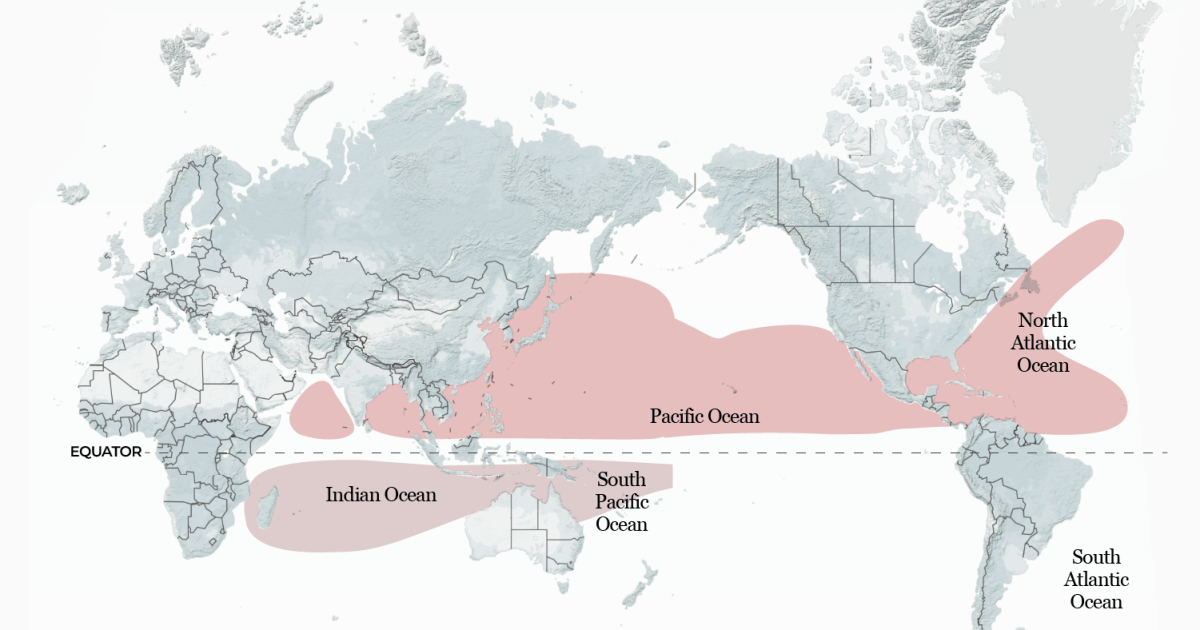
US National Oceanic and Atmospheric Administration Predicts Atlantic Hurricane Season Outlook
The Atlantic hurricane season has begun, running from Monday to November 30, with storm activity expected to peak in mid-September. According to forecasters at the US National Oceanic and Atmospheric Administration (NOAA), this year’s season is predicted to be quieter-than-usual due to a phenomenon called El Nino.
El Nino is characterized by periodic warming of surface sea temperatures in the central and eastern tropical Pacific Ocean, which can disrupt global wind and rainfall patterns. This disruption can lead to increased flooding, droughts, and heatwaves across parts of the world.
NOAA has forecasted a 55% chance of below-normal activity, a 35% chance of near-normal, and a 10% chance of above-normal Atlantic hurricane season. The agency attributes this prediction to El Nino’s impact on global weather patterns.
El Nino events typically occur every two to seven years and usually last nine to 12 months. Its counterpart, La Nina, is characterized by cooler-than-normal Pacific temperatures. Both are part of the larger climate pattern called ENSO (El Nino-Southern Oscillation), which has three phases.
Tropical storms form over warm ocean waters near the equator, driven by the cycle of warm air rising and cooling to create an area of lower air pressure. As this cycle gains momentum, it creates a tropical storm, which can strengthen into a hurricane or typhoon if wind speeds reach 119km/h (74mph).
The Atlantic hurricane season affects countries in the Caribbean and the East and Gulf coasts of the United States. The strength of hurricanes is measured on a wind scale from 1 to 5, with Category 1 storms bringing sustained winds of 119-153km/h (74-95mph) and Category 5 storms generating winds exceeding 252km/h (157mph).
In contrast, cyclones occur in the South Pacific and Indian Ocean, while typhoons occur in the northwestern Pacific Ocean. The strength of these storms is also measured on a wind scale.
NOAA will continue to monitor the Atlantic hurricane season and provide updates as necessary.
Source: Al Jazeera