European Hard Right Divided Over US-Israel Stance on Iran Conflict
March 11, 2026 • Al Jazeera
Here is a rewritten version of the article in a neutral newsroom style:
European far-right parties and personalities are divided over their stance on US President Donald Trump’s foreign policy decisions, particularly with regards to Iran.
Some prominent figures, such as Nigel Farage, founder of Reform UK, have expressed support for the war. In a recent post on X, he urged United Kingdom Prime Minister Keir Starmer to “back the Americans in this vital fight against Iran!” However, he later stated that any refugees fleeing Iran should be housed in the Middle East and not in Britain.
The Spanish far-right Vox party has also backed the war, criticizing Prime Minister Pedro Sanchez for his opposition. In contrast, Tino Chrupalla, co-chair of Alternative for Germany (AfD), warned that Trump’s presidency is becoming increasingly focused on military interventions. Markus Frohnmaier, the AfD’s lead candidate for state elections in Baden-Wurttemberg, took a nuanced approach, stating that the war should be considered in a “balanced way” and that it is in Germany’s interest to avoid new migration flows.
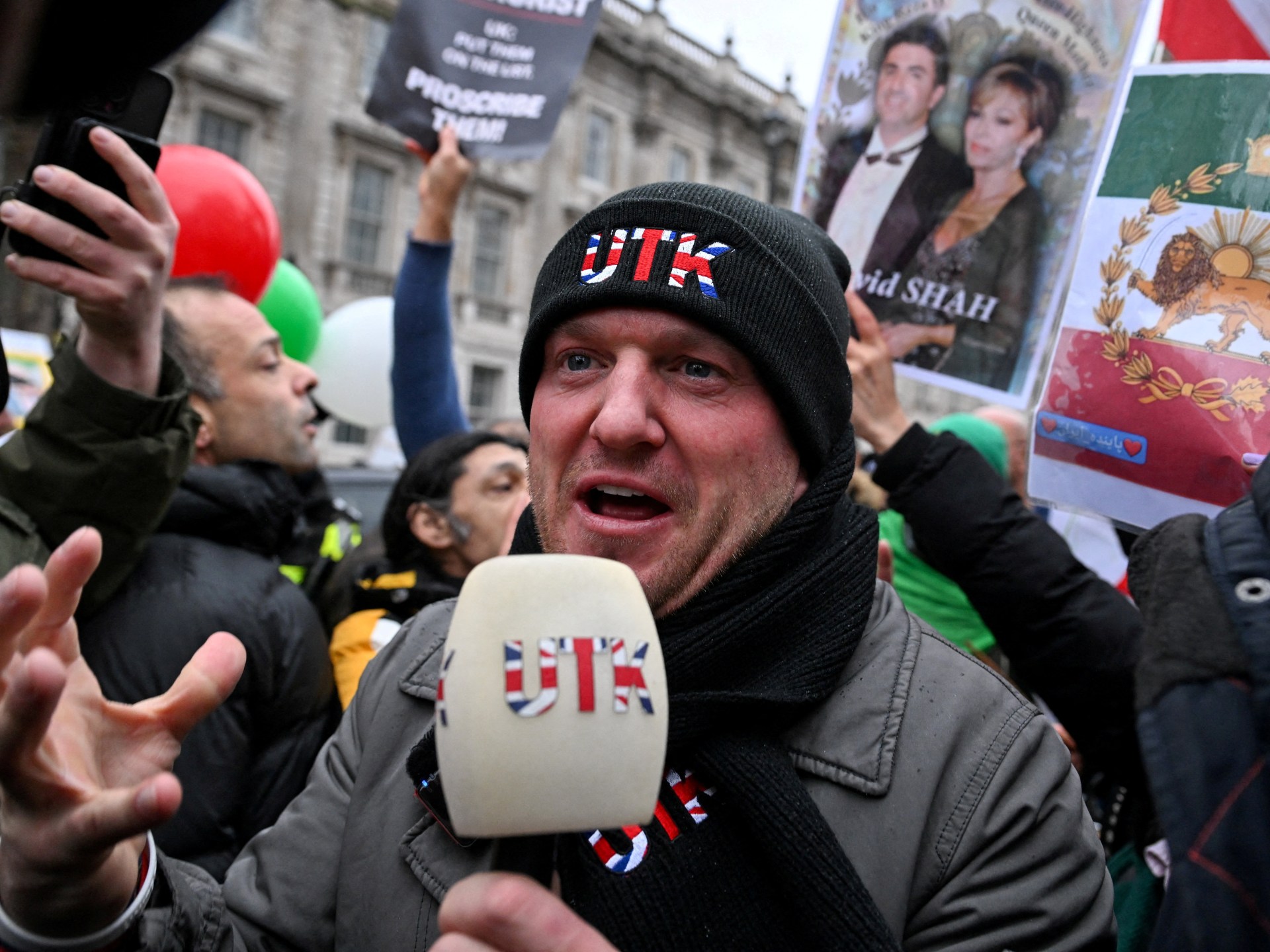
In the UK, Tommy Robinson and Paul Golding are taking different stances on the war. Robinson has enthusiastically supported it, while Golding, leader of Britain First, expressed reservations, saying “Not our fight, not our war. Put Britain First.”
Marine Le Pen, leader of France’s National Rally, has also taken a cautious approach to US intervention in Venezuela and Iran. While she initially criticized Macron’s announcement about sending an aircraft carrier to the Mediterranean, she later expressed support for the US position.
Experts point out that these divisions reflect a paradox within the European far-right movement. The hard right often shares similar grievances and concerns across countries, particularly around immigration. However, their views on nationalism and cooperation with other parties vary widely.
Tim Bale, a politics professor at Queen Mary University of London, notes that historically, parts of the far right have viewed the US with suspicion, while others have seen it as a strategic ally. The current divisions over Iran are resurfacing this trend.
Morgan Finnsio, a Swedish researcher who studies far-right movements, adds that factions within the Western far-right have consistently fractured over geopolitical issues. The current divisions center on Trump’s “radical new geopolitical orientation” and its consequences, including attacks on Venezuela and threats to Greenland.
These divisions are largely driven by the influence of outside powers, such as Russia, the US, and Israel, which often have competing interests in the region.
Source: Al Jazeera