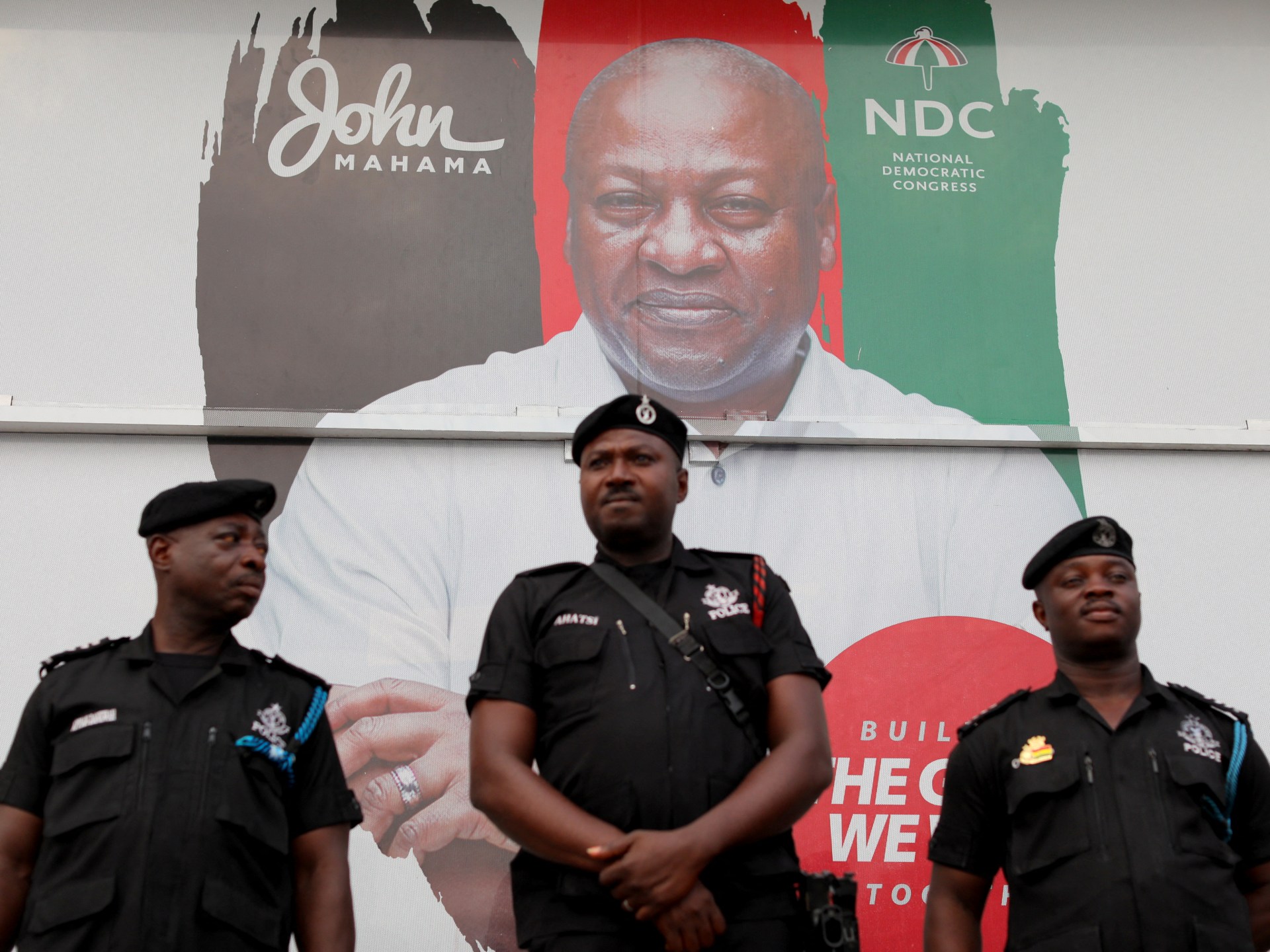
Ghana arrests critics amid concerns over free speech during Mahama presidency
June 6, 2026 • Al Jazeera
Here’s a rewritten version of the article in a neutral newsroom style:
Ghana Sees Rise in Arrests Linked to False News and Offensive Speech
In Ghana, 14 individuals have been arrested for spreading false news and making offensive comments over the past 16 months. This number is nearly double that documented during the previous administration’s eight-year tenure.
According to the Media Foundation for West Africa (MFWA), authorities claim these arrests are related to long-standing laws in a new digital environment. However, some critics argue that the government is using these laws to restrict public speech.
President John Mahama warned in 2022 that using state power to intimidate dissent was a “dangerous blueprint” for democracy. A senior ruling party official has dismissed allegations of a crackdown, stating that opposition figures intentionally sponsor individuals to insult the President.
Opposition leaders, including Minority Leader Alexander Afenyo-Markin, have expressed concerns about the government’s actions. They argue that arresting citizens for words that do not constitute genuine threats is not justice but intimidation.
Ghana’s Criminal Code and Electronic Communications Act are at the center of the debate. Some argue that these laws need to be applied in a way that balances free speech with harm prevention. A legal consultant has identified at least 16 alleged misapplications of Section 208 in recent cases, compared to roughly a dozen over the previous eight years.
Veteran journalist Ben Ephson has called for clearer guidance on where free expression ends and harm begins. He believes the government must explain its actions to ensure people understand the difference between press freedom and responsible journalism.
The debate in Ghana is not unique, as similar tensions are playing out in other democracies. Experts point to gaps in public understanding of constitutional rights and the need for stronger institutions to manage the pressures of the digital age.
Source: Al Jazeera