Indigenous glacier grafting technique helps counteract global water scarcity issues
February 17, 2026 • Al Jazeera
Here is a rewritten version of the article in a neutral newsroom style:
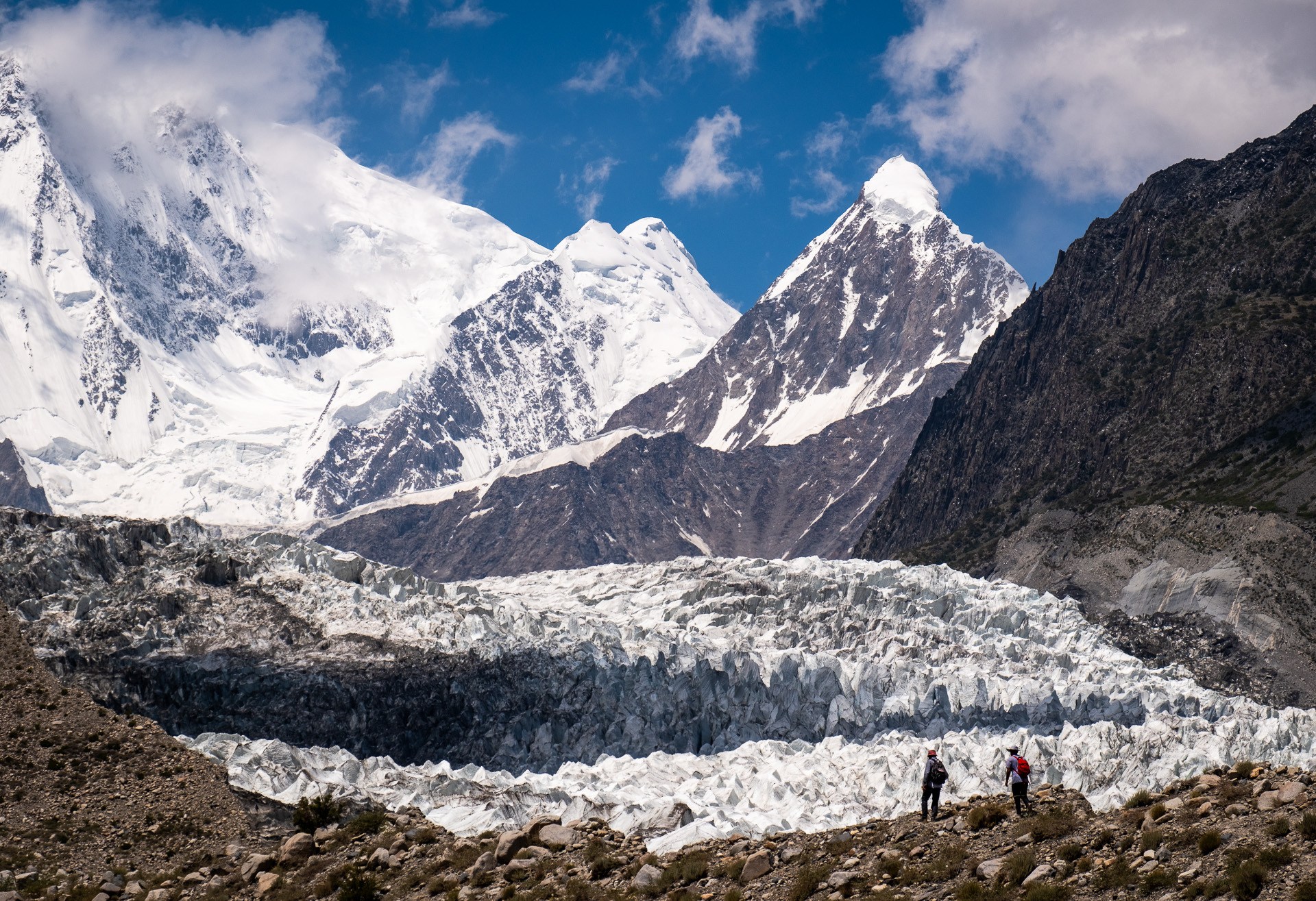
Residents in Pakistan’s northern region are employing an ancient technique known as glacier grafting to address water shortages due to rising temperatures. The practice, also referred to as “glacier marriage,” involves transporting ice from glaciers closer to human settlements and placing it at carefully chosen high-altitude locations to create new artificial glaciers.
Pakistan is home to approximately 13,000 glaciers and is considered one of the top 10 most climate-vulnerable nations globally. According to the National Disaster Management Authority (NDMA), global warming is expected to have a significant impact on glacier melting.
Glacier grafting has been practiced for centuries in the region, with the earliest recorded instance dating back to the 14th century. The technique involves storing ice from glaciers near human settlements during periods of water scarcity. Experts believe that this practice evolved as a method for managing water scarcity in the fragile mountain ecosystem.
In addition to glacier grafting, residents in the Ladakh region have developed a newer technique called “ice stupa formation.” This process involves spraying water into freezing temperatures and creating an ice structure with a conical shape. The resulting structure remains frozen for longer periods due to its partially shaded surface.
The creation of artificial glaciers requires specific materials, including coal, grass, salt, and water collected from seven different streams. Locals follow environmentally respectful practices during the process, which includes reciting Quranic verses, performing spiritual rituals, and avoiding plastics and immoral actions.
In some regions, volunteers collect around 200kg of “male” ice from one valley and “female” ice from another to create an artificial glacier. The “male” ice is typically black in color, while the “female” ice is usually lighter, providing more fertile water for agricultural purposes.
Source: Al Jazeera