Iran Conflicts Economic Impact Revealed in Global Market Trends
March 16, 2026 • Al Jazeera
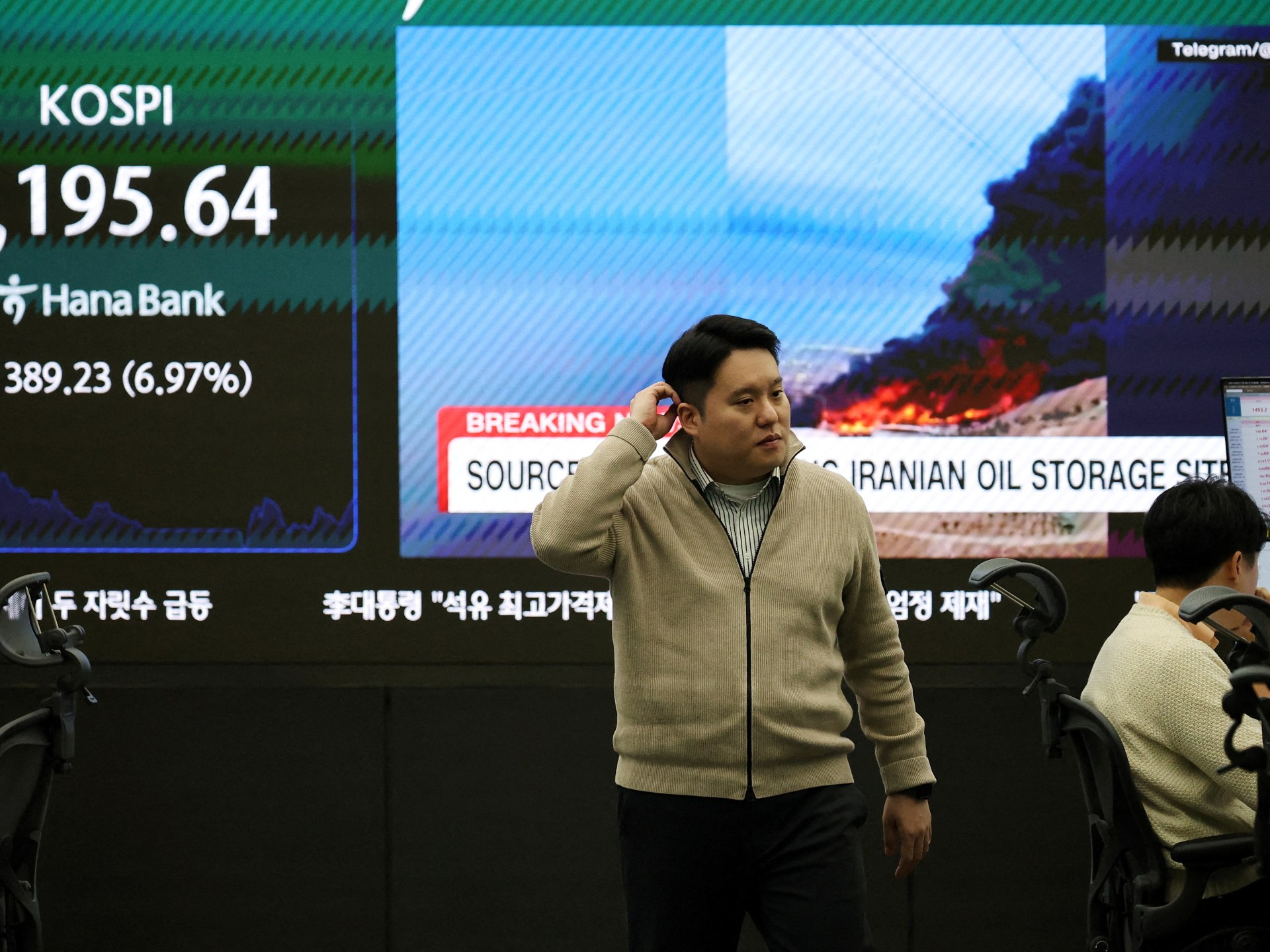
Global Oil Prices Rise Amidst Conflict in Middle East
The ongoing conflict between the US-Israeli forces and Iran has led to a significant increase in global oil prices, with Brent crude rising by over 40% since February 27. The war has disrupted oil supplies through the Strait of Hormuz, which accounts for approximately 20% of global oil and gas exports.
Iranian attacks on several vessels passing through the strait have reduced traffic in the narrow channel, causing a shortage of oil supplies. Additionally, Iranian drones have targeted fuel tankers in Iraqi waters, further exacerbating the situation.
As a result, prices of refined products such as petrol, jet kerosene, and fuel oil have also increased significantly. Liquified natural gas (LNG) prices have risen by almost 60% since the start of the war.
According to data from the US Energy Information Administration, about 84% of crude oil and 83% of LNG that passed through the Strait of Hormuz in 2024 were bound for Asia. China, India, Japan, and South Korea accounted for nearly 70% of those oil shipments.
Analysts predict that if the conflict is short-lived, oil prices would fall back sharply by the end of the year. However, if the conflict continues, oil prices could rise further to around $130 per barrel in Q2. Shipments through the Strait of Hormuz are expected to resume in Q2, but prices may remain higher than expected.
The impact of rising oil prices is being felt globally, with at least 85 countries reporting increases in petrol prices since February 28. Governments have responded by introducing measures to conserve fuel, such as reducing work hours for government employees in Pakistan.
Source: Al Jazeera