Oil prices to remain volatile despite Iran conflict resolution efforts
March 23, 2026 • Al Jazeera
US-Israeli Conflict Sparks Global Energy Market Turmoil
A significant disruption to oil and gas supplies has led to a sharp increase in global energy prices. Research suggests that the US-Israeli conflict on Iran will have a profound impact on the global energy market. The price of Brent crude oil has risen to nearly $120 per barrel, its highest point since July 2008.
In 2022, following Russia’s invasion of Ukraine, Brent crude also spiked, reaching $139 per barrel in March before stabilizing at pre-war rates later that year. However, the current conflict with Iran is expected to have a different outcome. The closure of the Strait of Hormuz has resulted in a physical chokepoint, taking offline part of the global oil supply.
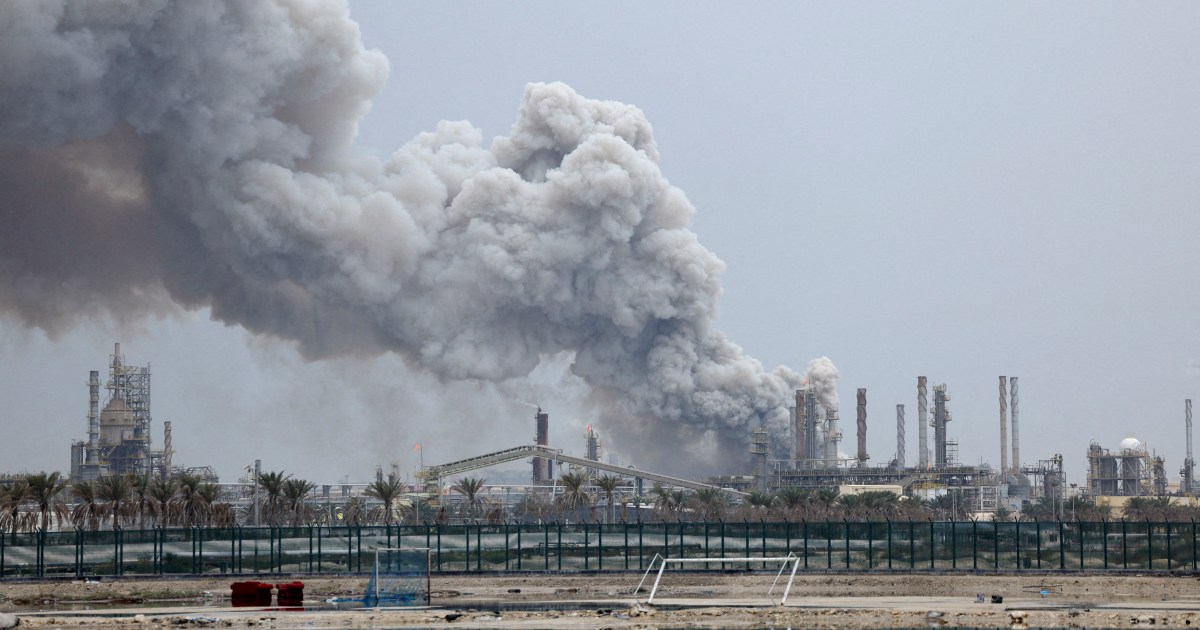
Tanker traffic disruptions have forced Gulf producers to reduce output as storage capacity has been depleted. Iranian strikes on gas and oil infrastructure have also damaged facilities and led to shutdowns. These attacks have increased uncertainty and removed production capacity from the market.
The International Energy Agency (IEA) assesses that this current episode is the largest supply disruption in global oil market history, with flows through Hormuz collapsing to a trickle. Gulf production cuts of at least 10 million barrels per day are also reported.
In contrast to the 2022 energy shock caused by Russia’s invasion of Ukraine, which was primarily driven by sanctions and price caps, the current conflict is expected to have a more lasting impact. The US-Israeli war on Iran has resulted in a physical outage, rather than just rerouting supplies or releasing reserves from storage.
The effectiveness of reserve releases is also constrained by logistics, as strategic petroleum reserves are predominantly located in the US, Europe, Japan, and South Korea. Moving oil to affected markets requires time, shipping capacity, and secure maritime routes. Alternative pipeline routes bypassing the Strait of Hormuz provide only limited spare capacity.
The natural gas market faces a similar crisis, with 112 billion cubic meters (bcm) of liquefied natural gas (LNG) normally passing through the Strait of Hormuz now cut off. The alternatives are limited, and the impact on global energy markets is expected to be significant.
Source: Al Jazeera