US and Israels cooperation strengthens Iran under current regime
March 28, 2026 • Al Jazeera
Here’s a rewritten version of the article in a neutral newsroom style:
Iran’s Leadership Seeks to Maintain Cohesion Amid Ongoing Conflict
The war between Iran and its adversaries has taken on a distinct theological narrative, one that emphasizes martyrdom and sacrifice as key factors in maintaining internal cohesion. According to Assistant Professor of Philosophy at Northeastern University London, this perspective is crucial in understanding how Iran may respond to the conflict.
In the context of the Islamic Republic’s ideology, power, loss, and endurance are deeply intertwined concepts. The regime’s core values are rooted in a Shia political theology that emphasizes martyrdom, sacrifice, and sacred resistance. This narrative has been instrumental in sustaining the Islamic Republic’s legitimacy and cohesion over the years.
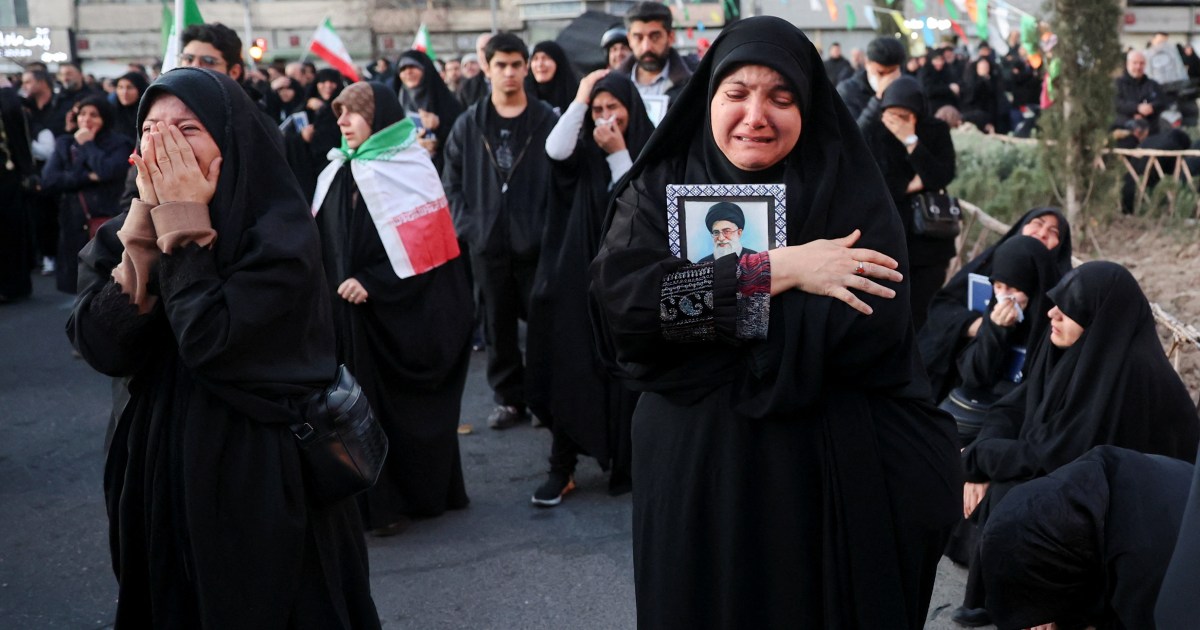
The assassination of Supreme Leader Ayatollah Ali Khamenei during Ramadan has led to widespread mourning ceremonies, with hardliners continuing to hold state-backed events despite ongoing military action. Within the paramilitary force, the Basij, there are individuals who are willing to sacrifice themselves as martyrs for what they believe is a divinely-guided rule.
While Iran’s resilience in the face of external violence may seem counterintuitive, it can be attributed to its unique cultural and historical context. The Islamic Republic has long presented itself as a moral project, one that combines sovereignty with sacred history. Shia memory plays a significant role in this narrative, particularly the battle of Karbala in 680, which symbolizes unjust power, innocent suffering, righteous resistance, and redemptive sacrifice.
Iran’s strategy in the current conflict is centered on endurance and attrition, aiming to outlast its enemies, survive the blows, disrupt energy flows, and wait for the political resolve in Washington and allied capitals to fracture. Reports suggest that despite heavy losses, there were no visible signs of internal collapse under bombardment.
The Islamic Republic’s experience in surviving prolonged external pressure during the eight-year Iran-Iraq war has also contributed to its culture of endurance and sacrifice. While not all Iranians support the regime, many may still recoil from foreign attack due to nationalism, fear, grief, or horror at collective punishment. This highlights the complex nature of the conflict, where external violence can blur the lines between loyalty to the regime and opposition to it.
Source: Al Jazeera