US claims destruction of Iranian missile capabilities remains unverified
March 16, 2026 • Al Jazeera
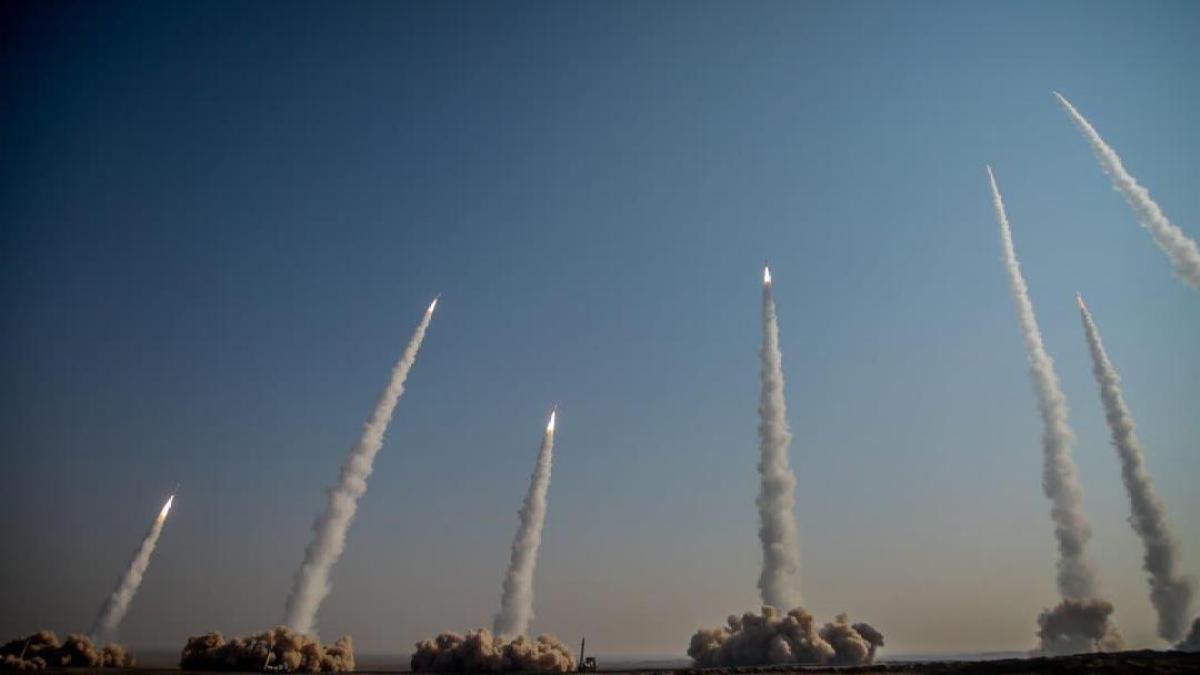
Iran’s Missile Capabilities Remain a Concern Despite Reduced Launch Frequency
Despite joint operations by the United States and Israel, Iran has maintained enough missile capabilities to continue firing strategically in the region. According to recent assessments, Iran’s ballistic missile capacity remains functional, despite being severely degraded.
The White House stated on Saturday that Iran’s navy is considered combat ineffective, with complete aerial dominance over the country. The US military has reported significant results from “Operation Epic Fury,” launched on February 28. President Donald Trump also announced that US forces had decimated Iran’s drone manufacturing capacity.
However, Qatar recently intercepted a missile fired from Iran towards the country, and Saudi Arabia, the United Arab Emirates, and Bahrain issued alerts. A missile landed in Abu Dhabi, killing one person.
Iran has reduced its retaliatory missile and drone launches since the start of the conflict. In the first 24 hours, Iran had fired 167 missiles and 541 drones at the United Arab Emirates. By day 15, this number had decreased to four missiles and six drones. The barrage against Israel has also decreased significantly.
The US Office of the Director of National Intelligence assessed in 2022 that Iran has the largest inventory of ballistic missiles in the region. Israeli intelligence reports suggest that Iran has approximately 3,000 missiles, although this figure may have dropped following the 12-day war last June.
The US-Israel strategy involves hunting down Iran’s launchers, which can be identified by a signature such as a large explosion. However, Iran is a vast country, making it difficult to completely eliminate its capacity to shoot despite having nearly full control of its airspace.
Experts say that Iran has been firing one or two missiles at a time towards civilian and commercial infrastructure, rather than aiming volleys at military targets. This approach is seen as “harassment fire” aimed at exhausting alert systems in nearby countries and scaring people off.
Source: Al Jazeera