US Government Introduces New Regulations on Conspiracy Theories and Speculation
May 2, 2026 • Al Jazeera
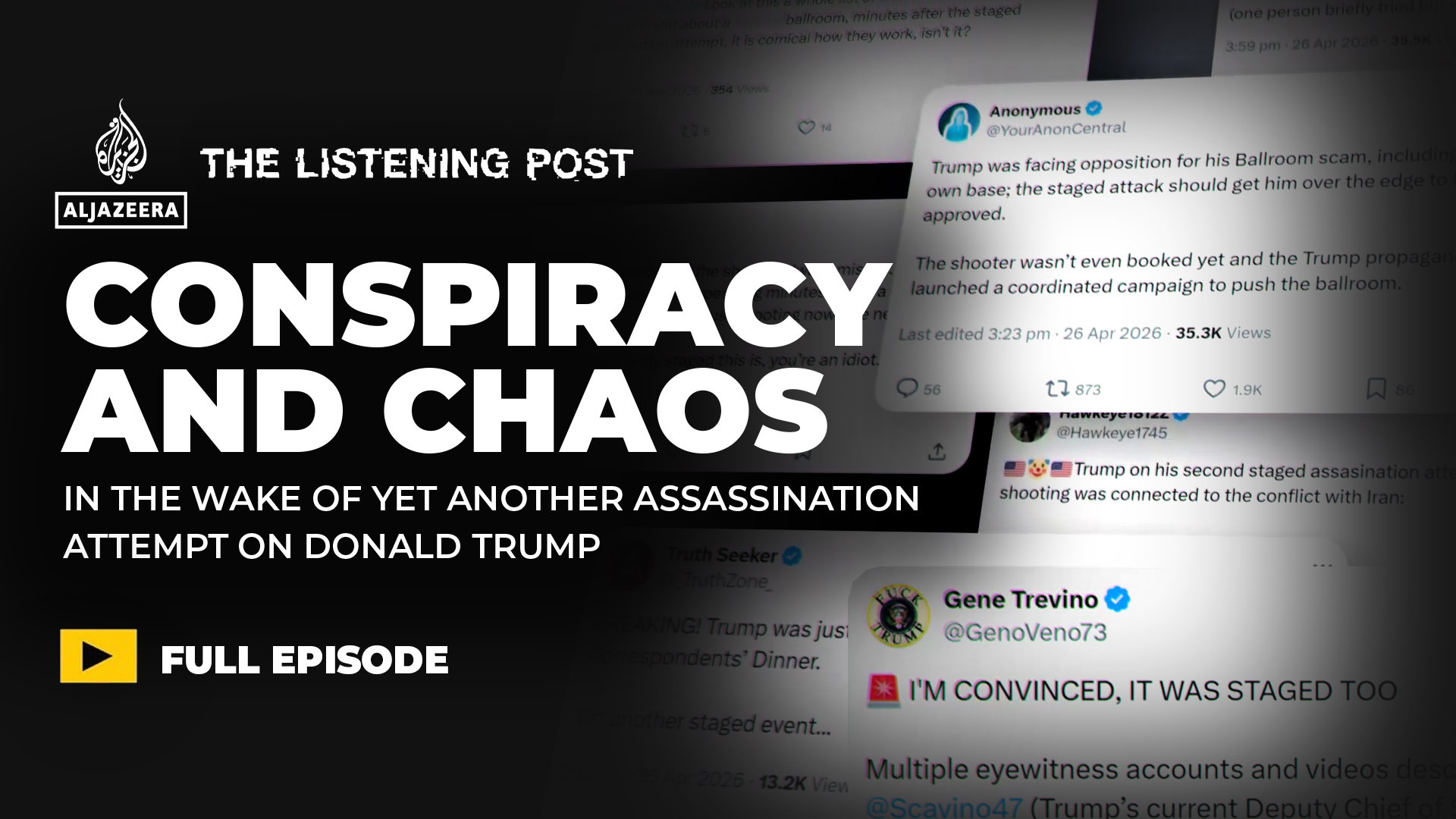
Here’s a rewritten version of the article in a neutral newsroom style:
Assassination Attempt at White House Correspondents’ Dinner Sparks Concerns Over Media Trust and Conspiracy Theories
A recent assassination attempt at the White House correspondents’ dinner has highlighted the growing concerns over media trust and the spread of conspiracy theories. The incident, which occurred during an event meant to celebrate journalism, has raised questions about the safety of journalists and the public’s perception of the media.
As news of the attempted assassination broke, a parallel narrative began to emerge online, with some individuals speculating about potential motives and conspiracies surrounding the event. This phenomenon is not unique to this incident, as conspiracy theories often gain traction in the aftermath of high-profile events.
Meanwhile, Russia has faced criticism for its efforts to tighten internet restrictions and throttle Telegram, a popular messaging app. The move has sparked public backlash, with President Vladimir Putin acknowledging that the measures may have gone too far.
Separately, Israeli forces have been accused of using tactics such as drone surveillance, AI-powered targeting, and infiltration of Lebanese communications devices to control the population and spread terror in Lebanon. This has led to an escalation of Israel’s information war, which involves the use of propaganda to deepen divisions within Lebanese society.
These incidents highlight the complex issues surrounding media trust, conspiracy theories, and the role of technology in shaping public discourse.
Source: Al Jazeera