US Supreme Court Rules Against Sweeping Global Tariffs Imposed by Trump Administration
February 20, 2026 • Al Jazeera
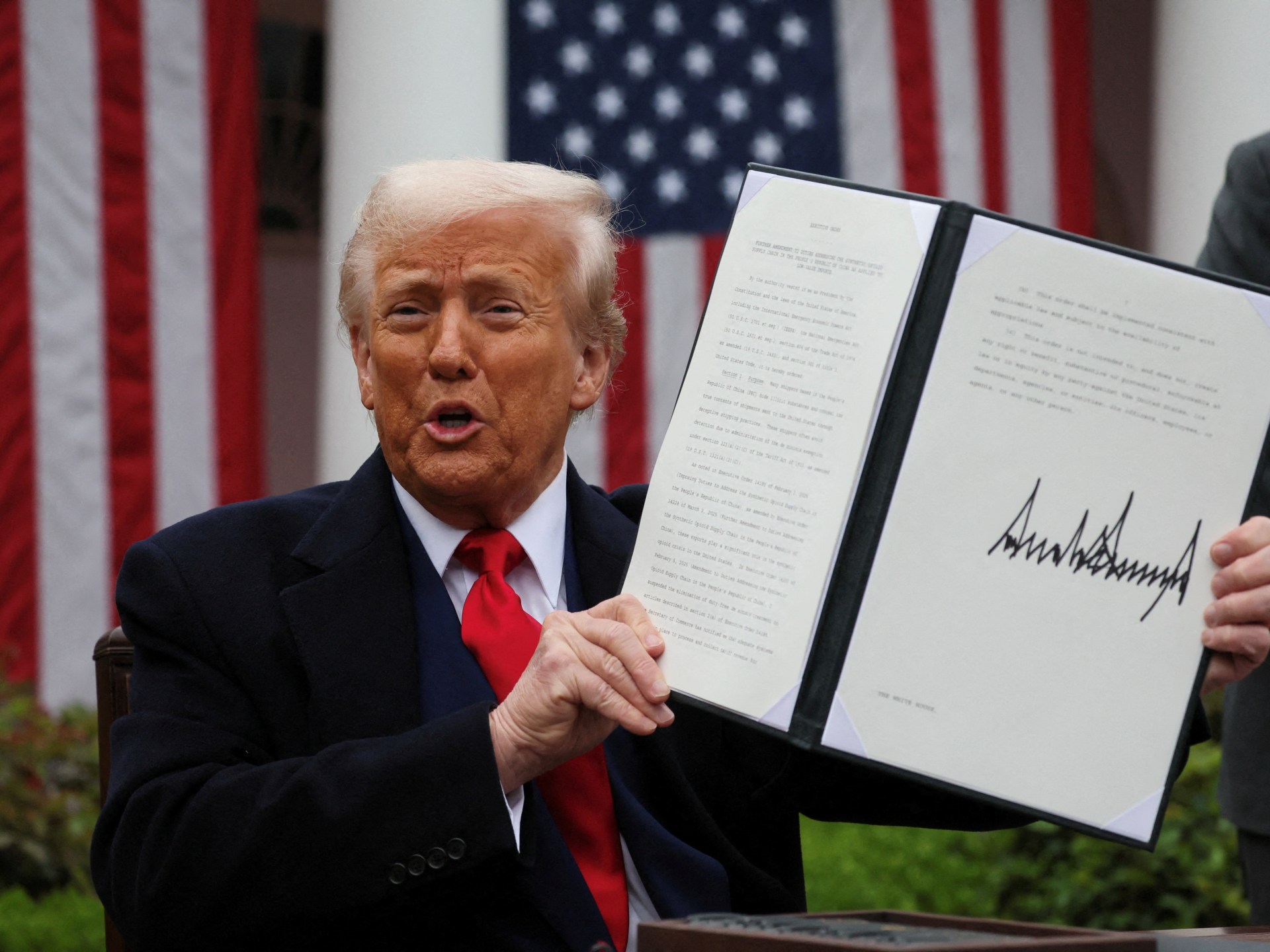
US Supreme Court Rules on Tariff Imposition by Former President Trump
The US Supreme Court has issued a ruling stating that former President Donald Trump did not have the authority to impose tariffs under a specific law intended for national emergencies.
According to the court’s decision, the Tariff Act of 1930 provides for the imposition of tariffs in response to national emergencies declared by the president. However, the court ruled that this provision does not grant the president blanket authority to impose tariffs without congressional approval.
The case involved Trump’s imposition of tariffs on steel and aluminum imports from several countries, including Canada and Mexico, in 2018. The tariffs were imposed under Section 301 of the Trade Act of 1974, which allows the president to take action against foreign trade practices that are deemed unfair or unreasonable.
In its ruling, the Supreme Court held that Trump’s imposition of the tariffs was not authorized by law because Congress had not provided explicit authorization for such actions. The court also noted that the Tariff Act of 1930 requires congressional approval for the imposition of tariffs in response to national emergencies.
The decision marks a significant development in the ongoing debate over the president’s authority to impose tariffs and other trade restrictions without congressional approval. The ruling is expected to have implications for future trade policy decisions by the US government.
Source: Al Jazeera