US Supreme Court to Consider Birthright Citizenship Constitutional Challenge
April 1, 2026 • Al Jazeera
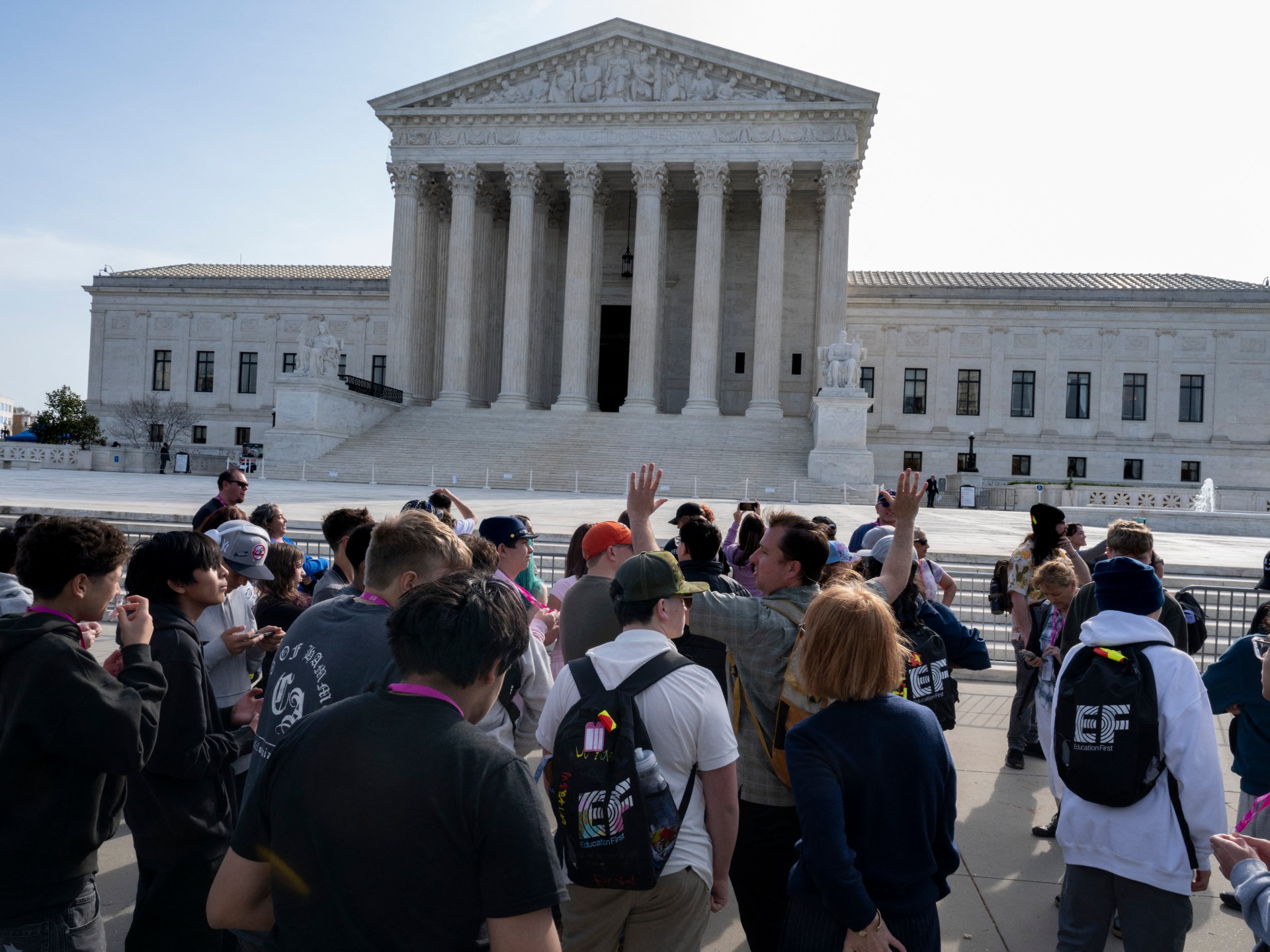
US Supreme Court to Hear Challenge to Trump’s Executive Order on Birthright Citizenship
A challenge to President Donald Trump’s executive order aimed at ending birthright citizenship is set to be heard before the US Supreme Court on Wednesday. The order, signed by Trump just hours after taking office in January 2025, sought to effectively end the long-standing interpretation of the 14th Amendment of the US Constitution as establishing universal citizenship for infants born in the country.
The case, Trump v Barbara, is a class action brought on behalf of individuals who would be denied citizenship under the executive order. The plaintiffs include a Honduran citizen, a woman from Taiwan on a student visa, and a Brazilian national whose wife gave birth in March 2025.
Aarti Kohli, executive director of the Asian Law Caucus, which brought the challenge alongside other organizations, will present the case before the nine-justice panel of the US Supreme Court. The court’s conservative supermajority may influence the outcome, as it has previously ruled in Trump’s favor on immigration-related issues.
The 14th Amendment, ratified in 1868, states that “all persons born or naturalised in the United States, and subject to the jurisdiction thereof, are citizens of the United States and of the State wherein they reside.” The executive order argues that this phrase does not apply to those without documentation or on temporary visas.
The case has been part of a months-long challenge to the executive order, which has faced significant opposition from various groups. At least 10 legal challenges have been launched against Trump’s order, but this is the first to be heard before the Supreme Court.
Kohli stated that the court will determine whether the president has the power to rewrite the Constitution. The outcome of the case could have significant implications for American society and the cultural fabric of the US.
Source: Al Jazeera