Venezuelas Future Uncertain Amid Power Struggle Over Oil Resources
January 5, 2026 • Al Jazeera
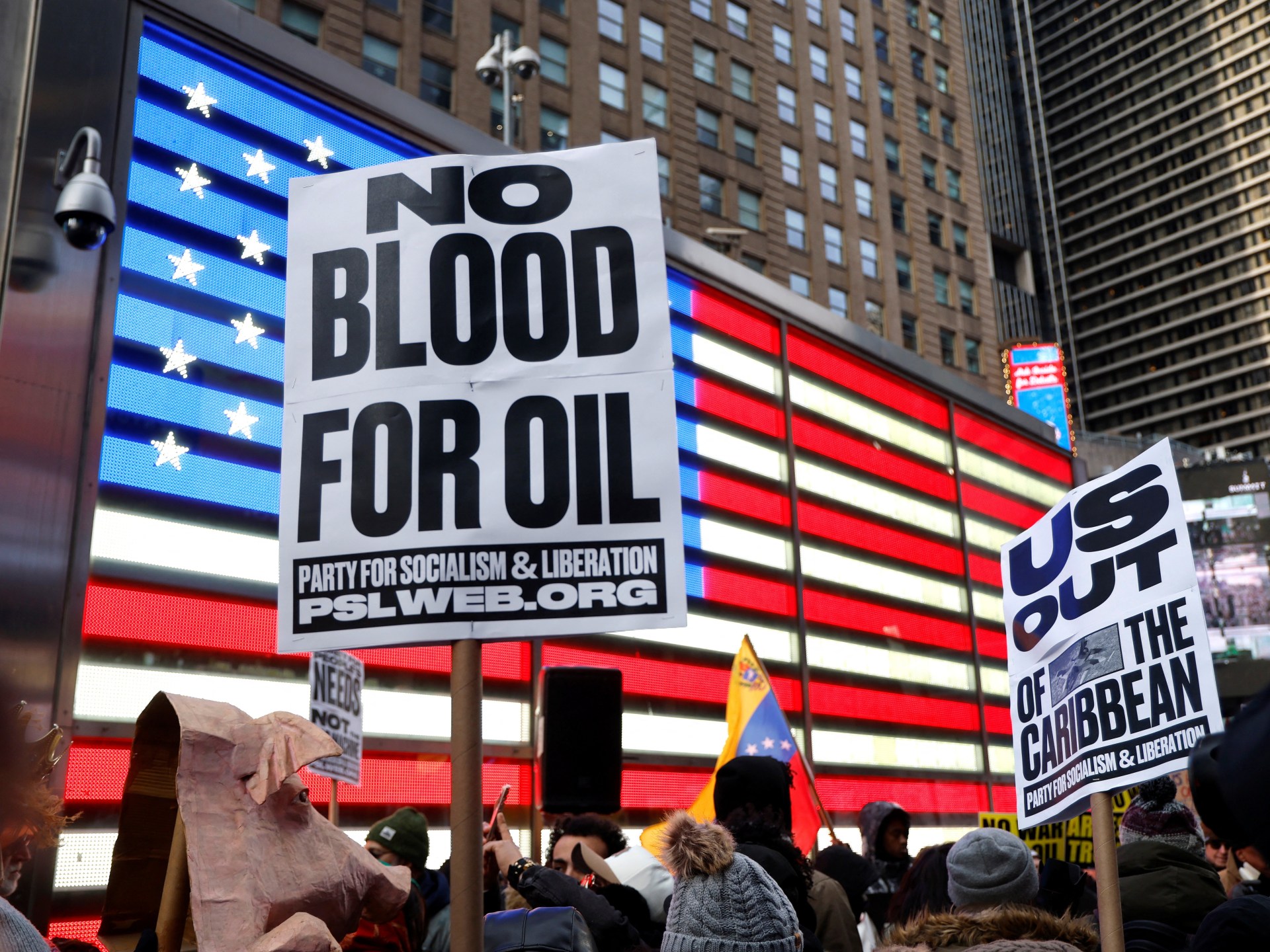
Venezuela’s Oil Reserves and US Intervention
The United States has taken military action against Venezuela, resulting in the arrest of President Nicolas Maduro. The operation was carried out by the US military, with Washington describing it as “decisive, necessary and complete.” The incident has sent shockwaves beyond Latin America, particularly in the Middle East and North Africa.
Venezuela is home to an estimated 303 billion barrels of proven oil reserves, accounting for approximately 17% of global total. However, the country’s oil production has been significantly reduced. In November, Venezuela produced 934,000 barrels per day, less than 1% of global demand. The decline in production began under former President Hugo Chavez and continued with Maduro.
US sanctions were imposed on Venezuela in January 2019, aimed at forcing a change in the government’s leadership. The sanctions targeted the state oil company PDVSA, severing its access to critical revenue streams. This led to a collapse of the country’s economy and oil industry. The US also imposed an embargo on all transactions with PDVSA, threatening secondary sanctions on foreign entities doing business with it.
The sanctions halted Venezuela’s oil exports to key markets like India and the European Union, preventing the import of diluent chemicals needed for processing heavy crude. As a result, the Venezuelan government resorted to printing more money, triggering hyperinflation that wiped out salaries and savings. This led to a mass exodus of nearly 8 million Venezuelans beginning in 2019.
The impact on oil markets has been muted, with prices falling despite the US intervention. Brent crude slipped to around $60 a barrel, while West Texas intermediate (WTI) dropped below $58. The explanation for this drop lies in oversupply, as new barrels enter the market from Brazil, Guyana, Argentina, and the US.
OPEC+ has begun unwinding voluntary cuts totaling nearly 4 million barrels per day, while the International Energy Agency projects supply could exceed demand by up to 2 million barrels per day in 2026. The lack of reaction from oil markets allows the US intervention to be framed as a necessary act, masking the long-term reality that rebuilding Venezuela’s oil industry will require hundreds of billions of dollars over the course of a decade.
Source: Al Jazeera