Venezuelas Military Plays Crucial Role in Countrys Future Uncertainty
January 10, 2026 • Al Jazeera
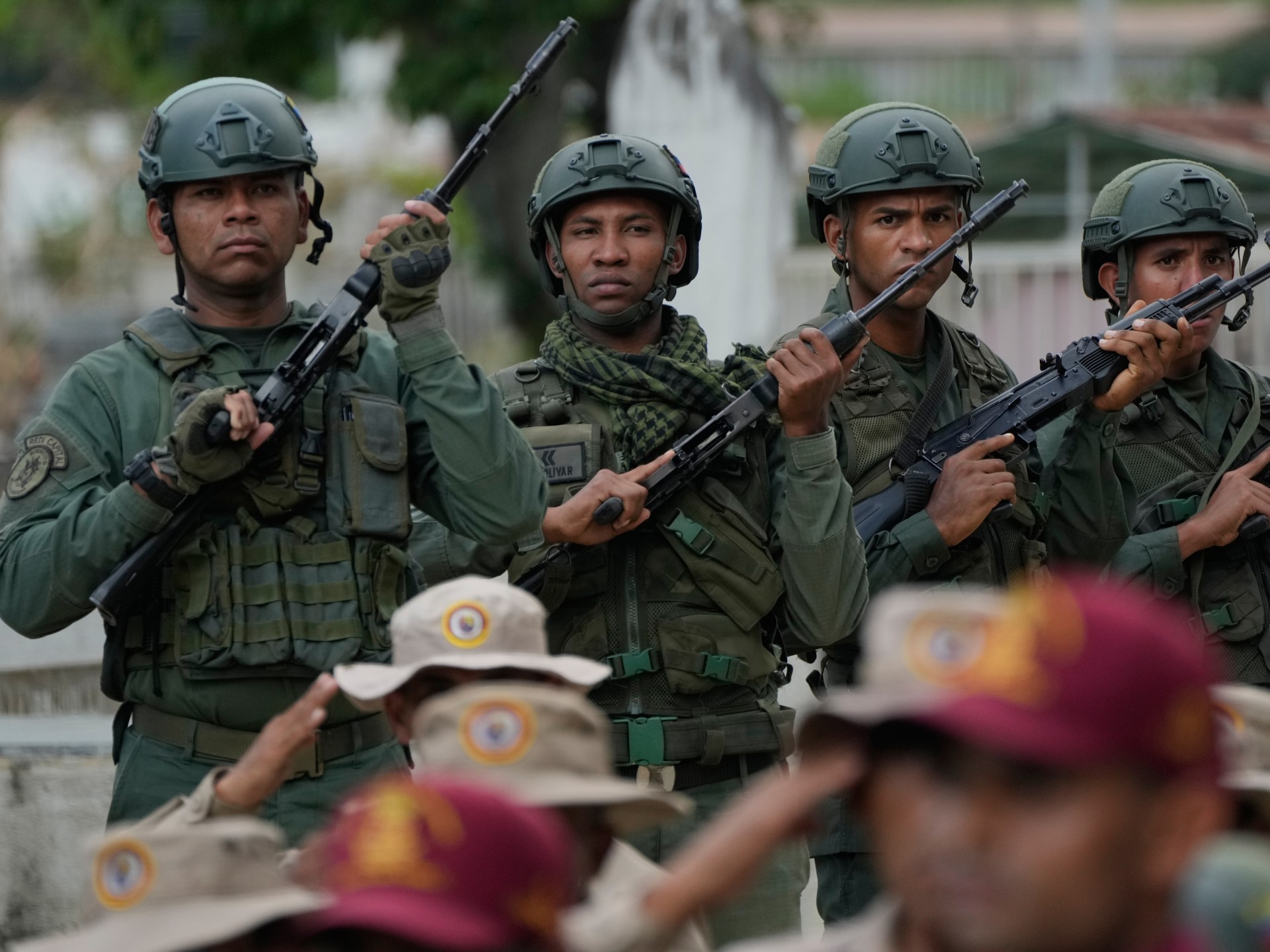
Venezuela’s Military Faces Crucial Dilemma Amid Maduro’s Abduction
The National Bolivarian Armed Forces (FANB), Venezuela’s military, has been a key ally to the country’s leaders for nearly three decades. The FANB played a significant role in dismantling the previous political establishment and persecuting opposition figures under Hugo Chavez and Nicolas Maduro. In exchange, the governments of Chavez and Maduro granted the military leadership various positions and influence within Venezuelan politics.
However, the abduction of Maduro by US special forces has exposed weaknesses in the FANB’s military technology and defense protocols. The operation took place at Fuerte Tiuna, a major Venezuelan military complex. With Maduro’s removal, the military’s image as a protector of the state has been compromised.
The FANB now faces a critical decision: to support the US-backed transition led by interim president Delcy Rodriguez or risk further US attacks and erosion of its power. The military’s influence has grown significantly over the years, including in law enforcement, which has replaced the roles of state and local police in many cases.
The government has long relied on the FANB to maintain stability, incorporating elements of the ruling United Socialist Party of Venezuela (PSUV), paramilitary groups, and the political, judicial, and military police into its security framework. This “civic-military-police union” has given the military a critical role in any political transition.
Many analysts believe that any government established in Venezuela needs the support of the military to govern effectively. Rodriguez’s administration relies on the military’s backing to avoid exacerbating tensions in the country. The US president’s trust in Rodriguez, rather than opposition leader Maria Corina Machado, is partly due to her acceptance among military ranks.
The FANB’s asymmetrical power dynamics with the US military leave Venezuela vulnerable to potential attacks. This threat serves as a significant incentive for the military leadership to make compromises and participate in the transition led by Rodriguez. The FANB will likely need to comply with various steps to maintain its status within Venezuelan politics, some of which were previously unthinkable.
The situation highlights the complex relationships between the Venezuelan government, the military, and external actors like the US. As the country navigates this uncertain period, the FANB’s decisions will have far-reaching consequences for Venezuela’s future.
Source: Al Jazeera