BNP emerges victorious in Bangladeshs post-revolutionary general election
February 14, 2026 • Al Jazeera
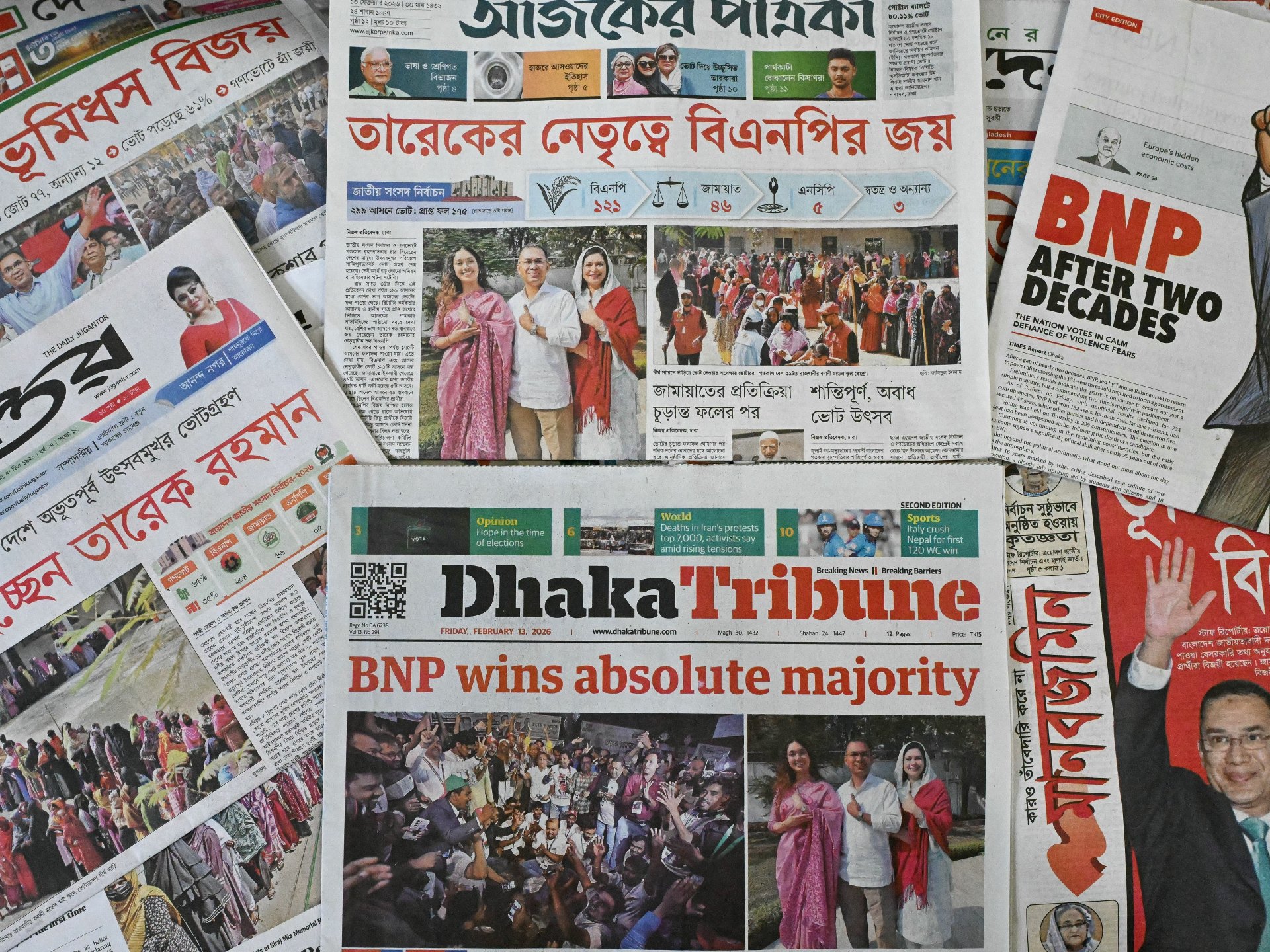
Bangladesh Nationalist Party Secures Victory in 13th Parliamentary Election
The Bangladesh Nationalist Party (BNP) has secured a decisive victory in the country’s 13th parliamentary election, returning to power after years of opposition under Sheikh Hasina’s rule. The BNP won 151 seats out of 300, while its main rival, Bangladesh Jamaat-e-Islami (JI), secured 77 seats.
According to official results, JI had gained significant support in the lead-up to the election, with many analysts predicting a strong showing for the party. However, the outcome was ultimately determined by the first-past-the-post system used in the country’s electoral process.
In this system, a party’s vote share does not directly translate into seats won. Instead, voters cast ballots for individual candidates, and the candidate with the most votes in each constituency is elected. This means that even if a party has gained significant support overall, it may still lose seats to other parties if its candidates do not perform well in individual constituencies.
The election was marked by widespread discontent with the BNP’s leadership, particularly among rural voters who felt that the party had failed to deliver on promises of economic growth and stability. However, the BNP’s nomination strategy proved effective, as it relied on familiar faces from previous elections rather than new candidates.
In many constituencies, voters opted for the BNP due to its established network of supporters and local leaders. This was particularly true in rural areas, where the party’s ability to provide access to jobs, stability, and dispute resolution was seen as more important than ideological purity.
The election was not a revolution, but rather a significant shift in voter sentiment. While many voters were dissatisfied with the BNP’s excesses, they ultimately chose the party due to its familiarity and local connections. The outcome of the election highlights the importance of understanding the complexities of Bangladesh’s electoral system and the role that patronage networks play in shaping voter behavior.
Source: Al Jazeera