Iran faces challenges balancing military security with diplomatic relations abroad
March 19, 2026 • Al Jazeera
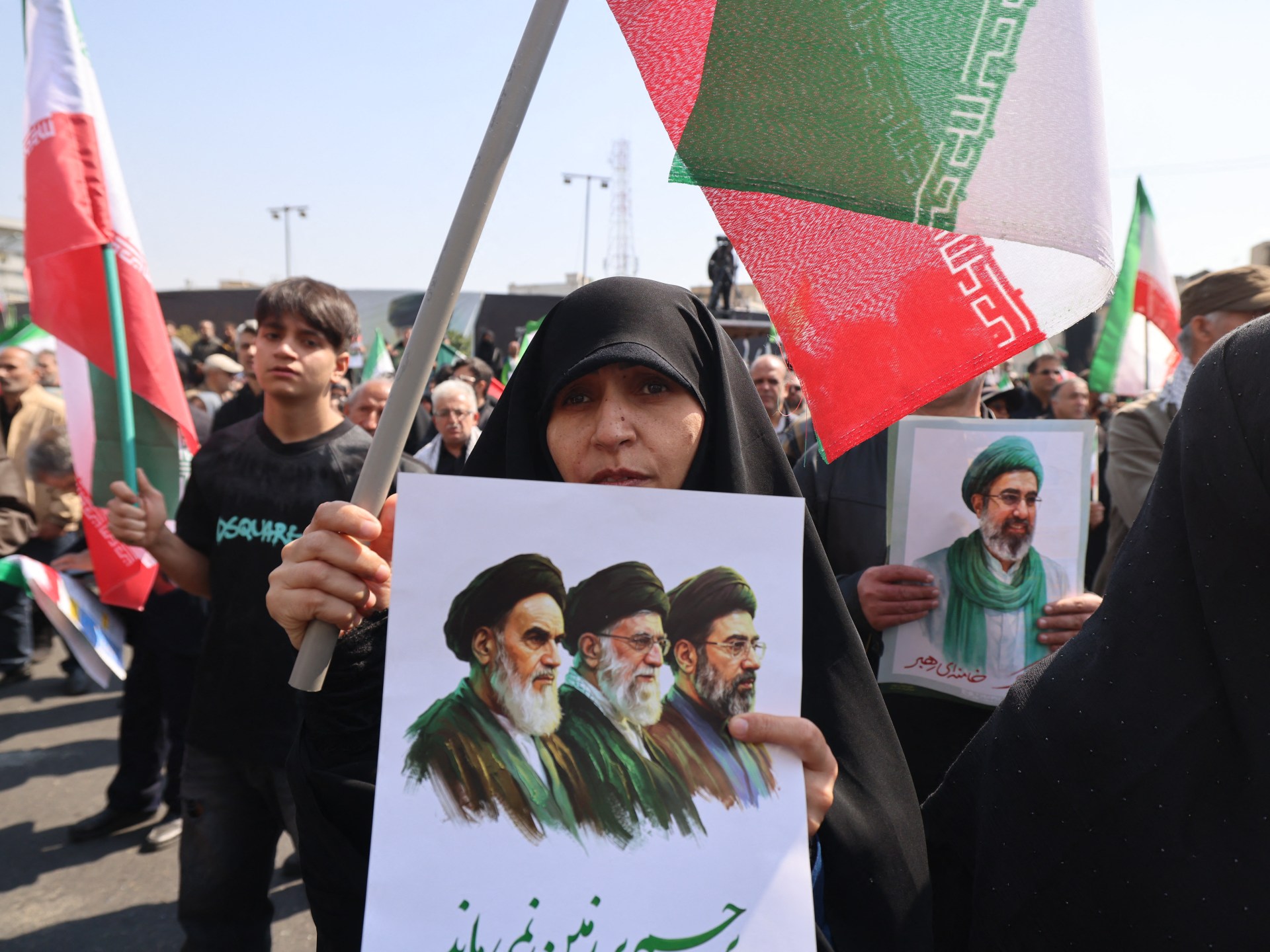
Iran Faces Growing Pressure Amid Escalating Conflict
The Iranian government is facing mounting pressure both domestically and internationally, highlighting the limits of its regional strategy and capacity to sustain escalation without full-scale war.
Upon coming to power in 1979, Ayatollah Ruhollah Khomeini adopted a distinctly Shia-sectarian constitution, which effectively marginalized non-Shia citizens. This approach was part of his “tilling the land” program, aimed at exporting the revolution beyond Iran’s borders. The consequences of this program continue to be felt in the region.
The ongoing war with the US-Israel alliance has exposed Iran’s intentions towards Arab Gulf states and its excessive power. The Iranian regime has failed to respect neighboring countries’ rights, targeting civilian sites and economic infrastructure in Gulf cities. Relations between Iran and Gulf Cooperation Council states are complex, defined by repeated military and security confrontations, as well as political positions viewed as a direct threat to their security and sovereignty.
Iran’s regional network of armed groups reflects its strategy, with militias operating in Iraq, Lebanon, Syria, and Yemen. These groups are funded and directed by Iran, placing it in conflict with regional countries, particularly the Gulf states. The pursuit of a nuclear program has also led to sustained international confrontation.
The Iranian regime’s ideology is rooted in the concept of Wilayat al-Faqih, developed by Khomeini, which assigns the Guardian Jurist a direct line of authority from the hidden imam. This theory has been adopted by Ali Khamenei and Mojtaba Khamenei, who act as the “Guardian Jurist” on behalf of the hidden imam.
The consequences of Iran’s actions in the region are far-reaching, with many viewing its ideology as a new imperial project driven by Persian ambitions. The Iranian government’s response to these criticisms is unclear, but it remains to be seen how it will navigate the complex regional dynamics and international pressures.
Source: Al Jazeera