Somali population faces severe food shortages due to climate change and conflict
April 23, 2026 • Al Jazeera
Somalia’s Drought Crisis Deepens: 6.5 Million Face Hunger
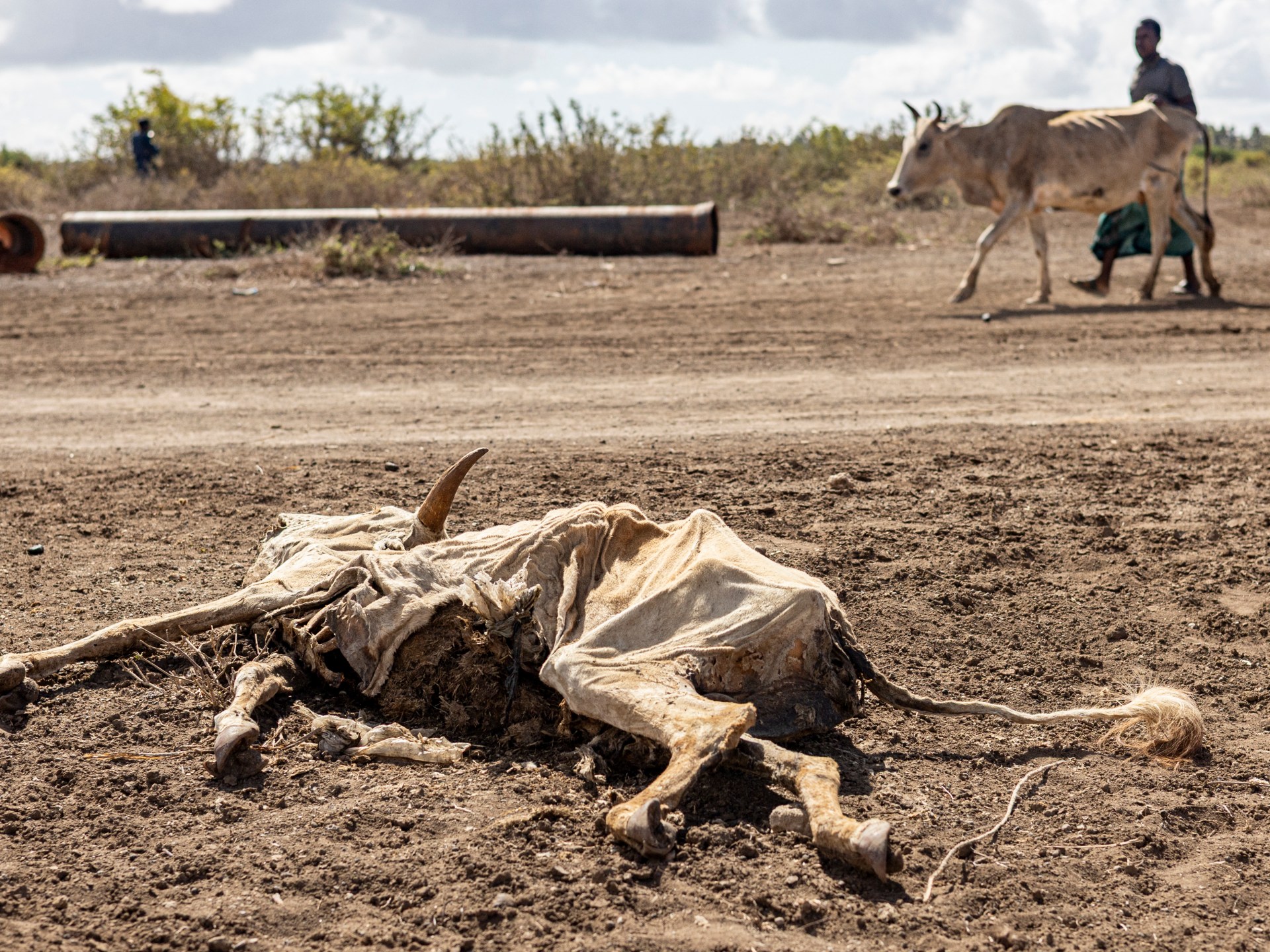
A severe drought, combined with failed rains and conflict, has pushed 6.5 million people in Somalia into hunger. The situation is particularly dire for children, who are at risk of acute malnutrition due to the lack of access to basic necessities.
In the southern port city of Kismayo, livestock have become a symbol of loss as families struggle to survive without their animals, which were once a primary source of food and income. The impact of the drought is not limited to Kismayo but is felt across the country, with widespread hunger and malnutrition affecting millions.
According to Francesca Sangiorgi, humanitarian director at Save the Children, the crisis is being driven by repeated climate shocks that are compounding over time. “We’re seeing multiple rainy seasons that have failed across the country,” she said. When rain does arrive, it often comes too late to restore livelihoods that have already collapsed.
The scale of the crisis is severe, with a third of the population facing severe food insecurity. Many households struggle to access basic necessities, and some are forced to go without food altogether. The United Nations estimates that 1.8 million children under five in Somalia are at risk of acute malnutrition, putting their survival in immediate danger.
The situation on the ground is dire, with overcrowded aid camps struggling to provide resources. Displaced residents, including women and children, have been forced to travel long distances to reach these camps, often without knowing what they will find. The crisis has also led to secondary displacement, as people who have already been forced from their homes are displaced again due to the lack of services and commodities.
According to Doctors Without Borders, more than 3.8 million Somalis are currently displaced, with many facing extreme shortages and increased vulnerability to illnesses such as diarrhoea, measles, and other infections. The humanitarian community is working to provide assistance, but resources are limited and uncertain.
Source: Al Jazeera